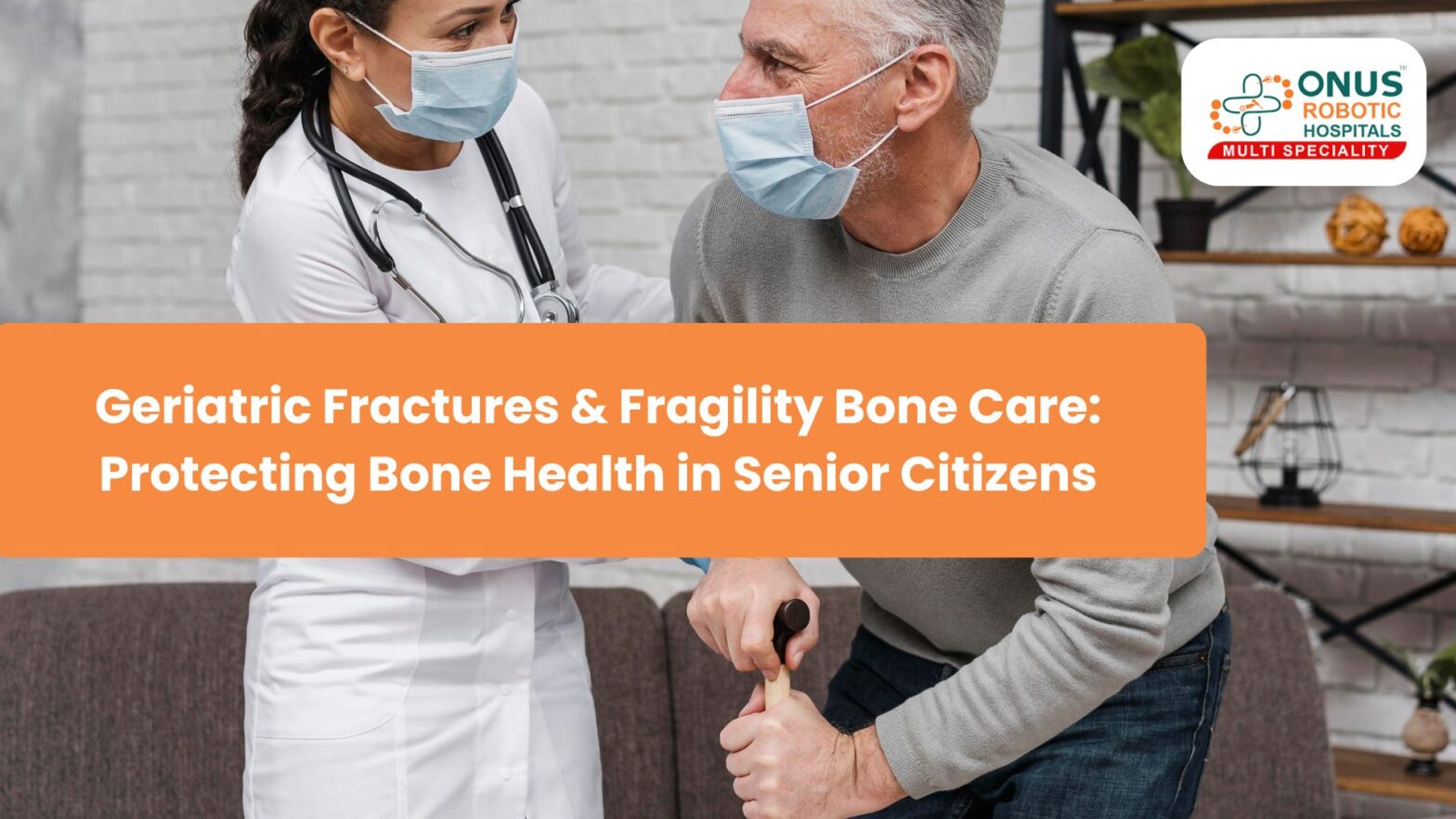
Geriatric Fractures & Fragility Bone Care: Protecting Bone Health in Senior Citizens: Dr. Balaraju Naidu, Robotic Orthopedic Surgeon – ONUS Robotic Hospitals
As we age, our bones naturally lose strength. For many older adults, even a minor fall while walking at home or getting up from bed can lead to serious fractures. These injuries are known as fragility fractures, and they are one of the leading causes of disability and loss of independence among the elderly.
Understanding why these fractures occur and how to manage them early is crucial for maintaining mobility, confidence, and quality of life.
What Are Fragility Fractures?
A fragility fracture occurs when bones become weak and break from a low-energy injury, such as:
- Slipping in the bathroom
- Tripping on a small step
- Losing balance while getting up
These fractures happen primarily because of Osteoporosis, a condition where the bones become thinner, porous, and less dense.
Common Fragility Fractures in Older Adults
The most frequently affected areas are:
| Fracture Site | Typical Cause | Key Signs |
| Hip | Slip or fall | Severe hip pain & inability to walk |
| Wrist | Trying to break a fall | Swelling, pain, visible deformity |
| Spine (Compression Fracture) | Bending, lifting, or no known injury | Sudden back pain, height loss, stooped posture |
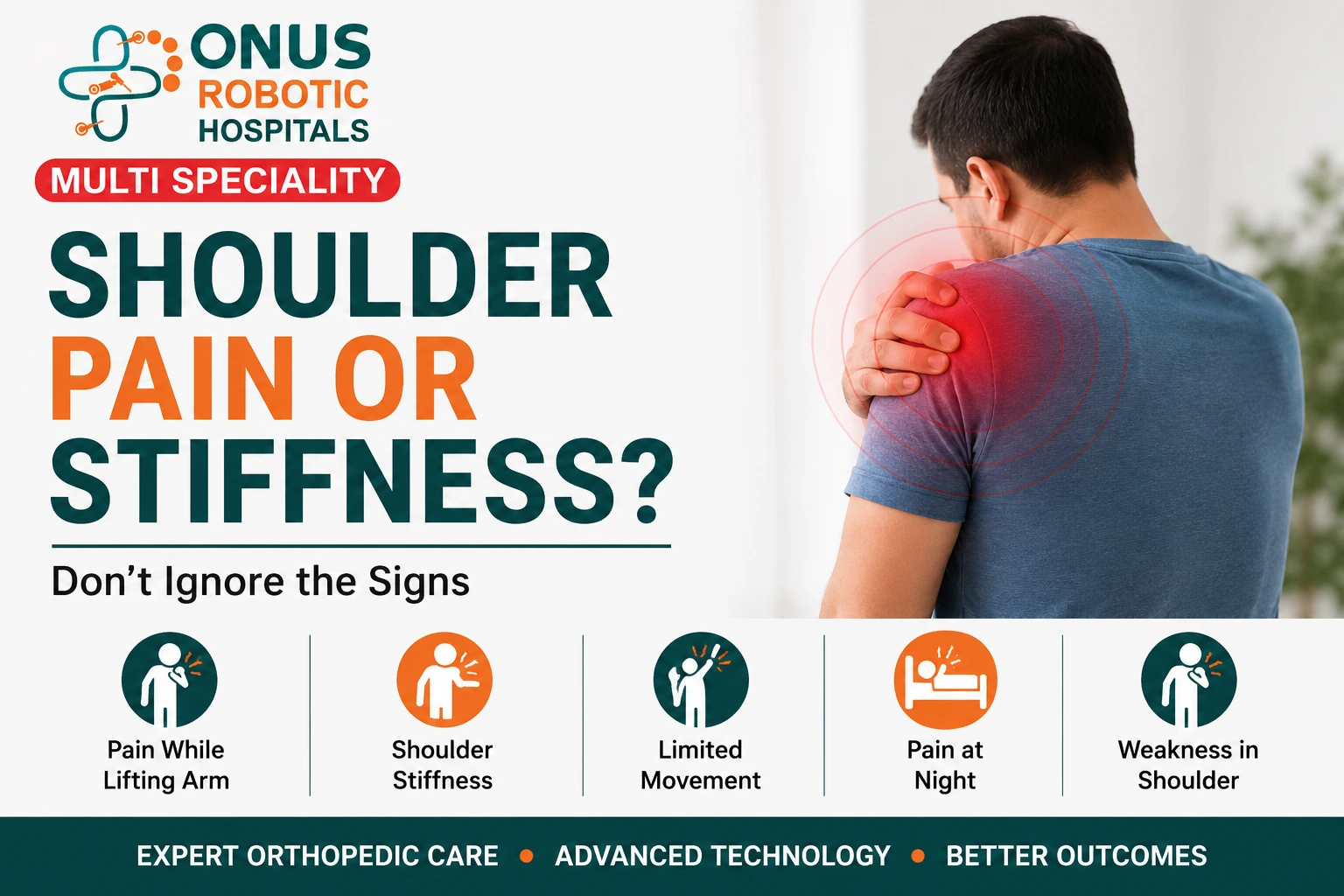
| Shoulder | Falling sideways | Pain & difficulty lifting the arm |
If your elderly family member experiences sudden pain after a minor fall, do not ignore it — immediate medical evaluation is essential.
Why Bed Rest Is Not the Solution
Many families believe that resting at home will help the bones heal. However, prolonged bed rest can be dangerous, especially in seniors.
It may lead to:
- Muscle weakness
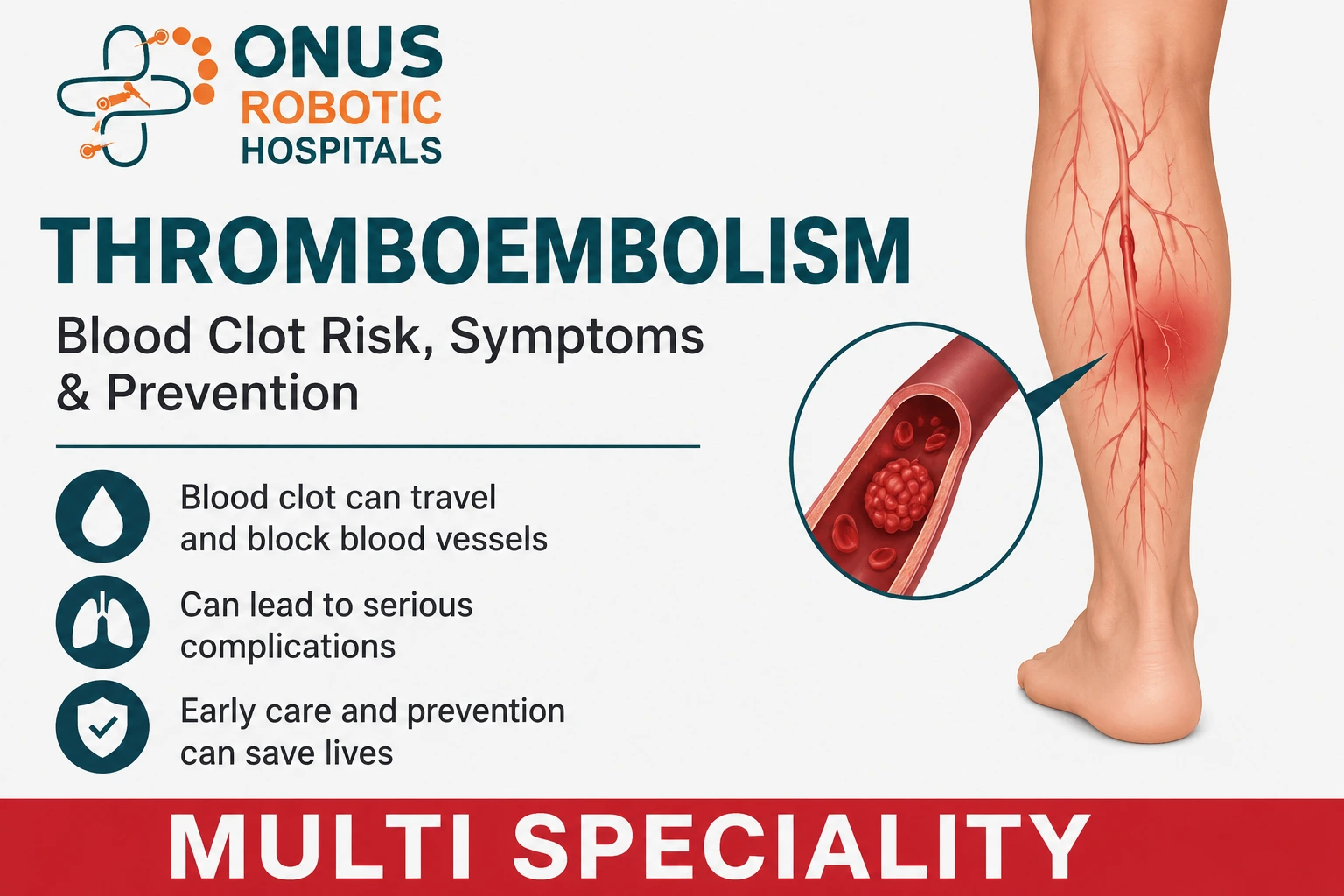
- Blood clots
- Bed sores
- Lung infections (pneumonia)
- Permanent inability to walk
Early movement is key to successful recovery.
How ONUS Robotic Hospitals Treat Geriatric Fractures
At ONUS Robotic Hospitals, we provide comprehensive bone and joint care for seniors, focusing on safe, faster recovery and return to independence.
1. Accurate Assessment
We perform:
- Digital X-rays
- DEXA Scan to test bone strength
- Blood tests for Calcium & Vitamin D
2. Advanced Surgical Treatment (If Required)
We specialize in:
- Minimally Invasive Fixation (plates, screws, rods)
- Robotic Hip & Knee Replacement for complex fractures
- Kyphoplasty / Vertebroplasty for spinal compression fractures
Robotic precision ensures:
- Less pain
- Smaller incision
- Faster healing
- Early mobilization
3. Early Walking & Physiotherapy
Our goal is to get patients:
- Sitting within 24 hours
- Walking with support as early as possible
4. Bone Strengthening Therapy
We correct underlying bone weakness through:
- Calcium & Vitamin D supplements
- Osteoporosis medications
- Diet planning
- Weight-bearing exercise guidance
How to Prevent Falls & Fractures at Home
Small adjustments can make home safer:
- Ensure adequate lighting in all rooms.
- Use non-slip mats in bathrooms.
- Remove loose rugs and clutter.
- Install railings and grab bars near stairs and toilets.
- Encourage 15 minutes of sunlight daily for Vitamin D.
- Promote mild exercises like walking or chair exercises.
Recovery After Robotic Knee Replacement
- Start walking in 24 hours (in most cases)
- Physiotherapy is essential for best results
- Most patients return to normal routine within 3–6 weeks
- Full strengthening may take 2–3 months
Takeaway
Fragility fractures are not just an age-related problem — they are treatable and preventable with the right approach.
✔ Early diagnosis
✔ Timely treatment
✔ Strengthening bones
✔ Safe rehabilitation
…can bring elderly patients back to independent living.
At ONUS Robotic Hospitals, We Are Here to Help
Our dedicated team of orthopedic specialists, physiotherapists, and geriatric care experts ensure compassionate and advanced care for senior patients.
📞 For consultation or emergency bone care, contact us anytime.