De Quervain’s Tenosynovitis: Causes, Symptoms, Diagnosis & Treatment – By Dr. Balaraju Naidu, Robotic Orthopedic Surgeon, ONUS Robotic Hospitals
If you feel pain near your thumb every time you lift your phone, open a jar, or pick up your child, you may have De Quervain’s Tenosynovitis. It is one of the most common wrist conditions, especially among new mothers, mobile users, gym-goers, and people performing repetitive hand movements.
What Is De Quervain’s Tenosynovitis?
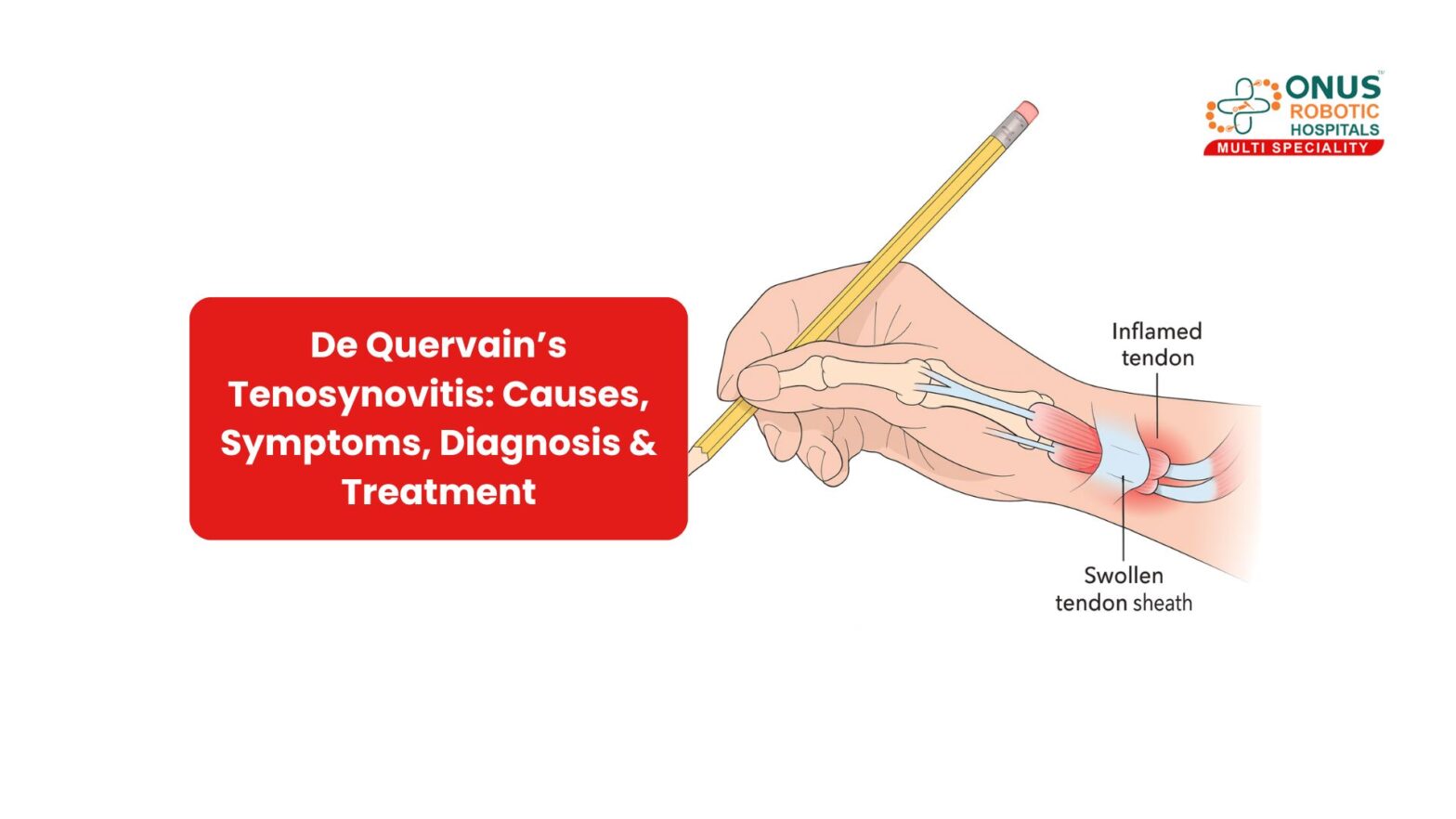
De Quervain’s Tenosynovitis is an inflammation of the tendons located on the thumb side of your wrist. These tendons help you move your thumb away from your hand. When they become irritated, the tendon sheath swells, causing pain and difficulty in movement.
Common Causes
This condition usually results from repetitive stress or sudden strain. Some common triggers include:
- Excessive mobile phone usage
- Lifting babies repeatedly (common in new mothers → “Mommy Thumb”)
- Repetitive grasping or twisting movements
- Sports such as tennis, badminton, gym workouts
- Typing or heavy computer use
- Inflammatory arthritis (less common)
Symptoms You Should Not Ignore
People with De Quervain’s typically experience:
- Pain at the base of the thumb
- Swelling around the wrist
- Difficulty gripping objects
- Pain while twisting the wrist
- Numbness or catching sensation
- Sharp pain during the Finkelstein test (thumb inside fist → wrist bent towards the little finger)
Symptoms often worsen if the wrist is not rested properly.
How Is It Diagnosed?
Doctors diagnose De Quervain’s mainly through physical examination.
- Finkelstein test confirms the condition.
- Rarely, ultrasound imaging may be used to assess tendon inflammation.
Treatment Options
1. Rest & Activity Modification
Avoid repetitive wrist movements and give the tendon time to heal.
2. Splinting (Thumb Spica Brace)
This immobilizes the thumb and wrist, reducing strain and promoting recovery.
3. Cold Compress
Applying ice for 10–15 minutes helps reduce swelling and pain.
4. Medications
Your doctor may prescribe anti-inflammatory medications for pain relief.
5. Physiotherapy
Physiotherapy exercises help:
- Improve tendon mobility
- Reduce stiffness
- Strengthen wrist and thumb muscles
- Prevent recurrence
6. Steroid Injection
A corticosteroid injection can provide fast relief in moderate to severe cases.
7. Surgery (If Necessary)
Surgery is rarely needed. If pain persists despite conservative treatment, a small procedure is done to release the tendon sheath.
Prevention Tips
- Reduce repetitive wrist strain
- Take frequent breaks from phone usage
- Avoid lifting heavy objects incorrectly
- Maintain proper ergonomics
- Strengthen your wrist and thumb muscles regularly
De Quervain’s Tenosynovitis is painful but easily treatable if diagnosed early. If you experience persistent thumb-side wrist pain for more than a few weeks, consult an orthopedic specialist or physiotherapist. Early treatment ensures a quick and complete recovery.
For consultations, visit ONUS Robotic Hospitals – Bone & Joint Care Specialists.
📞 For Appointments:
ONUS Robotic Hospitals – Hyderabad