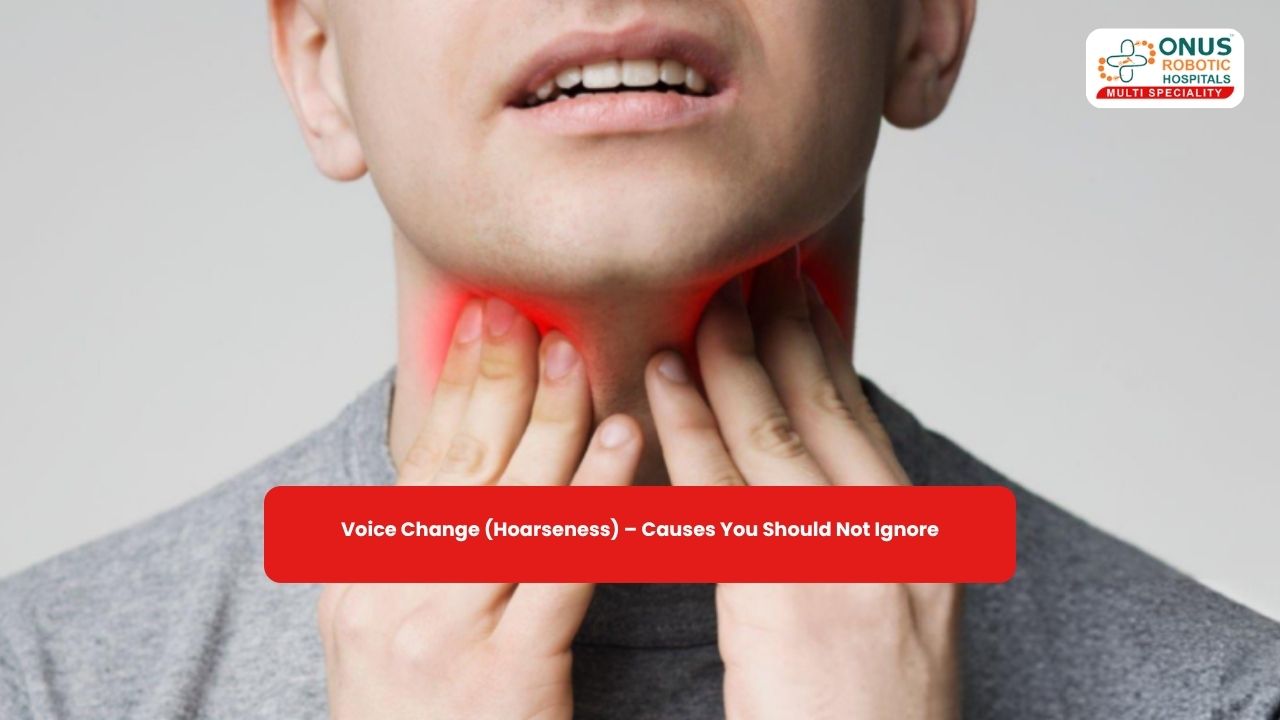
Voice Change (Hoarseness) – Causes You Should Not Ignore – By Dr. Akshitha Reddy, ENT Specialist, ONUS Robotic Hospitals
When a Persistent Change in Voice Signals an Underlying Throat or Vocal Cord Problem
Voice change, medically called Hoarseness, refers to any alteration in the sound, pitch, strength, or clarity of your voice. It may sound rough, weak, strained, or breathy.
While many voice changes are temporary—often due to infection or overuse—persistent hoarseness lasting more than 2–3 weeks should always be evaluated. In some cases, it may indicate conditions affecting the vocal cords, nerves, or throat.
Early diagnosis ensures effective treatment and prevents long-term voice damage.
What Is Voice Change (Hoarseness)?
Voice change occurs when the vocal cords become irritated, inflamed, injured, or unable to move properly.
The vocal cords are located in the voice box (larynx) and are responsible for producing sound. When these structures are affected, voice quality changes.
Common voice changes include:
- Rough or raspy voice
- Weak voice
- Breathy speech
- Reduced voice strength
- Loss of voice
Common Causes of Voice Change
1) Voice Overuse / Vocal Strain
Excessive use of the voice is one of the most common causes.
This often affects:
- Teachers
- Singers
- Public speakers
- Call center workers
Overuse leads to temporary inflammation and hoarseness.
Typical triggers:
- Shouting
- Prolonged talking
- Singing loudly
- Speaking without rest
2) Laryngitis (Inflammation of Vocal Cords)
One of the most frequent causes is Laryngitis.
It is usually caused by viral infection.
Common symptoms:
- Hoarseness
- Sore throat
- Dry cough
- Voice fatigue
Most cases improve within a few days.
3) Vocal Cord Nodules or Polyps
Chronic voice strain can lead to benign growths such as:
- Vocal Cord Nodules
- Vocal Cord Polyps
These conditions cause persistent hoarseness.
Common in:
- Professional voice users
- Teachers
- Singers
4) Vocal Cord Paralysis
A serious cause is Vocal Cord Paralysis, where one or both vocal cords fail to move properly.
Possible causes:
- Nerve injury
- Surgery
- Tumors
- Neurological disease
Symptoms include:
- Weak voice
- Breathy speech
- Difficulty swallowing
- Voice fatigue
5) Acid Reflux (Silent Reflux)
Another common cause is Laryngopharyngeal Reflux, often called silent reflux.
Unlike typical reflux, it may occur without heartburn.
Typical symptoms:
- Morning hoarseness
- Frequent throat clearing
- Burning sensation in throat
- Chronic cough
6) Smoking and Alcohol
Smoking and alcohol irritate the vocal cords.
Long-term use increases the risk of:
- Chronic inflammation
- Voice damage
- Cancer
Smoking is one of the strongest risk factors for throat disease.
7) Thyroid Surgery or Neck Injury
Injury to the recurrent laryngeal nerve during surgery can affect voice.
Possible causes:
- Thyroid surgery
- Neck trauma
- Nerve damage
Symptoms:
- Sudden voice change
- Weak voice
- Difficulty speaking
8) Throat Cancer (Serious Cause)
Persistent hoarseness may indicate Laryngeal Cancer.
Warning signs include:
- Hoarseness lasting more than 2–3 weeks
- Difficulty swallowing
- Weight loss
- Neck swelling
- Persistent throat pain
Early detection significantly improves outcomes.
Symptoms That Should Not Be Ignored
Seek medical attention if you notice:
- Voice change lasting more than 2–3 weeks
- Sudden loss of voice
- Difficulty speaking
- Difficulty swallowing
- Persistent throat pain
- Neck swelling
- Unexplained weight loss
These symptoms require evaluation.
How Is Voice Change Diagnosed?
Diagnosis usually includes:
Clinical Examination
Doctors assess:
- Voice quality
- Throat condition
- Vocal cord movement
Laryngoscopy (Key Test)
A small camera is used to examine the vocal cords.
This helps detect:
- Inflammation
- Nodules
- Polyps
- Paralysis
- Tumors
Early diagnosis improves treatment success.
Treatment Options for Voice Change
Treatment depends on the underlying cause.
Common treatments include:
- Voice rest
- Medications
- Speech therapy
- Acid reflux treatment
- Surgery (in selected cases)
Most patients recover completely with proper care.
Voice Care Tips to Protect Your Vocal Cords
Simple habits can prevent voice problems.
Daily Voice Care
- Avoid shouting
- Stay hydrated
- Take voice breaks
- Avoid smoking
- Limit caffeine
- Use proper voice technique
These steps maintain healthy vocal cords.
When Should You See an ENT Specialist?
Consult a doctor if:
- Voice change lasts more than 2–3 weeks
- Voice becomes weak or breathy
- Swallowing becomes difficult
- You have a history of smoking
- Neck swelling develops
Early evaluation prevents complications.
Final Takeaway
Voice change is:
✔ Common
✔ Usually temporary
⚠️ Sometimes serious
The key message:
Hoarseness lasting more than 2–3 weeks should never be ignored.
Early diagnosis protects your voice and health.
For Appointments:
👩⚕️ Dr. Akshitha Reddy
ENT Specialist
Providing ethical, evidence-based care for ear, nose, throat, sinus, and airway conditions.
ONUS Robotic Hospitals – Hyderabad
👉 link: contact-us or book-appointment