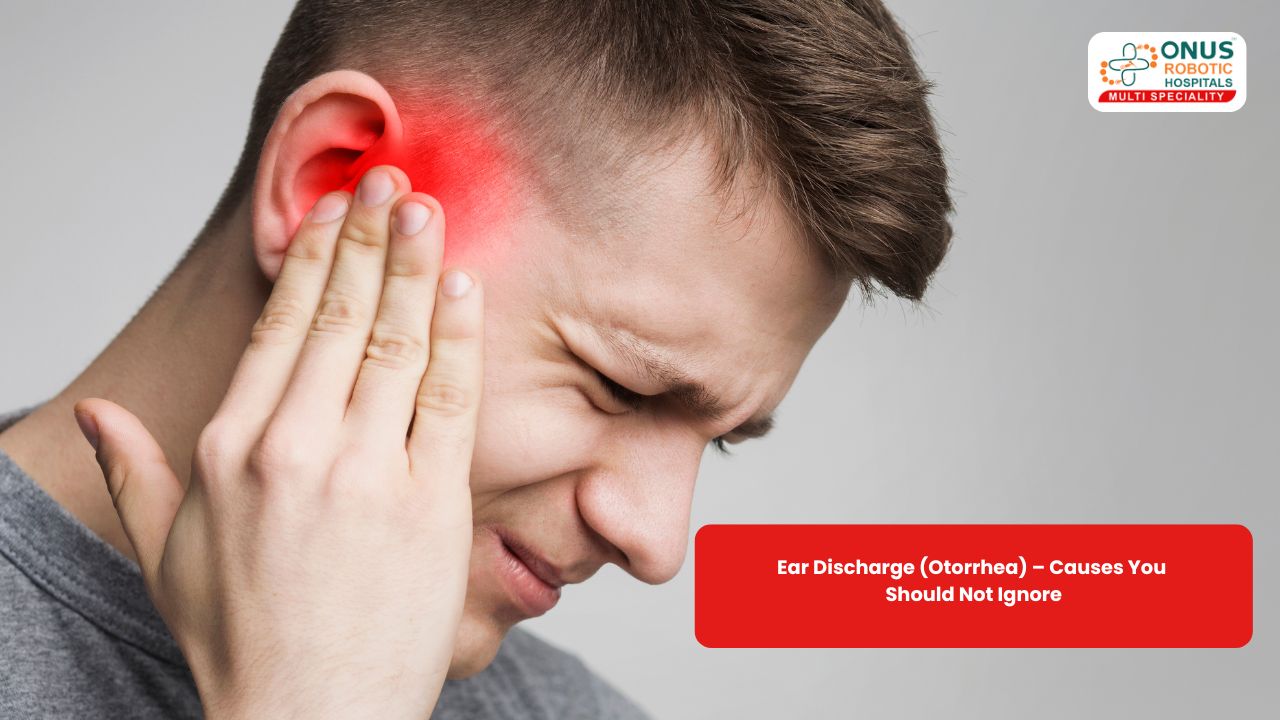
Ear Discharge (Otorrhea) – Causes You Should Not Ignore- By Dr. Akshitha Reddy, ENT Specialist, ONUS Robotic Hospitals
Ear discharge, medically called Otorrhea, refers to any fluid coming out of the ear. It may be watery, thick, pus-like, bloody, or foul-smelling.
While many people ignore it initially, ear discharge is often a warning sign of an underlying ear disease that requires timely medical attention. Early treatment can prevent complications such as hearing loss, chronic infection, and eardrum damage—conditions frequently seen in delayed ENT cases.
What Is Ear Discharge (Otorrhea)?
Ear discharge occurs when infection, injury, or disease causes fluid to leak from the ear canal or middle ear.
The type of discharge often gives clues about the cause.
Types of Ear Discharge
- Watery discharge – Usually seen in infection or injury
- Yellow or green pus – Indicates bacterial infection
- Bloody discharge – May occur due to trauma or severe infection
- Foul-smelling discharge – Often seen in chronic ear disease
Understanding the type of discharge helps doctors identify the underlying problem quickly.
Common Causes of Ear Discharge
1) Ear Infection (Most Common Cause)
One of the leading causes is Acute Otitis Media or Chronic Suppurative Otitis Media.
These infections can cause:
- Ear pain
- Fever
- Hearing loss
- Eardrum rupture
- Persistent discharge
Chronic infections are particularly dangerous because they can lead to long-term ear damage.
2) Outer Ear Infection (Swimmer’s Ear)
Also known as Otitis Externa, this condition affects the ear canal.
Common causes include:
- Water exposure
- Excess ear cleaning
- Use of earbuds
- Humid environments
Symptoms include:
- Ear pain
- Itching
- Thick discharge
- Pain when touching the ear
3) Fungal Infection (Otomycosis)
Fungal infections are common in warm and humid climates like India.
This condition is called Otomycosis.
Typical symptoms:
- Severe itching
- Flaky discharge
- Ear blockage
- Mild pain
The discharge may appear:
- Black
- White
- Grey
4) Ear Trauma
Injury to the ear canal or eardrum can cause discharge.
Common causes:
- Using earbuds
- Inserting pins or sharp objects
- Accidents
- Aggressive ear cleaning
This may lead to:
- Pain
- Bleeding
- Hearing loss
5) Foreign Body in the Ear
This is more common in children.
Examples:
- Beads
- Paper
- Food particles
- Small toys
Symptoms include:
- Foul-smelling discharge
- Irritation
- Pain
- Hearing difficulty
6) Cholesteatoma (Serious Condition)
A Cholesteatoma is a dangerous condition where abnormal tissue grows inside the ear.
Symptoms include:
- Persistent foul-smelling discharge
- Hearing loss
- Ear fullness
- Recurrent infection
This condition often requires surgery.
7) CSF Leak (Rare but Emergency)
A clear watery discharge after head injury may indicate:
Cerebrospinal Fluid Leak
This is a medical emergency.
Warning signs:
- Clear watery discharge
- Head injury history
- Severe headache
- Neurological symptoms
Immediate treatment is required.
Symptoms That Should Not Be Ignored
Seek medical attention if you notice:
- Ear discharge lasting more than 2–3 days
- Foul-smelling discharge
- Hearing loss
- Severe ear pain
- Swelling around the ear
- Bloody discharge
- Fever
These symptoms may indicate a serious condition.
How Ear Discharge Is Diagnosed
Diagnosis usually includes:
Clinical Examination
Doctors check:
- Ear canal
- Eardrum
- Type of discharge
Diagnostic Tests (If Needed)
- Otoscopy (ear examination)
- Hearing test
- Ear swab test
- CT scan (in complicated cases)
Early diagnosis prevents complications.
Treatment Options for Ear Discharge
Treatment depends on the cause.
Common treatments include:
- Antibiotic ear drops
- Antifungal medication
- Professional ear cleaning
- Pain relief medication
- Surgery (in severe cases)
Most cases improve with proper treatment.
Important Tips to Prevent Ear Problems
Follow these simple precautions:
- Do not insert earbuds into the ear
- Avoid self-medication
- Keep the ear dry
- Treat infections early
- Seek medical advice promptly
These steps prevent complications.
When Should You See an ENT Specialist?
Consult a doctor immediately if:
- Discharge lasts more than 2–3 days
- There is hearing loss
- The discharge smells bad
- Pain becomes severe
- There is a history of injury
- Symptoms worsen
Early treatment prevents permanent damage.
Final Takeaway
Ear discharge is:
❌ Not normal
⚠️ A warning sign of ear disease
✔ Treatable with early medical care
Ignoring ear discharge can lead to:
- Hearing loss
- Chronic infection
- Eardrum damage
Early consultation ensures safe recovery.
For Appointments:
👩⚕️ Dr. Akshitha Reddy
ENT Specialist
Providing ethical, evidence-based care for ear, nose, throat, sinus, and airway conditions.
ONUS Robotic Hospitals – Hyderabad
👉 link: contact-us or book-appointment