Why Weight Loss Does Not Always Mean Fat Loss – A Diabetes Perspective: Dr. Ravi Kiran | Diabetologist, Onus Robotic Hospital
Introduction: The Scale Is Not the Full Story
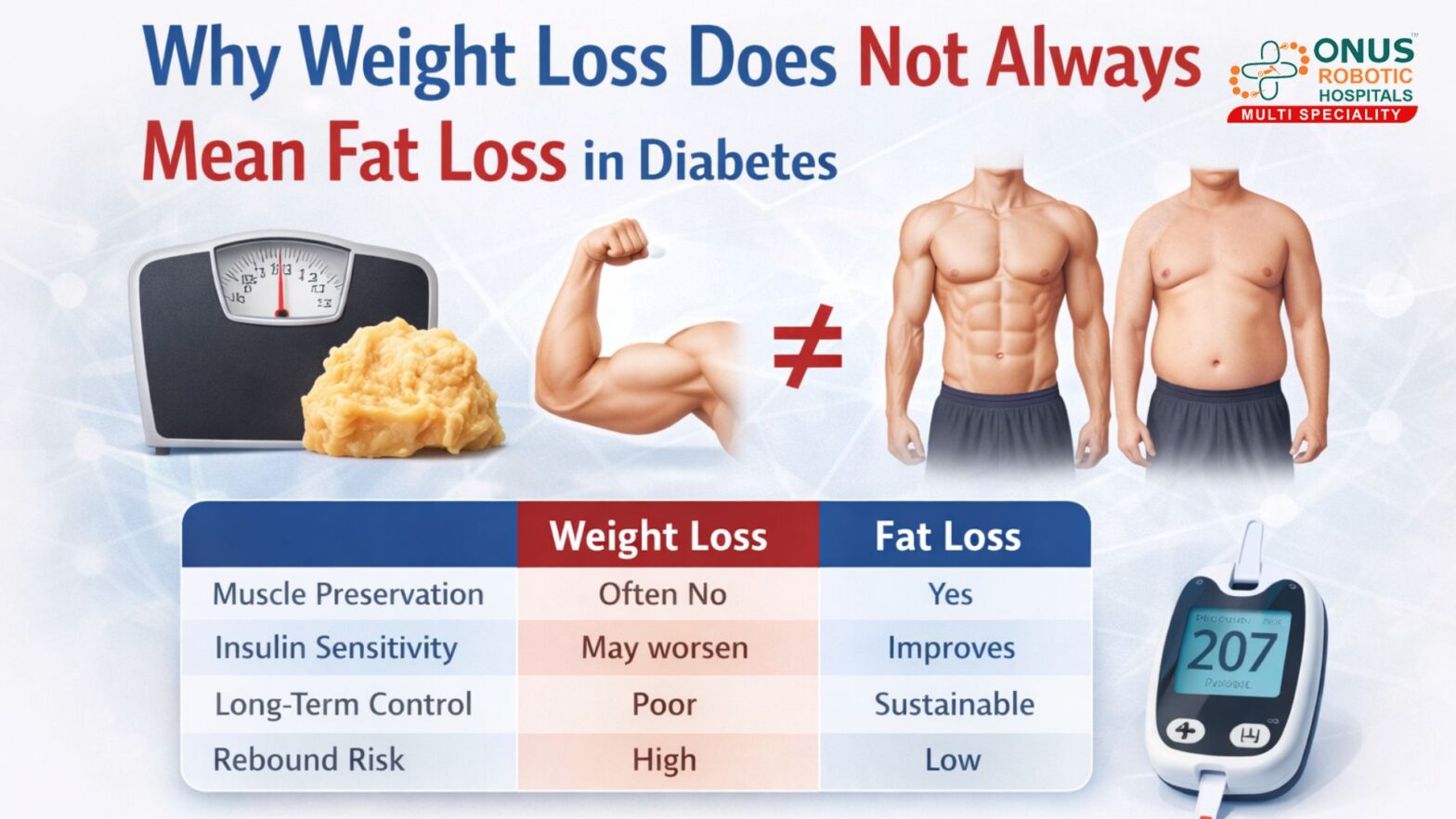
Many people with Type 2 Diabetes feel reassured when the number on the weighing scale drops. But medically speaking, weight loss does not automatically mean fat loss.
In diabetes and metabolic syndrome, rapid or unplanned weight loss often reflects:
-
Loss of water
-
Glycogen depletion
-
Loss of lean muscle mass
—not necessarily reduction in body fat.
This distinction matters.
Because fat loss improves metabolism.
But muscle loss worsens blood sugar control.
Understanding Body Weight vs Body Composition
Your total body weight consists of:
-
Fat mass
-
Lean muscle mass
-
Water and glycogen
-
Bone and connective tissue
Most bathroom scales measure only total weight. They do not tell you whether you are losing fat or muscle.
Clinical data published in The Lancet Diabetes & Endocrinology shows that 25–35% of rapid weight loss in diabetics may come from lean muscle mass, particularly when protein intake is low.
That means the scale may go down — while metabolic health does not improve.
Why Muscle Loss Is Dangerous in Diabetes
Skeletal muscle is the primary site for glucose disposal in the body.
When muscle mass decreases:
-
Insulin sensitivity worsens
-
Post-meal glucose spikes increase
-
Basal metabolic rate drops
-
Long-term weight regain becomes more likely
Research published in Diabetes Care demonstrates a direct correlation between muscle loss and worsening HbA1c levels, even when overall weight decreases.
👉 This explains why some patients lose weight but see no improvement in sugar levels.
Common Causes of Weight Loss Without Fat Loss
1️⃣ Very Low-Calorie Diets
Severely restricted diets often lead to:
-
Glycogen depletion
-
Water loss
-
Muscle breakdown
The initial drop on the scale is usually not fat.
2️⃣ Inadequate Protein Intake
Many Indian diets provide significantly less protein than recommended.
Low protein intake accelerates muscle loss during weight reduction.
Without adequate protein, the body uses muscle tissue as fuel.
3️⃣ Skipping Meals
Irregular eating patterns:
-
Increase cortisol
-
Worsen insulin resistance
-
Promote muscle breakdown
4️⃣ Excessive Cardio Without Strength Training
Long-duration cardio without resistance training encourages:
-
Calorie burn
-
Muscle breakdown
-
Metabolic slowdown
Fat loss requires muscle preservation — not muscle depletion.
Fat Loss vs Weight Loss – The Metabolic Difference
| Parameter | Weight Loss | Fat Loss |
|---|---|---|
| Scale Change | Yes | May or may not |
| Muscle Preservation | Often No | Yes |
| Insulin Sensitivity | May worsen | Improves |
| Long-term Sustainability | Poor | Strong |
| Rebound Risk | High | Low |
The American Diabetes Association (ADA) emphasizes improving body composition, not just reducing weight.
Why Diabetics Need a Different Weight Strategy
Unlike non-diabetics, individuals with diabetes must prioritize:
-
Muscle preservation
-
Stable insulin response
-
Metabolic flexibility
-
Sustainable fat reduction
Studies such as the DiRECT trial and publications in NEJM show that intentional fat loss with adequate nutrition improves insulin sensitivity and reduces medication dependence.
Crash dieting does the opposite.
How to Promote Fat Loss (Not Just Weight Loss) in Diabetes
1️⃣ Ensure Adequate Protein Intake
Protein helps:
-
Preserve lean muscle
-
Improve satiety
-
Reduce post-meal glucose spikes
2️⃣ Include Resistance Training
Even 2–3 strength sessions per week can:
-
Improve muscle insulin sensitivity
-
Preserve metabolic rate
-
Enhance fat reduction
3️⃣ Maintain Structured Meal Timing
Regular meal patterns:
-
Stabilize insulin levels
-
Reduce cortisol spikes
-
Improve metabolic efficiency
4️⃣ Optimize Sleep and Stress
Poor sleep alone can increase insulin resistance by 20–30%.
Metabolic control requires more than calorie counting.
The Role of Weight Loss Medications and Injections
GLP-1 receptor agonists and dual incretin therapies may:
-
Suppress appetite
-
Support calorie reduction
However, without lifestyle correction:
-
Muscle loss may still occur
-
Fat loss is not guaranteed
-
Rebound weight gain is common after stopping medication
Medications support physiology.
Habits determine long-term success.
Key Takeaway for Patients
If you are losing weight but:
-
Your sugars remain unstable
-
You feel weak or fatigued
-
Your body composition has not improved
You are likely losing muscle — not fat.
True diabetes control comes from fat loss with muscle preservation, not aggressive scale reduction.
The goal is metabolic health, not just a lower number.
Consultation
📍 Dr. Ravi Kiran
Diabetologist & Preventive Medicine Specialist
Onus Robotic Hospital, Hyderabad