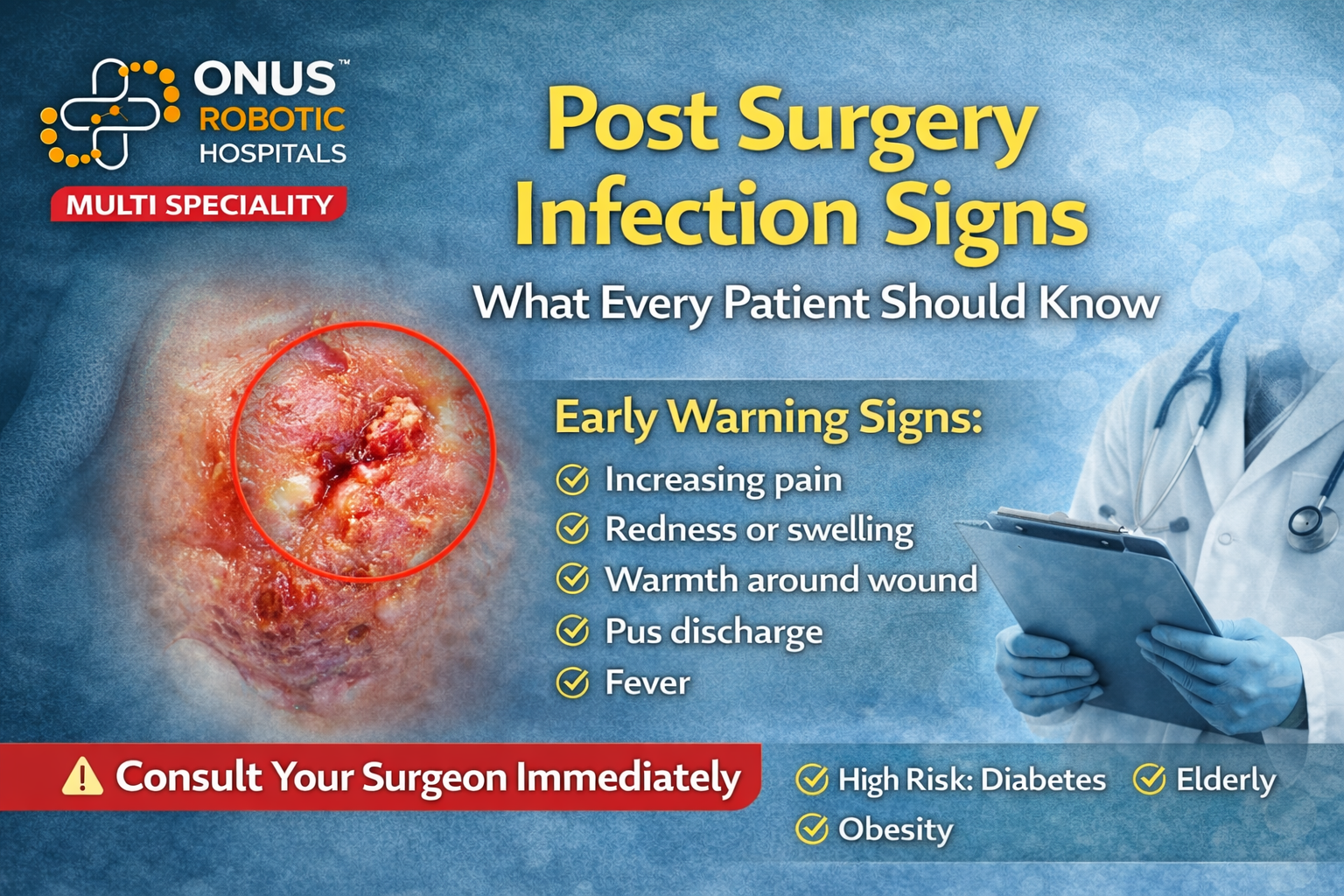
Post Surgery Infection Signs – What Every Patient Should Know – By Dr. Balaraju Naidu, Robotic Orthopedic Surgeon, ONUS Robotic Hospitals
Surgery is only the beginning of recovery. True success depends not just on the procedure, but also on proper post-operative care and early detection of complications.
One of the most important complications to watch for is post-surgical infection.
Early identification can protect implants, prevent repeat surgeries, and save recovery time.
What Is Post-Surgery Infection?
A post-surgical infection occurs when bacteria enter the surgical wound or deeper tissues after an operation.
Infections can involve:
-
Skin and soft tissue (superficial infection)
-
Deep muscle layers
-
Bones (osteomyelitis)
-
Implants or prosthetic joints
If untreated, infection can compromise surgical outcomes and delay healing.
Why Post-Surgical Infection Is Serious
Infections can lead to:
-
Delayed wound healing
-
Implant loosening
-
Bone infection
-
Extended hospital stay
-
Repeat surgery
-
Permanent functional loss
This is why early recognition is critical.
Early Warning Signs You Should Never Ignore
Patients should immediately inform their surgeon if they notice:
-
Increasing pain at the surgical site
-
Redness and swelling
-
Warmth around the wound
-
Pus or foul-smelling discharge
-
Fever or chills
-
Delayed wound healing
-
Sudden stiffness in joint surgeries
Pain that worsens instead of improving is a red flag.
Who Is at Higher Risk?
Certain patients have a higher risk of developing infections:
-
Diabetes patients
-
Smokers
-
Elderly individuals
-
Obese patients
-
People with low immunity
-
Patients on long-term steroids
Proper medical supervision is especially important for these groups.
What Should You Do If You Suspect Infection?
⚠️ Do not self-medicate.
Avoid:
-
Applying home remedies
-
Taking random antibiotics
-
Ignoring symptoms
Consult your surgeon immediately for:
-
Clinical evaluation
-
Blood tests
-
Wound assessment
-
Imaging if needed
Early treatment prevents major complications.
Prevention Tips After Surgery
Simple precautions reduce infection risk:
✔ Keep the wound clean and dry
✔ Follow the prescribed antibiotic schedule
✔ Control blood sugar levels
✔ Avoid smoking
✔ Maintain proper hygiene
✔ Attend all follow-up visits
✔ Report unusual symptoms early
Prevention is easier than treatment.
Why Early Detection Protects Implants
In joint replacement and fracture surgeries, infections can spread to implants.
Early management:
-
Saves the implant
-
Reduces need for revision surgery
-
Improves long-term results
Delayed care increases complexity.
Final Takeaway
Surgical success does not end in the operation theatre.
Be alert.
Report symptoms early.
Follow post-operative instructions strictly.
Early detection of post-surgery infection protects recovery and avoids repeat surgeries.
For Appointments:
Dr. Balaraju Naidu, Robotic Orthopedic Surgeon
ONUS Robotic Hospitals – Hyderabad
👉 Button link: contact-us or book-appointment