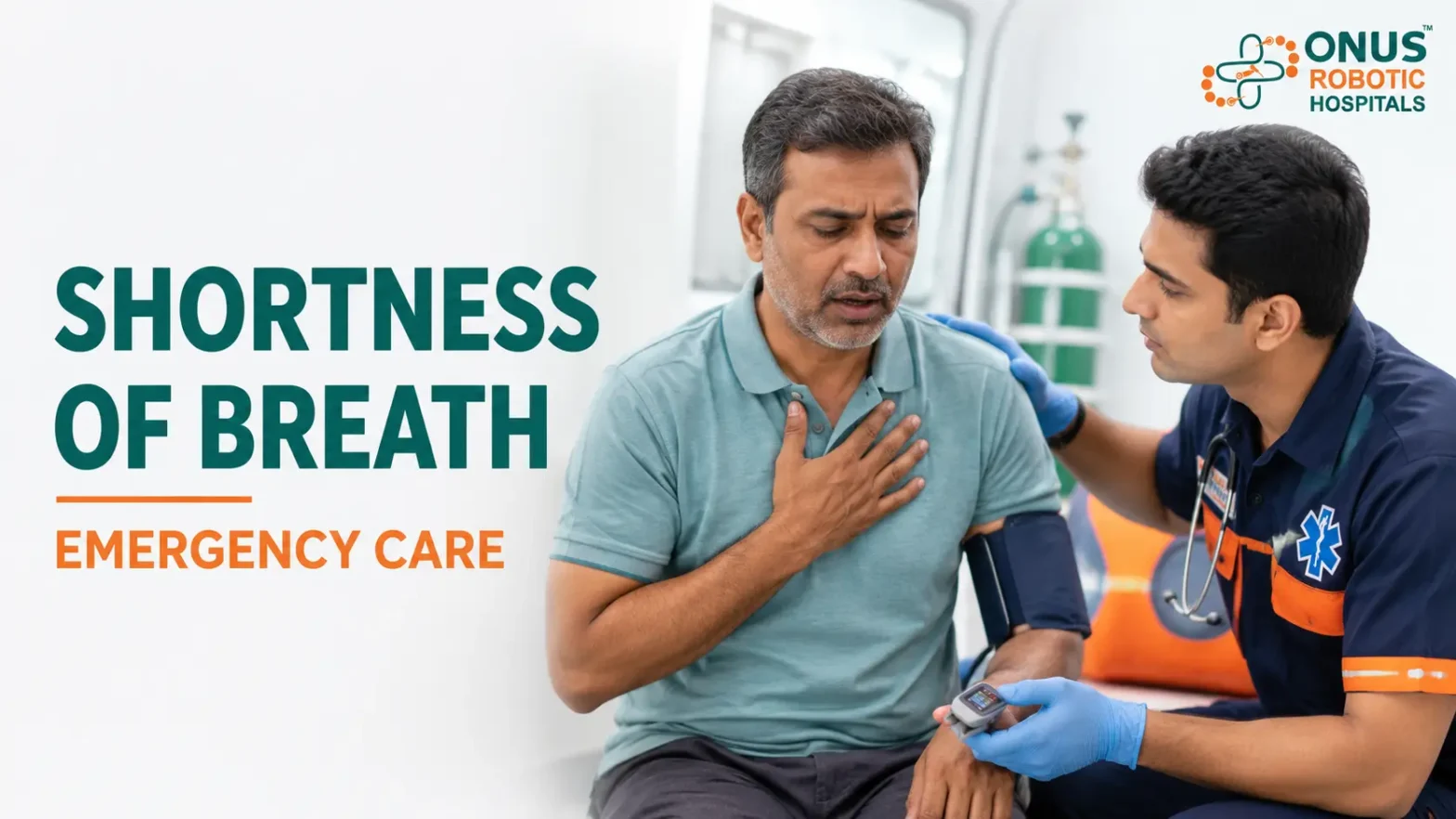
Shortness of Breath Emergency Care: Warning Signs & Life-Saving Steps: Dr. Ravi Kiran | Diabetologist, Onus Robotic Hospital
Shortness of breath, also called breathlessness or breathing difficulty, is a symptom that should never be ignored. It may happen due to asthma, COPD, heart failure, infection, allergy, anxiety, low oxygen levels, or heart-related emergencies. In some patients, breathlessness can be the first warning sign of a serious medical emergency.
In this important awareness session, Dr. P. Ravi Kiran, Senior General Physician & Medical Director, interacted with ambulance staff and explained practical life-saving steps to follow during breathlessness emergencies.
The goal of emergency care is simple: identify danger signs quickly, keep the patient in a safe position, check oxygen levels, avoid delay, and shift the patient to medical care when needed.
What Is Shortness of Breath?
Shortness of breath means the patient feels difficulty in breathing, air hunger, tightness in the chest, or inability to breathe comfortably. Some patients may say:
“I am not getting enough air.”
“I feel tightness in my chest.”
“I cannot lie down.”
“I am breathing very fast.”
“I feel like I may collapse.”
Breathlessness can be mild, moderate, or severe. Severe breathlessness needs emergency attention, especially when the patient is gasping, unable to speak properly, has chest pain, looks blue or pale, or becomes confused. NHS guidance advises emergency care when a person has severe difficulty breathing, chest tightness, pain spreading to the arms/back/neck/jaw, blue or grey lips/skin, or sudden confusion.
Common Causes of Shortness of Breath
1. Asthma Attack
Asthma can cause sudden breathlessness, wheezing, chest tightness, and cough. A severe asthma attack can become dangerous if not treated quickly.
2. COPD
Patients with COPD may develop worsening breathlessness due to infection, pollution, smoking-related lung damage, or sudden flare-ups.
3. Heart Failure
Heart failure can cause breathlessness, especially while lying down, walking, climbing stairs, or during sleep. Some patients may also develop leg swelling or fatigue.
4. Lung Infection
Pneumonia, viral infections, and severe respiratory infections can reduce oxygen levels and cause fast breathing, fever, cough, and weakness.
5. Allergy or Anaphylaxis
A severe allergic reaction can cause sudden breathing difficulty, swelling of lips or face, rashes, dizziness, or collapse. This is an emergency.
6. Anxiety or Panic Attack
Anxiety can cause fast breathing and a feeling of suffocation. However, breathlessness should not be assumed to be anxiety until serious causes are ruled out.
7. Heart Attack
Shortness of breath can occur with or without chest discomfort during a heart attack. The American Heart Association lists chest discomfort, pain in the arm/back/neck/jaw/stomach, shortness of breath, cold sweat, nausea, and lightheadedness as heart attack warning signs.
Danger Signs You Should Not Ignore
Seek urgent medical help if the patient has:
Severe difficulty breathing
Gasping or choking sensation
Unable to speak full sentences
Blue lips or bluish fingers
Very low oxygen saturation
Chest pain, tightness, or heaviness
Sweating with breathlessness
Pain spreading to arm, jaw, neck, back, or shoulder
Confusion, drowsiness, or unconsciousness
Fast worsening breathlessness
Breathlessness after accident or injury
Breathlessness in elderly, diabetic, or heart patients
Mayo Clinic advises emergency medical care when sudden severe shortness of breath occurs, or when breathlessness is associated with chest pain, fainting, blue lips or nails, upset stomach, or altered mental alertness.
Proper Position for a Breathless Patient
One simple but important step is proper positioning.
If a person is breathless, do not force them to lie flat. Many breathless patients feel better in a sitting position. Help the patient sit upright, slightly leaning forward if comfortable, with support to the back and arms.
A useful position is:
Sit upright
Keep shoulders relaxed
Allow the patient to lean slightly forward
Loosen tight clothing
Keep the area well ventilated
Avoid crowding around the patient
Do not make the patient walk unnecessarily
If the patient becomes unconscious or is not breathing normally, emergency resuscitation protocols should be followed by trained responders.
Oxygen Saturation: Why It Matters
Oxygen saturation is checked using a pulse oximeter. It gives a quick idea of oxygen level in the blood.
Low oxygen levels can happen in asthma, COPD, pneumonia, heart failure, pulmonary embolism, severe allergy, and other emergencies. A low reading, worsening breathlessness, blue lips, confusion, or drowsiness should be treated seriously.
Important point: Do not rely only on the oximeter number. Look at the patient. If the patient is struggling to breathe, confused, blue, sweaty, or has chest pain, it is an emergency even if the reading appears acceptable.
When Breathlessness May Indicate Heart Attack
Breathlessness may be heart-related when it is associated with:
Chest pain or pressure
Sweating
Pain spreading to left arm, shoulder, neck, jaw, back, or stomach
Nausea or vomiting
Sudden weakness
Dizziness or fainting
Breathlessness without clear lung symptoms
Breathlessness in a diabetic patient
Breathlessness in elderly patients
Heart attack symptoms may not always be dramatic. Shortness of breath can occur even without chest discomfort, especially in some patients. The American Heart Association specifically notes that shortness of breath may occur with or without chest discomfort.
What Ambulance Staff and First Responders Should Check
During breathlessness emergencies, quick assessment is important.
Ambulance staff and first responders should observe:
Airway: Is the patient able to speak?
Breathing: Is breathing fast, noisy, or laboured?
Circulation: Is the patient pale, sweaty, or weak?
Oxygen saturation: Is SpO₂ low?
Chest pain: Is there tightness or heaviness?
Consciousness: Is the patient alert or confused?
History: Asthma, COPD, heart disease, diabetes, allergy, infection, trauma?
Medicines: Inhalers, cardiac medicines, oxygen support, allergy medication?
The priority is to identify danger signs early and shift the patient to appropriate emergency care without delay.
What Not to Do During Breathlessness
Avoid these mistakes:
Do not make the patient lie flat if they are uncomfortable
Do not delay ambulance support in severe breathlessness
Do not assume it is only anxiety
Do not give food or water if the patient is severely breathless
Do not crowd around the patient
Do not ignore chest pain with breathlessness
Do not wait at home if oxygen levels are low or symptoms are worsening
Why Early Action Saves Lives
Breathlessness can worsen quickly. Early identification and timely emergency response can prevent complications, especially in asthma attacks, heart failure, COPD flare-ups, severe infections, allergic reactions, and heart attacks.
Quick action helps:
Improve oxygen delivery
Reduce panic and distress
Prevent delay in emergency care
Identify heart attack warning signs early
Support safe transfer to hospital
Improve survival in serious cases
Expert Emergency & General Medicine Care at ONUS Robotic Hospitals
At ONUS Robotic Hospitals, patients with breathlessness, low oxygen levels, chest discomfort, asthma, COPD, infection, heart-related symptoms, diabetes-related complications, and emergency medical conditions receive timely evaluation and care.
Consultation
📍 Dr. Ravi Kiran
Diabetologist & Preventive Medicine Specialist
Onus Robotic Hospital, Hyderabad