Warning Signs You Should Not Ignore
Consult an orthopedic specialist immediately if you have:
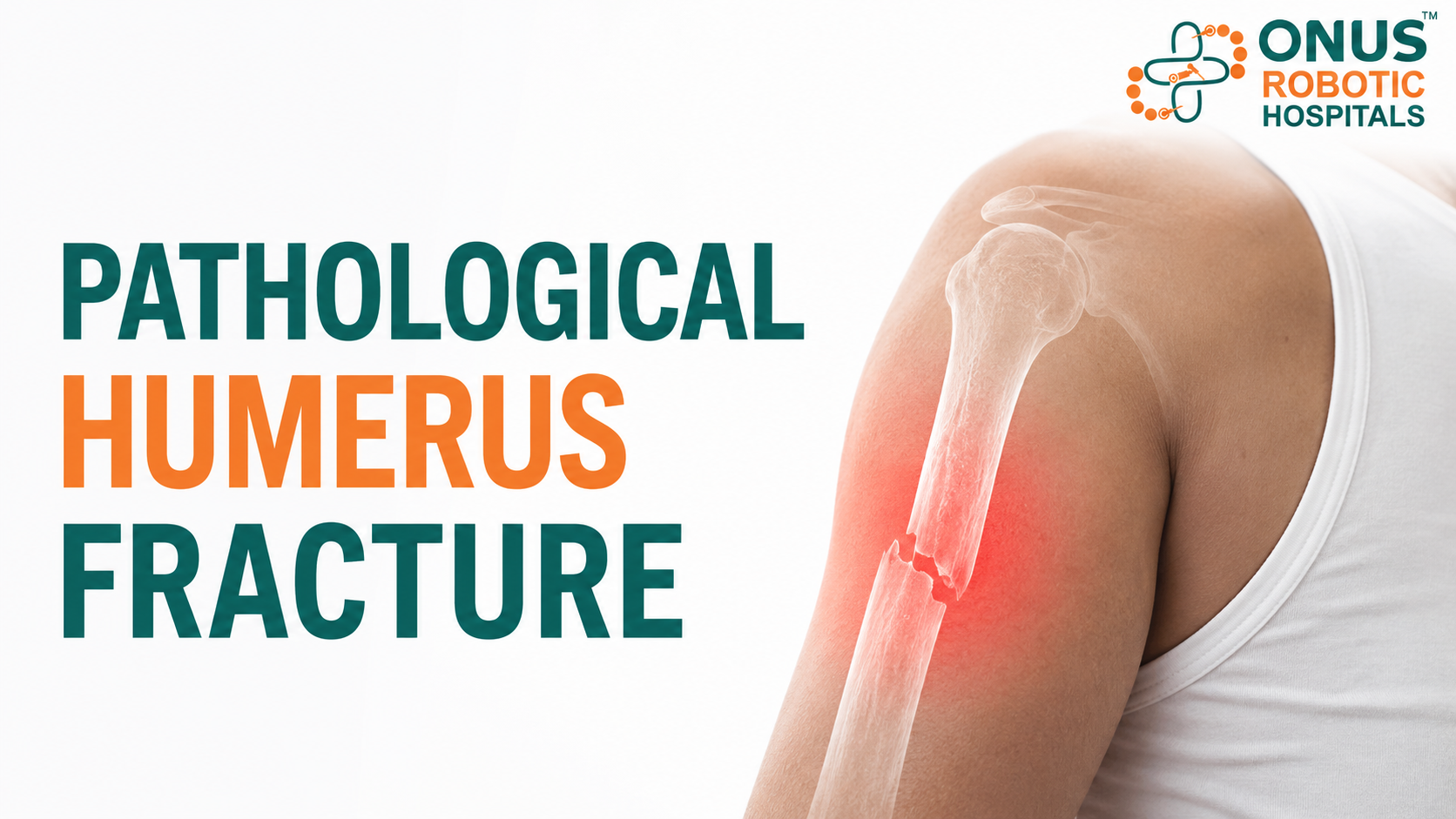
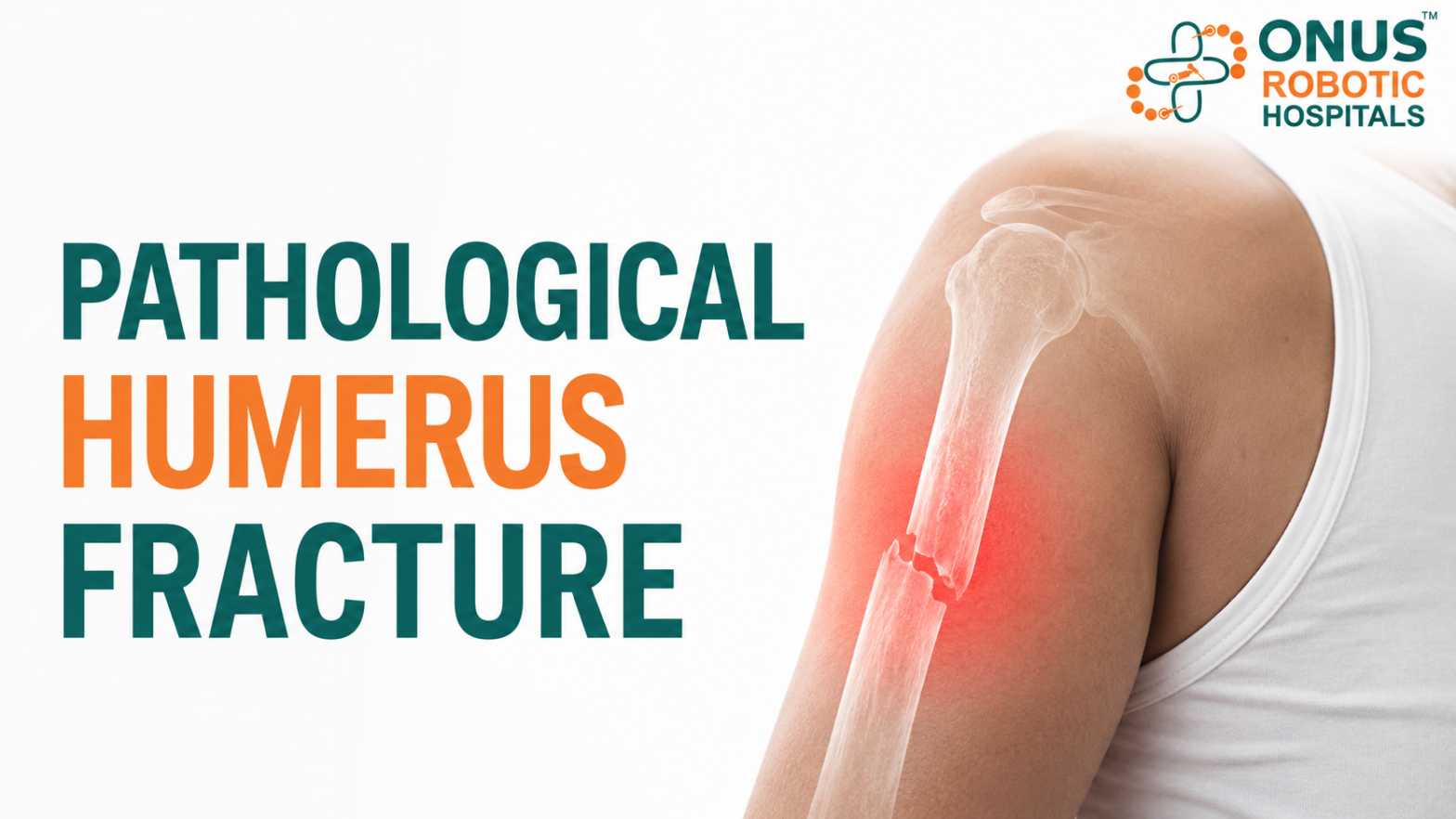
Severe arm pain after a minor fall
Sudden inability to move the arm
Swelling and deformity in the upper arm
Pain in the arm without clear injury
Fracture after very low-impact trauma
History of cancer with new bone pain
Repeated fractures
Persistent night pain
Unexplained weakness or fatigue
Early diagnosis can help identify the true cause behind the fracture and prevent further complications.
How Is Pathological Fracture of Humerus Diagnosed?
Diagnosis begins with clinical examination and detailed history. The doctor will ask about the injury, previous pain, cancer history, osteoporosis, infections, medication use, and general health.
Common investigations may include:
X-Ray
An X-ray helps confirm the fracture and shows the location, pattern, and bone quality. It may also reveal abnormal bone lesions.
MRI Scan
MRI helps evaluate soft tissue, bone marrow, tumor involvement, infection, and surrounding structures.
CT Scan
CT scan gives detailed bone imaging and is useful for surgical planning, especially when there is bone destruction or complex fracture pattern.
Blood Tests
Blood tests may help identify infection, inflammation, calcium imbalance, vitamin deficiency, or other systemic causes.
Biopsy
If a tumor or suspicious lesion is found, a biopsy may be required to identify whether it is benign, malignant, or metastatic. Accurate diagnosis is important before planning definitive treatment, especially when malignancy is suspected.
Treatment Options
Treatment depends on the cause, fracture location, bone quality, patient age, general health, pain level, and whether the fracture is stable or unstable.
1. Pain Management
Pain control is an important first step. Medicines, arm support, immobilization, and careful handling can help reduce pain until definitive treatment is planned.
2. Fracture Stabilization
The broken humerus must be stabilized so the patient can regain comfort and function. Depending on the fracture, treatment may involve sling support, brace, cast, or surgery. For many standard humeral shaft fractures, non-surgical treatment with functional bracing can work well, but pathological fractures often need more individualized planning because bone healing potential may be affected.
3. Surgery When Required
Surgery may be needed when the fracture is unstable, painful, displaced, associated with tumor, or unlikely to heal properly without fixation.
Surgical options may include:
Internal fixation with plate and screws
Intramedullary nail fixation
Cement augmentation in selected cases
Tumor removal or curettage when appropriate
Joint replacement or reconstruction in severe bone destruction
Biopsy with fixation when malignancy is suspected
For pathological humeral fractures due to metastatic disease, internal fixation techniques such as plate fixation, nail fixation, and cement augmentation may be used depending on the bone condition and patient needs. Recent orthopedic literature also describes compound osteosynthesis as a treatment option for actual or impending pathological humeral fractures.
4. Treatment of the Underlying Disease
This is the most important part of pathological fracture care. If only the fracture is treated and the bone disease is ignored, there may be risk of delayed healing, repeat fracture, infection progression, or tumor progression.
Underlying treatment may include:
Osteoporosis management
Calcium and Vitamin D correction
Bone-strengthening medicines when advised
Antibiotics for bone infection
Cancer treatment with oncology team
Radiotherapy or chemotherapy when required
Regular follow-up imaging
In cases of metastatic bone disease, orthopedic treatment is often coordinated with oncology and radiation oncology depending on the primary disease and overall health status.
5. Physiotherapy and Rehabilitation
After the fracture is stabilized and pain reduces, physiotherapy helps restore shoulder, elbow, wrist, and hand function.
Rehabilitation may include:
Shoulder and elbow movement exercises
Grip strengthening
Pain-free range-of-motion exercises
Muscle strengthening
Posture correction
Functional training for daily activities
Physiotherapy should be done only under medical guidance because excessive early movement can be harmful in unstable fractures.
Recovery After Pathological Humerus Fracture
Recovery depends on the cause of the fracture and the strength of the remaining bone. A simple osteoporotic fracture may recover differently from a fracture caused by infection or metastatic cancer.
Recovery depends on:
Cause of bone weakness
Fracture location
Type of treatment
Bone quality
Age and general health
Presence of infection or tumor
Surgical fixation strength
Physiotherapy compliance
Control of underlying disease
Regular follow-up is important to monitor healing and prevent complications.
Why Early Diagnosis Matters
A pathological fracture is a warning sign. It may be the first indication of an underlying bone disease, tumor, infection, osteoporosis, or cancer spread to bone.
Early diagnosis helps:
Identify the real cause
Plan safe fracture treatment
Reduce pain and disability
Prevent repeat fractures
Detect serious disease early
Improve long-term function
Guide cancer or osteoporosis treatment when needed
Expert Care at ONUS Robotic Hospitals
At ONUS Robotic Hospitals, patients with humerus fractures, pathological fractures, bone weakness, arm pain, trauma injuries, and complex orthopedic conditions receive advanced evaluation and personalized treatment.
With facilities such as digital imaging, CT, MRI, advanced orthopedic surgery, and multidisciplinary care, patients can receive accurate diagnosis and appropriate treatment planning.
For Appointments:
Dr. Balaraju Naidu, Robotic Orthopedic Surgeon
ONUS Robotic Hospitals – Hyderabad
👉 link: contact-us or book-appointment