Common Symptoms of Radial Nerve Palsy
Patients with radial nerve palsy may experience:
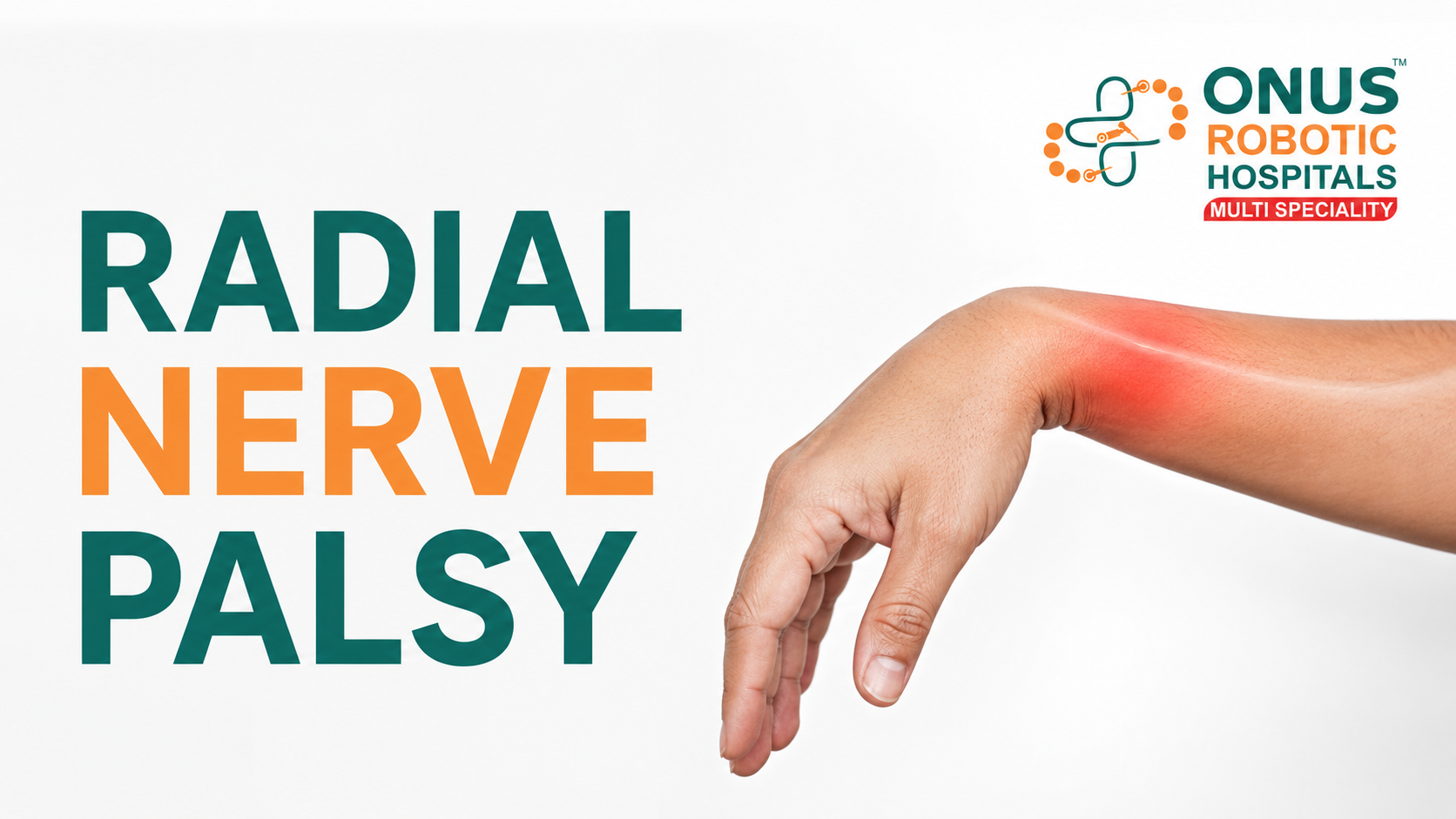
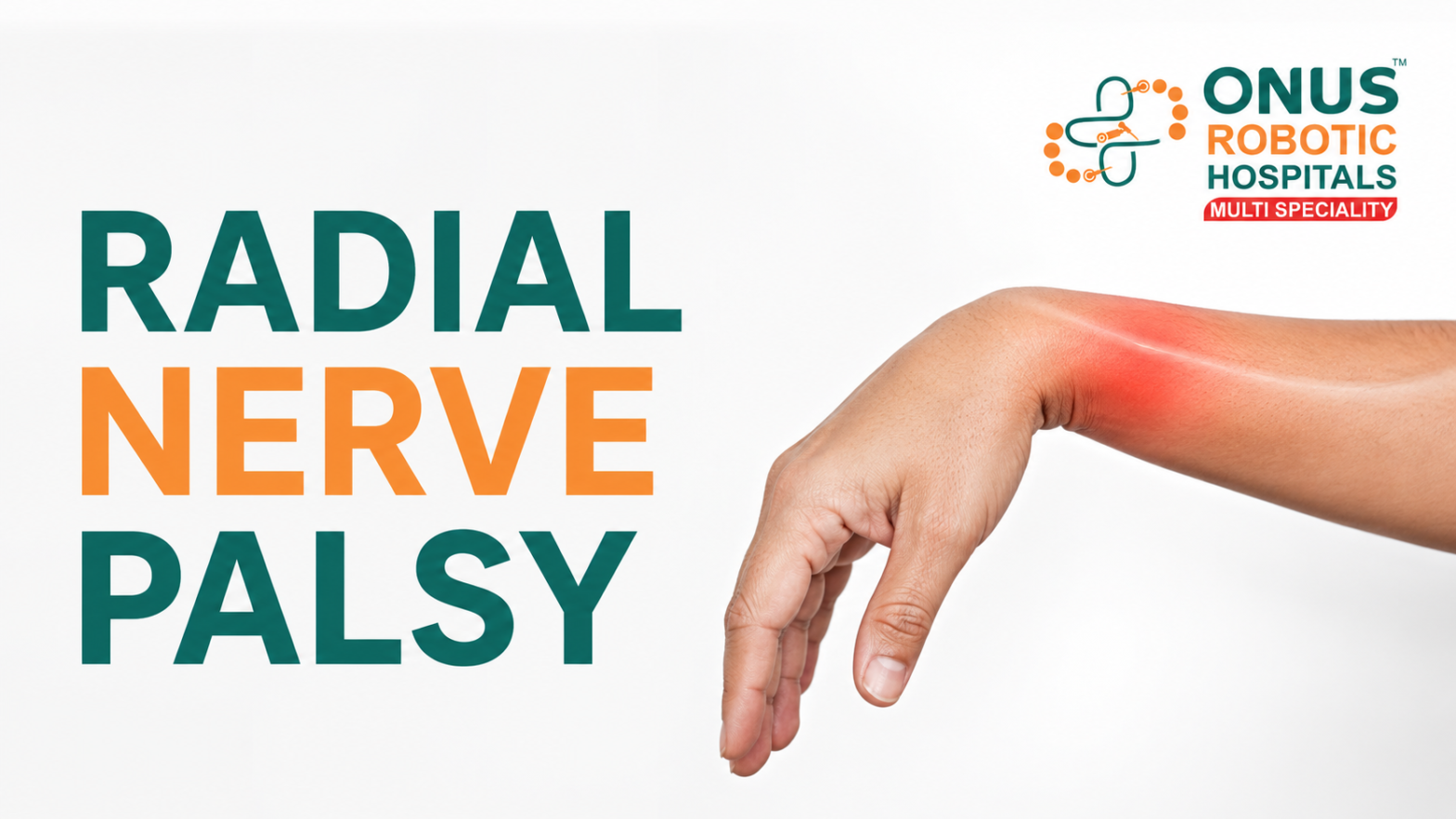
Wrist drop
Weak grip strength
Difficulty lifting the wrist
Difficulty lifting fingers or thumb
Numbness on the back of the hand
Tingling sensation
Weakness after fracture or injury
Pain around the arm, elbow, or forearm
Difficulty holding objects
Reduced hand control
Fatigue while using the hand
The exact symptoms depend on where the radial nerve is affected. A higher-level injury may affect the wrist, fingers, and sensation more significantly, while lower-level nerve involvement may mainly affect finger extension.
Warning Signs You Should Not Ignore
Consult an orthopedic specialist if you notice:
Sudden wrist drop
Hand weakness after injury or fracture
Numbness or tingling after trauma
Difficulty lifting fingers
Loss of grip strength
Weakness after a plaster cast or tight bandage
Pain with progressive weakness
No improvement in hand function over time
Early diagnosis helps identify the severity of nerve injury and improves the chances of recovery.
How Is Radial Nerve Palsy Diagnosed?
Diagnosis begins with a detailed clinical examination. The doctor checks wrist movement, finger extension, thumb movement, grip strength, sensation, reflexes, and the site of injury.
Depending on the cause, the doctor may recommend:
X-ray to check for fracture or bone injury
MRI or ultrasound in selected cases
Nerve conduction study
EMG test to assess nerve and muscle function
Clinical follow-up to monitor nerve recovery
Nerve conduction studies and EMG are useful in identifying the location and severity of nerve involvement and monitoring recovery.
Treatment Options for Radial Nerve Palsy
Treatment depends on the cause, severity, duration, and type of nerve injury.
1. Wrist Splinting
A wrist splint helps support the hand in a functional position and prevents stiffness. It can also make daily activities easier while the nerve recovers.
2. Physiotherapy and Hand Therapy
Physiotherapy plays an important role in recovery. Exercises help maintain joint mobility, prevent stiffness, improve muscle strength, and support functional hand use.
Therapy may include:
Wrist and finger range-of-motion exercises
Grip strengthening
Nerve gliding exercises
Muscle re-education
Splint training
Functional hand exercises
Many radial nerve palsy cases are initially managed conservatively with splinting and rehabilitation, especially when the nerve is compressed but not completely cut.
3. Treating the Underlying Cause
If the nerve problem is due to a fracture, cast pressure, swelling, or compression, the underlying cause must be treated properly. For fracture-related palsy, the bone injury and nerve function are monitored carefully.
4. Medicines
Pain-relieving medicines, anti-inflammatory medicines, or nerve-related medicines may be advised depending on symptoms. Medicines should be taken only as prescribed by the doctor.
5. Observation and Follow-Up
Some nerve injuries recover gradually over weeks to months. Regular follow-up is important to check whether wrist and finger movement is improving.
6. Surgical Treatment
Surgery may be needed if the nerve is severely injured, trapped, compressed, cut, or not recovering as expected. Surgical options may include nerve exploration, decompression, nerve repair, nerve grafting, or tendon transfer in selected cases.
The decision for surgery depends on injury type, duration, EMG findings, fracture condition, and clinical recovery.
Recovery From Radial Nerve Palsy
Recovery varies from patient to patient. Mild compression injuries may improve faster, while severe trauma-related nerve injuries can take months. Recovery depends on:
Severity of nerve damage
Cause of injury
Age and general health
Associated fracture or soft tissue injury
Time taken to start treatment
Physiotherapy compliance
Need for surgery
Patients should not delay evaluation, especially if wrist drop appears suddenly or follows a fracture or injury.
Can Radial Nerve Palsy Be Prevented?
Not all cases can be prevented, especially those caused by accidents or fractures. However, some precautions can reduce risk:
Avoid sleeping with prolonged pressure on the arm
Avoid tight casts, bands, or compression around the arm
Use crutches properly
Treat fractures and injuries early
Report numbness or weakness after plaster application
Follow physiotherapy advice after injury
Avoid ignoring hand weakness after trauma
Expert Care for Radial Nerve Palsy at ONUS Robotic Hospitals
At ONUS Robotic Hospitals, patients with wrist drop, radial nerve palsy, fracture-related nerve injuries, hand weakness, and upper limb trauma receive advanced orthopedic evaluation and personalized treatment.
Early diagnosis, proper nerve assessment, fracture management, splinting, physiotherapy, and surgical planning when needed can help improve functional recovery.
For Appointments:
Dr. Balaraju Naidu, Robotic Orthopedic Surgeon
ONUS Robotic Hospitals – Hyderabad
👉 link: contact-us or book-appointment