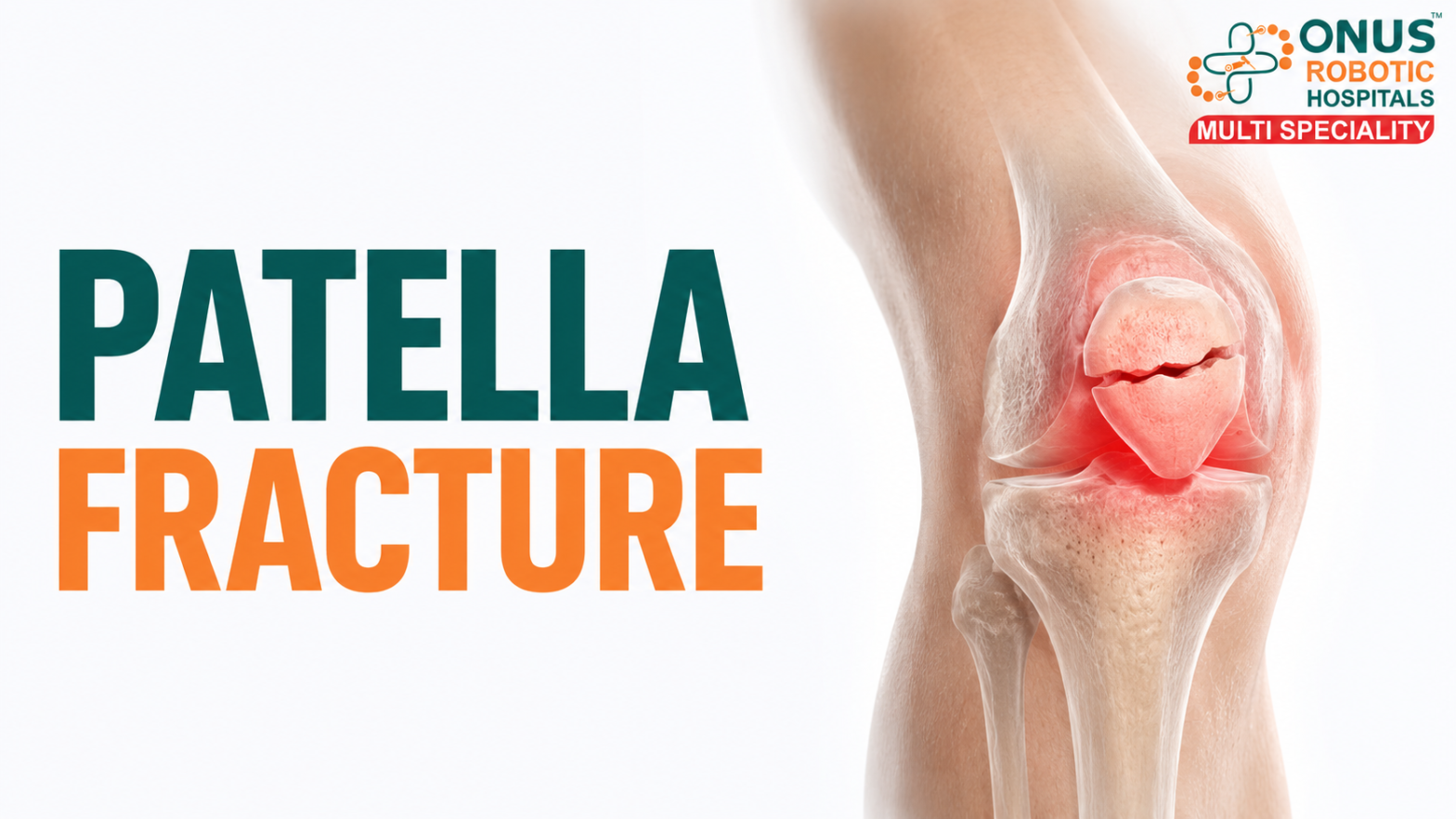
Common Symptoms of Patella Fracture
Patients with patella fracture may experience:
Severe knee pain
Swelling around the knee
Bruising near the kneecap
Difficulty walking
Inability to straighten the knee
Pain while bending the knee
Knee stiffness
Tenderness over the kneecap
Visible deformity in severe cases
Difficulty standing or bearing weight
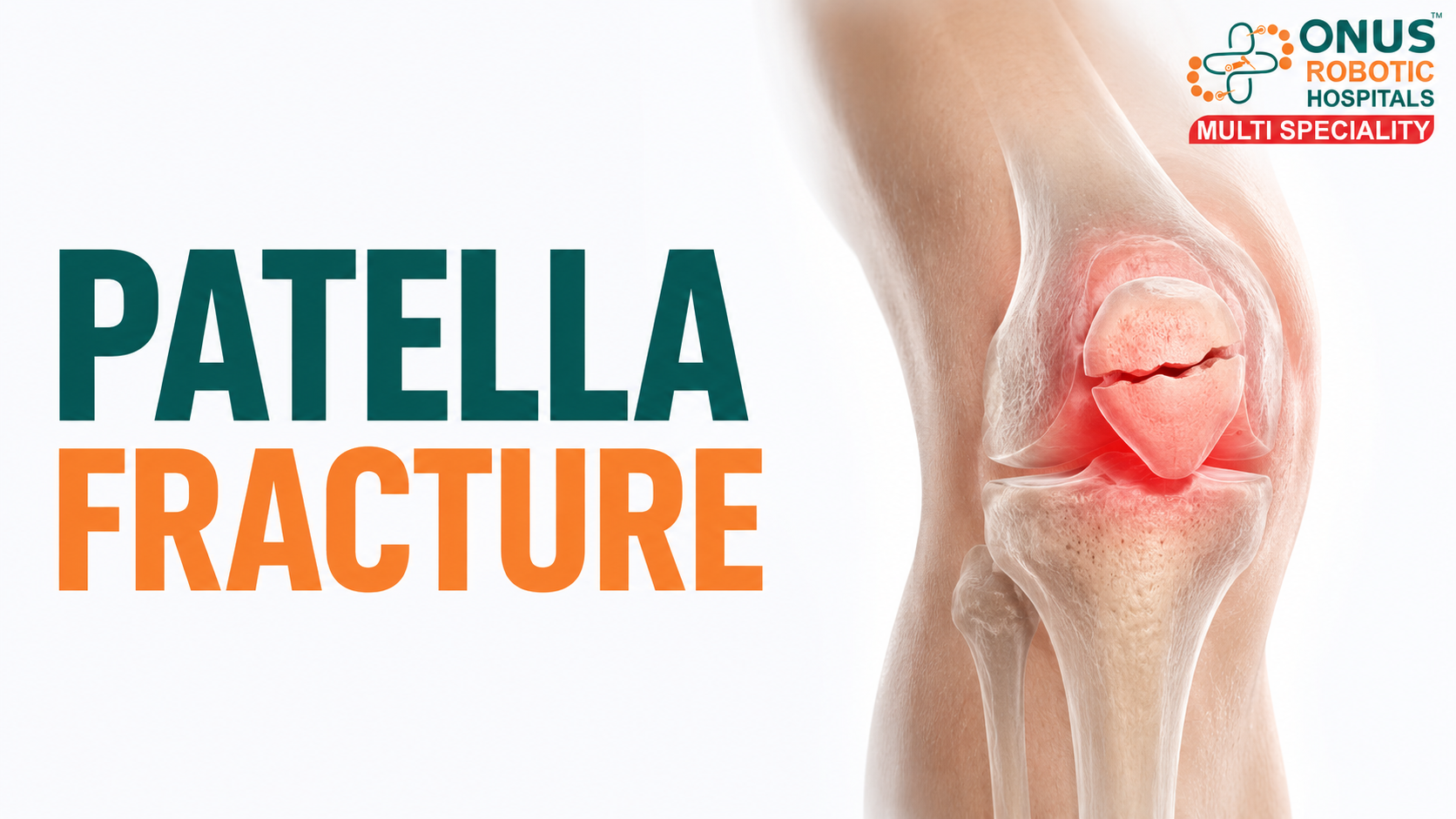
If a person cannot straighten the knee after injury, it may indicate disruption of the knee extensor mechanism and needs urgent orthopedic evaluation.
When Should You Consult a Doctor?
You should consult an orthopedic specialist immediately if you have:
Severe knee pain after a fall or accident
Swelling and bruising around the kneecap
Difficulty walking or standing
Inability to lift or straighten the leg
Visible deformity around the knee
Open wound after knee injury
Persistent pain after sports injury
Knee stiffness after trauma
Delaying treatment can lead to poor healing, stiffness, weakness, chronic pain, and difficulty in knee movement.
How Is Patella Fracture Diagnosed?
Diagnosis begins with a clinical examination. The doctor checks pain location, swelling, bruising, knee movement, leg straightening ability, and signs of open injury.
Common investigations include:
X-Ray
X-ray is usually the first test used to confirm a patella fracture. It helps identify the fracture pattern, displacement, and number of bone fragments.
CT Scan
CT scan may be advised in complex or comminuted fractures to understand the fracture pattern more clearly and plan surgery if required.
MRI
MRI is not required for every patella fracture but may be useful if there is suspicion of ligament, cartilage, tendon, or soft tissue injury.
Treatment Options for Patella Fracture
Treatment depends on the type of fracture and whether the knee straightening mechanism is intact.
1. Knee Immobilization
Stable fractures may be treated with a knee immobilizer, brace, or cast. The knee is kept straight for a period of time to allow the bone to heal.
2. Pain Management
Pain medicines, swelling control, ice application, elevation, and rest may be advised during the early recovery phase.
3. Restricted Weight Bearing
Depending on the fracture severity, the doctor may advise limited walking, walker support, or crutches for a few weeks.
4. Physiotherapy
Physiotherapy is important after initial healing to restore knee bending, muscle strength, balance, and walking ability. Exercises should be started only as advised by the doctor.
5. Surgery When Required
Surgery may be needed for displaced fractures, comminuted fractures, open fractures, or fractures where the patient cannot straighten the knee.
Surgical options may include fracture fixation using wires, screws, plates, tension band wiring, or other fixation methods depending on the fracture pattern.
The goal of surgery is to bring the bone fragments back into position, stabilize the fracture, restore knee movement, and help the patient return to daily activities.
Recovery After Patella Fracture
Recovery depends on the fracture type, treatment method, patient age, bone quality, and physiotherapy compliance.
In general, recovery may involve:
Initial immobilization
Gradual knee movement
Strengthening exercises
Walking training
Pain and swelling control
Regular follow-up X-rays
Return to normal activity in stages
Patients should avoid early bending, heavy weight-bearing, or unsupported walking unless advised by the orthopedic doctor.
Possible Complications If Ignored
Untreated or poorly treated patella fractures can lead to:
Chronic knee pain
Knee stiffness
Weakness while walking
Difficulty climbing stairs
Reduced knee bending
Poor fracture healing
Post-traumatic arthritis
Long-term disability
Inability to straighten the knee properly
Early treatment improves the chances of better knee function and long-term recovery.
Expert Patella Fracture Care at ONUS Robotic Hospitals
At ONUS Robotic Hospitals, patients with patella fractures, knee injuries, trauma cases, sports injuries, and complex orthopedic conditions receive advanced evaluation and personalized treatment.
With facilities such as X-ray, CT scan, MRI, trauma care, advanced orthopedic surgery, and rehabilitation support, patients can receive accurate diagnosis and appropriate treatment planning.
For Appointments:
Dr. Balaraju Naidu, Robotic Orthopedic Surgeon
ONUS Robotic Hospitals – Hyderabad
👉 link: contact-us or book-appointment