ENT Emergency First Aid Tips: What to Do Before Reaching the Hospital- By Dr. Akshitha Reddy, ENT Specialist, ONUS Robotic Hospitals
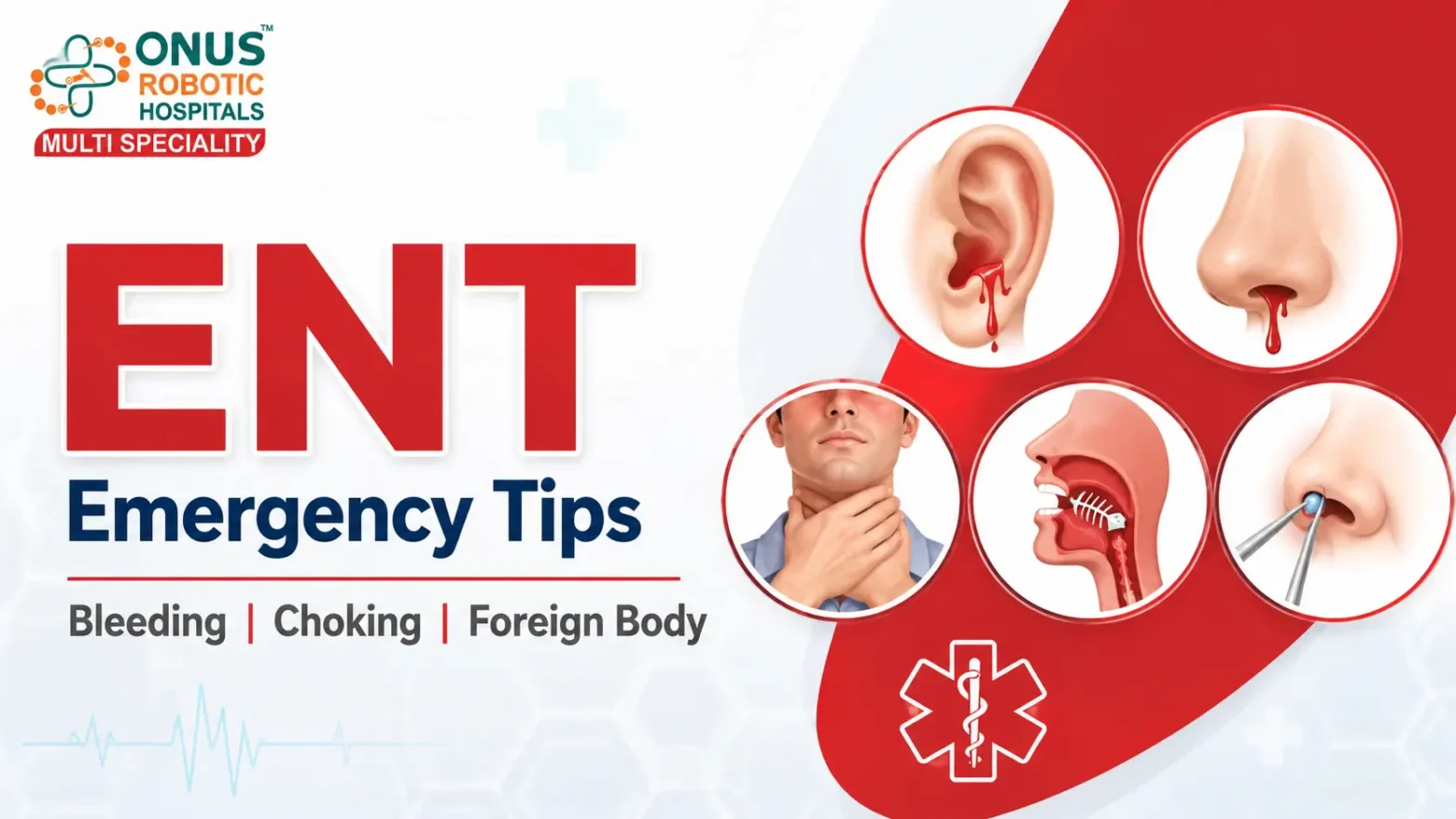
ENT emergencies can happen suddenly at home, school, workplace, while eating, during travel, or after an injury. Situations like ear bleeding, nose bleeding, food choking, fish bone stuck in the throat, and children inserting foreign objects into the ear or nose need quick identification and proper first aid.
In this important emergency awareness session, Dr. Akshitha Reddy, Consultant ENT Head & Neck Surgeon at ONUS Robotic Hospitals, explained life-saving ENT emergency tips and first aid instructions to ambulance staff.
The main goal of ENT emergency care is to avoid panic, prevent harmful home remedies, give correct first aid, and shift the patient to medical care when needed.
Why ENT Emergency Awareness Is Important
Many ENT emergencies look simple in the beginning but can become serious if handled wrongly. For example, forcefully removing a foreign body from a child’s ear or nose can push it deeper. Incorrect handling of choking can delay oxygen supply. Pouring oil or using sharp objects in the ear can worsen injury. Delaying care after fish bone injury may lead to infection or swelling.
Proper first aid can reduce complications and help the doctor treat the patient safely.
Common ENT Emergencies
ENT emergencies commonly include:
Ear bleeding
Nose bleeding
Food choking
Fish bone stuck in throat
Foreign body in ear
Foreign body in nose
Sudden breathing difficulty due to throat blockage
Injury to ear, nose, or throat
Bleeding after trauma
Each situation needs a different first aid approach. The most important rule is: do not attempt unsafe removal or aggressive handling at home.
1. Ear Bleeding: What to Do Immediately
Ear bleeding may occur due to injury, ear cleaning with sharp objects, road traffic accidents, falls, foreign body injury, ear infection, or eardrum injury.
Common Causes of Ear Bleeding
Trauma to the ear
Cotton bud or sharp object injury
Foreign body injury
Ear infection
Eardrum perforation
Head injury
Road traffic accident
Sudden pressure injury
First Aid for Ear Bleeding
Keep the patient calm
Do not insert cotton buds, pins, keys, or fingers into the ear
Do not pour oil, water, or ear drops without medical advice
Do not try to clean deep inside the ear
If bleeding is from outer ear injury, gently cover with clean gauze
If there is head injury, dizziness, vomiting, or unconsciousness, treat it as an emergency
Take the patient to an ENT specialist immediately
Warning Signs
Severe ear pain
Hearing loss
Dizziness
Vomiting
Bleeding after head injury
Clear fluid discharge from ear
Loss of consciousness
Facial weakness
These signs need urgent medical evaluation.
2. Nose Bleeding: How to Stop It Safely
Nose bleeding, also called epistaxis, is common in children and adults. It may happen due to nose picking, dry weather, injury, high blood pressure, allergy, infection, blood-thinning medicines, or trauma.
First Aid for Nose Bleeding
Make the patient sit upright
Ask the patient to lean slightly forward
Pinch the soft part of the nose for 10 minutes
Ask the patient to breathe through the mouth
Do not make the patient lie down
Do not tilt the head backward
Do not insert tissue deep inside the nose
Apply cold compression over the nose bridge if available
If bleeding does not stop, shift to hospital
What Not to Do
Do not tilt the head back
Do not blow the nose immediately
Do not put sharp objects or deep cotton packing
Do not panic if blood comes from the front of the nose
Do not delay if bleeding is heavy or recurrent
When Nose Bleeding Needs Emergency Care
Bleeding continues beyond 10–15 minutes
Bleeding after accident or facial injury
Patient is elderly or on blood thinners
Patient has high blood pressure
Repeated nose bleeding
Patient feels dizzy or weak
Bleeding is heavy
3. Food Choking: First Aid for Children and Adults
Food choking is a serious emergency. It happens when food or another object blocks the airway. The patient may be unable to breathe, cough, speak, or cry properly.
Common Signs of Choking
Sudden coughing while eating
Inability to speak
Difficulty breathing
Holding the throat
Noisy breathing
Blue lips
Panic or restlessness
Collapse in severe cases
What to Do During Choking
If the patient is coughing forcefully, encourage coughing
Do not put fingers blindly into the mouth
Do not give water while the patient is choking
Do not make the person lie down
Call emergency support if breathing is affected
Ambulance staff should follow trained choking rescue protocols
If the patient becomes unconscious, emergency resuscitation is needed
Important Note
Choking first aid differs for adults, children, and infants. Ambulance staff and caregivers should be trained properly in age-appropriate choking rescue methods.
4. Fish Bone Stuck in Throat: What Should You Do?
Fish bone injury is a common ENT emergency. A small fish bone may get stuck in the tonsil area, throat, or food pipe region. Patients may feel pricking pain, difficulty swallowing, throat discomfort, or foreign body sensation.
Symptoms of Fish Bone Stuck in Throat
Sharp pain while swallowing
Feeling something stuck in throat
Throat irritation
Difficulty eating
Pain on one side of throat
Coughing or gagging
Blood-stained saliva in some cases
What Not to Do
Do not forcefully swallow rice balls, bananas, or large food pieces
Do not try to remove it with fingers
Do not use home tools or sharp objects
Do not ignore persistent pain
Do not delay if breathing difficulty develops
Correct Action
Avoid further eating
Keep the patient calm
Do not attempt blind removal
Consult an ENT specialist for proper examination and safe removal
Early removal prevents swelling, infection, deeper injury, and complications.
5. Foreign Body in Ear: Common in Children
Children may insert beads, seeds, paper, erasers, toy parts, stones, insects, or small objects into the ear. Adults may also develop foreign body-related problems due to cotton buds or insects entering the ear.
Symptoms
Ear pain
Ear blockage
Reduced hearing
Crying or irritability in children
Discharge
Bleeding
Sensation of something moving in the ear
Foul smell in delayed cases
What to Do
Do not insert cotton buds or instruments
Do not pour oil or water unless advised by doctor
Do not try to remove round objects at home
Do not slap or shake the child
Bring the child to an ENT specialist
Incorrect removal attempts can push the object deeper or damage the ear canal and eardrum.
6. Foreign Body in Nose: What Parents Should Know
Foreign bodies in the nose are common in children. They may insert small toys, seeds, beads, food particles, paper, or button batteries.
Symptoms
One-sided nasal blockage
Foul-smelling discharge
Nose bleeding
Pain or irritation
Repeated sneezing
Child pointing to nose
Breathing discomfort in rare cases
Important Warning: Button Battery
A button battery in the nose is a serious emergency. It can cause tissue damage quickly and must be removed urgently by a doctor.
What Not to Do
Do not try to remove with forceps at home
Do not push the object deeper
Do not ask the child to repeatedly sniff inward
Do not delay if there is foul smell or bleeding
Do not ignore button battery suspicion
What Ambulance Staff Should Remember
ENT emergencies need calm handling and quick decision-making. Ambulance staff should focus on:
Airway safety
Bleeding control
Patient positioning
Avoiding blind removal attempts
Identifying danger signs
Keeping the patient calm
Quick transfer to appropriate medical care
Informing the receiving hospital about the emergency
When Should You Rush to the Hospital?
Immediate medical care is needed if there is:
Breathing difficulty
Severe choking
Blue lips or unconsciousness
Heavy nose bleeding
Bleeding after head injury
Fish bone with severe pain or swallowing difficulty
Foreign body in nose or ear
Button battery suspected
Severe ear pain with bleeding
Child in distress
Repeated vomiting, dizziness, or weakness after trauma
Why You Should Avoid Unsafe Home Remedies
Many complications happen not because of the original problem, but because of wrong handling. Unsafe attempts can cause bleeding, infection, deeper injury, airway obstruction, eardrum damage, or delayed treatment.
Avoid:
Putting oil in ear
Using pins, keys, sticks, or cotton buds
Blind finger removal during choking
Forcing food to push fish bone down
Deep nasal packing without medical guidance
Home removal of nose or ear foreign bodies
Ignoring emergency symptoms
Expert ENT Emergency Care at ONUS Robotic Hospitals
At ONUS Robotic Hospitals, patients with ear bleeding, nose bleeding, choking-related ENT concerns, throat foreign body, fish bone injuries, ear foreign body, nose foreign body, and emergency ENT problems receive timely evaluation and treatment.
Early diagnosis and proper first aid can prevent complications and support safer recovery.
For Appointments:
👩⚕️ Dr. Akshitha Reddy
ENT Specialist
Providing ethical, evidence-based care for ear, nose, throat, sinus, and airway conditions.
ONUS Robotic Hospitals – Hyderabad
👉 link: contact-us or book-appointment