Childhood Stroke: A Rare but Real Medical Emergency – By Dr.Krishna Chaithanya Reddy, Neurologist, ONUS Robotic Hospitals
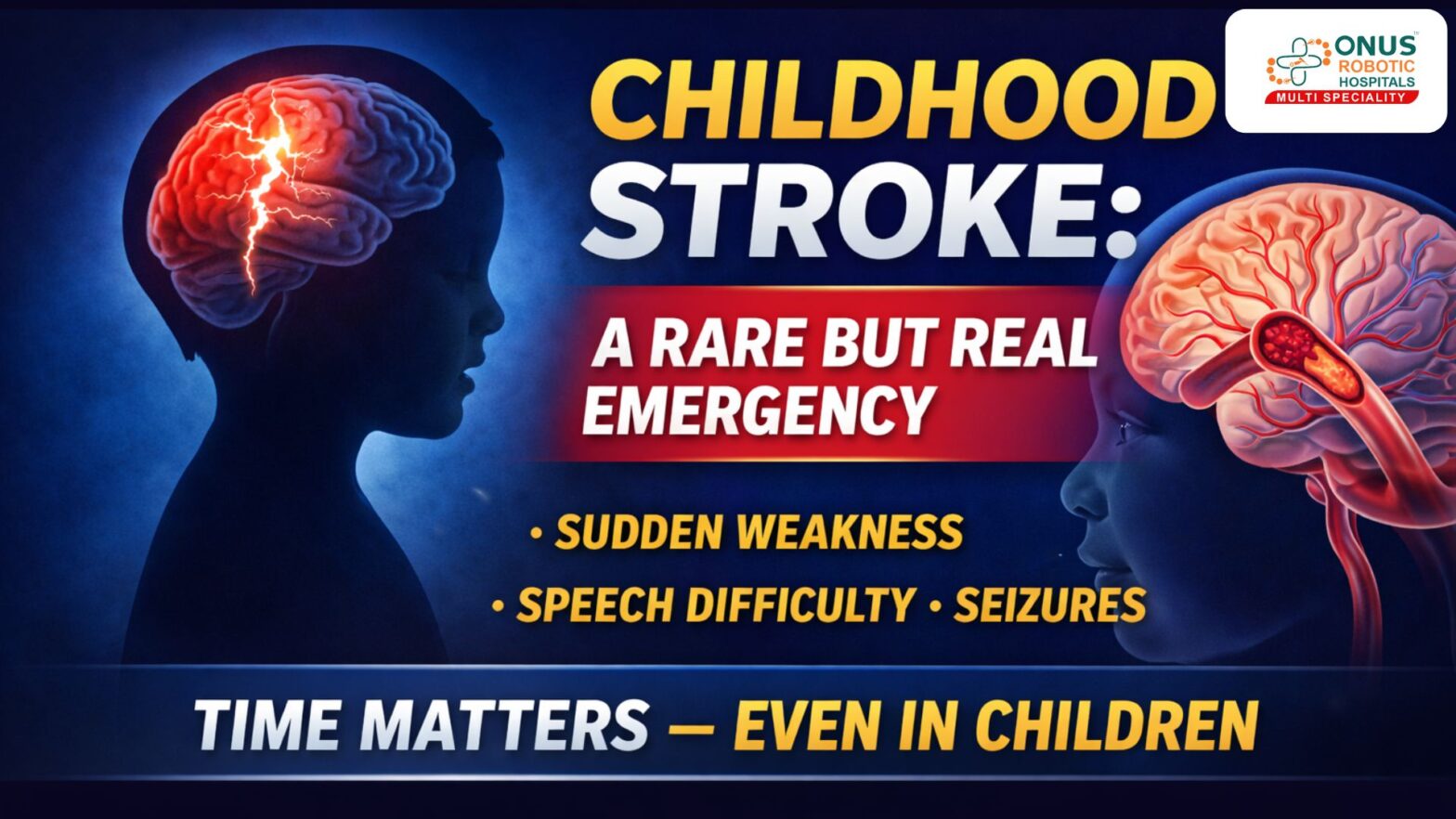
When most people hear the word “stroke,” they associate it with elderly individuals. However, stroke can occur in children — including newborns. Although uncommon, childhood stroke is a serious neurological emergency that requires immediate medical attention. Early recognition and treatment can significantly reduce the risk of lifelong disability.
Understanding childhood stroke is critical for parents, caregivers, and healthcare providers.
📊 How Common Is Childhood Stroke?
Childhood stroke occurs in approximately 2–13 per 100,000 children per year. While rare, it is more common than many people realize.
It is especially seen in:
-
Newborns (Perinatal stroke)
-
Children with congenital heart disease
-
Children with blood disorders such as sickle cell disease
-
Those with clotting abnormalities
Because symptoms may be subtle or misinterpreted, diagnosis is sometimes delayed.
🧠 What Is Childhood Stroke?
A stroke occurs when blood flow to a part of the brain is interrupted, leading to damage of brain tissue.
There are two main types:
1️⃣ Ischemic Stroke (More Common)
Occurs due to blockage of a blood vessel supplying the brain. This prevents oxygen delivery and damages brain cells.
2️⃣ Hemorrhagic Stroke
Occurs when a blood vessel ruptures, causing bleeding within the brain.
Both types require urgent evaluation.
🚨 Symptoms of Childhood Stroke
Symptoms differ between older children and infants.
In Older Children:
-
Sudden weakness of face, arm, or leg (usually one side)
-
Slurred speech
-
Sudden severe headache
-
Seizures
-
Difficulty walking or imbalance
-
Sudden vision changes
In Infants:
-
Seizures (often the first sign)
-
Poor feeding
-
Reduced movement of one side of the body
-
Unexplained irritability
-
Developmental delays noticed later
⚠️ Any sudden neurological change in a child should be treated as an emergency.
🎯 Causes of Stroke in Children
Unlike adults — where high blood pressure, diabetes, and cholesterol dominate — children have different underlying causes:
-
Congenital heart defects
-
Sickle cell disease
-
Severe infections (meningitis, varicella)
-
Arteriopathies (e.g., Moyamoya disease)
-
Neck vessel trauma
-
Clotting disorders
-
Autoimmune diseases
-
Genetic conditions
Identifying the underlying cause is essential for preventing recurrence.
🩺 How Is Childhood Stroke Diagnosed?
Prompt imaging is critical.
Diagnosis may include:
-
MRI Brain with Angiography
-
CT Scan (in emergency settings)
-
Blood tests (clotting profile, autoimmune markers)
-
Echocardiography (to assess heart abnormalities)
-
Infection screening
Early imaging significantly improves outcomes.
💊 Treatment of Childhood Stroke
Treatment depends on the cause and type of stroke.
Management options include:
-
Antiplatelet therapy (e.g., aspirin)
-
Anticoagulation (in selected cases)
-
Treatment of underlying infection or disorder
-
Rarely, thrombolysis in highly selected cases
-
Intensive rehabilitation therapy
Early physiotherapy, occupational therapy, and speech therapy are crucial components of recovery.
🧒 Long-Term Outcomes
Children’s brains have remarkable neuroplasticity, meaning recovery can be better than adults in some cases.
However, some children may develop:
-
Persistent weakness
-
Epilepsy
-
Learning difficulties
-
Behavioral issues
-
Cognitive challenges
Early rehabilitation significantly improves long-term function.
🔑 Important Message for Parents
If your child develops:
-
Sudden weakness
-
Sudden speech difficulty
-
Sudden imbalance
-
New-onset seizures
👉 Do not assume it is minor or temporary.
Seek emergency medical care immediately.
Time matters — even in children.
For Appointments:
Dr. Krishna Chaithanya Reddy
Consultant – Interventional Neurologist
ONUS Robotic Hospitals – Hyderabad
👉 link: contact-us or book-appointment