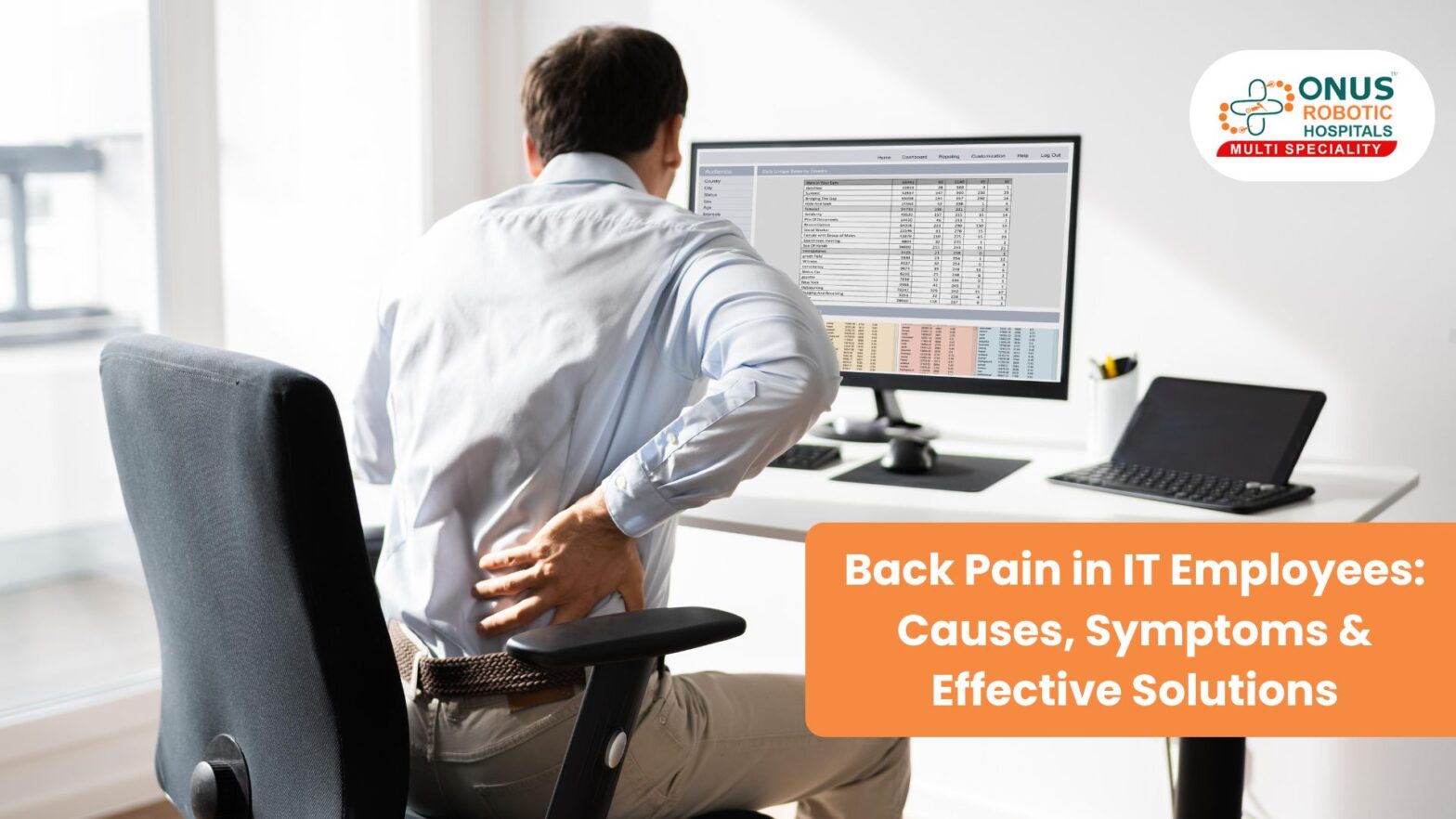
Back Pain in IT Employees: Causes, Symptoms & Effective Solutions: Dr. Balaraju Naidu, Robotic Orthopedic Surgeon – ONUS Robotic Hospitals
In the modern work culture, especially in the IT and corporate sectors, back pain has become one of the most common health problems. Long hours of sitting, continuous computer usage, and minimal movement gradually put a lot of stress on the spine. Over time, this leads to muscle stiffness, disc problems, and nerve-related pain.
Why is Back Pain So Common in IT Jobs?
Most IT employees spend 8–12 hours a day seated in front of a computer. When the body remains in the same posture for long durations:
- The natural curve of the spine gets disturbed.
- Back and neck muscles become tight.
- Blood flow decreases to the spinal discs.
- The core muscles weaken, leading to poor support for the spine.
Even a good ergonomic chair cannot help if the posture is incorrect or if breaks are not taken regularly.
Common Causes of Back Pain Among IT Professionals
- Poor Posture
Slouching, leaning forward, or sitting without back support can strain the spine. - Sedentary Lifestyle
Lack of exercise leads to weak core muscles and reduced flexibility. - Improper Desk Setup
Screen too low or high, chair height mismatch, or unsupported arms can increase stress on the back and neck. - Stress & Mental Fatigue
Stress increases muscle tension, leading to pain and stiffness. - Prolonged Screen Time
Encourages neck bending, leading to cervical pain that radiates to shoulders and upper back.
Symptoms You Should Not Ignore
While occasional discomfort is common, certain signs indicate a more serious problem:
- Pain radiating to the legs
- Tingling or numbness in legs or feet
- Sharp pain while bending or standing
- Weakness in legs
- Pain that does not improve even after rest
These may suggest a disc bulge or sciatica, and early treatment is essential.
Simple Lifestyle Changes to Reduce Back Pain
1. Follow the 45-10 Rule
Work for 45 minutes → Take a 5–10 minute break to stand, stretch, or walk.
2. Maintain Correct Sitting Posture
- Ensure your back is supported
- Keep feet flat on the floor
- Screen should be at eye level
- Avoid leaning forward
3. Perform Desk Stretching
A few stretches every day can significantly reduce pain:
- Neck & shoulder rolls
- Chest stretch
- Hamstring stretch
- Cat-cow stretch (seated variation)
4. Strengthen Your Core
The spine relies on core muscles for support.
Include simple exercises like:
- Planks
- Bridges
- Superman
Even 10 minutes a day can build strong back support.
Medical Treatment Options
If the pain is persistent, consult a specialist.
Treatment may include:
- Physiotherapy for muscle release & posture correction
- Heat / Cold therapy
- Strengthening Exercises
- Spinal Decompression / Traction (if disc issues)
- Nerve Release Exercises
- Pain-relief medications, if required
- In rare cases of severe nerve compression, Minimally Invasive Spine Procedures may be recommended.
Surgery is rarely needed, and is usually considered only when there is severe weakness or failure of conservative treatments.
Conclusion
Back pain in IT employees is largely preventable.
Small workplace changes, regular stretching, and core strengthening can make a huge difference.