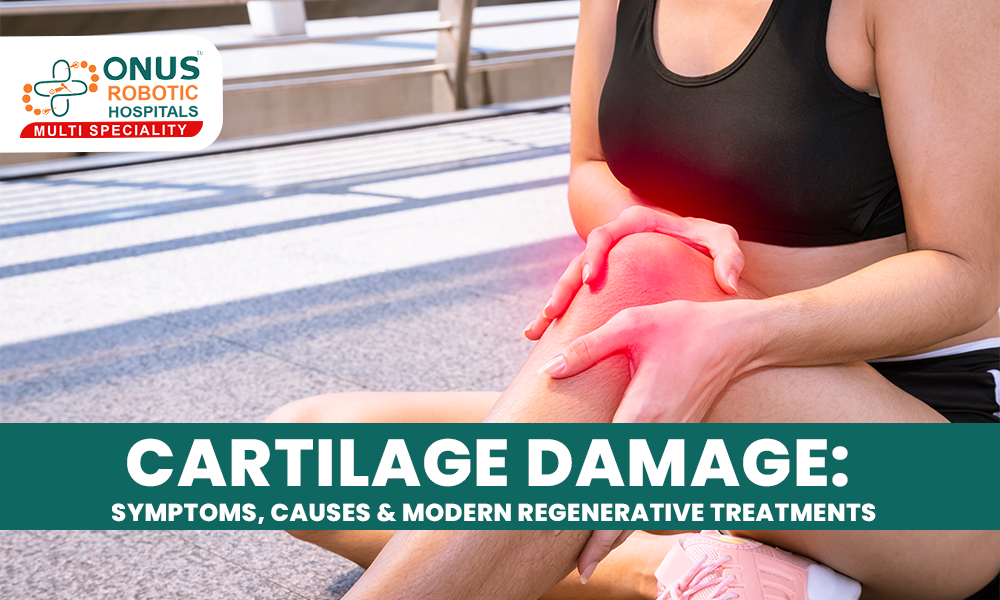
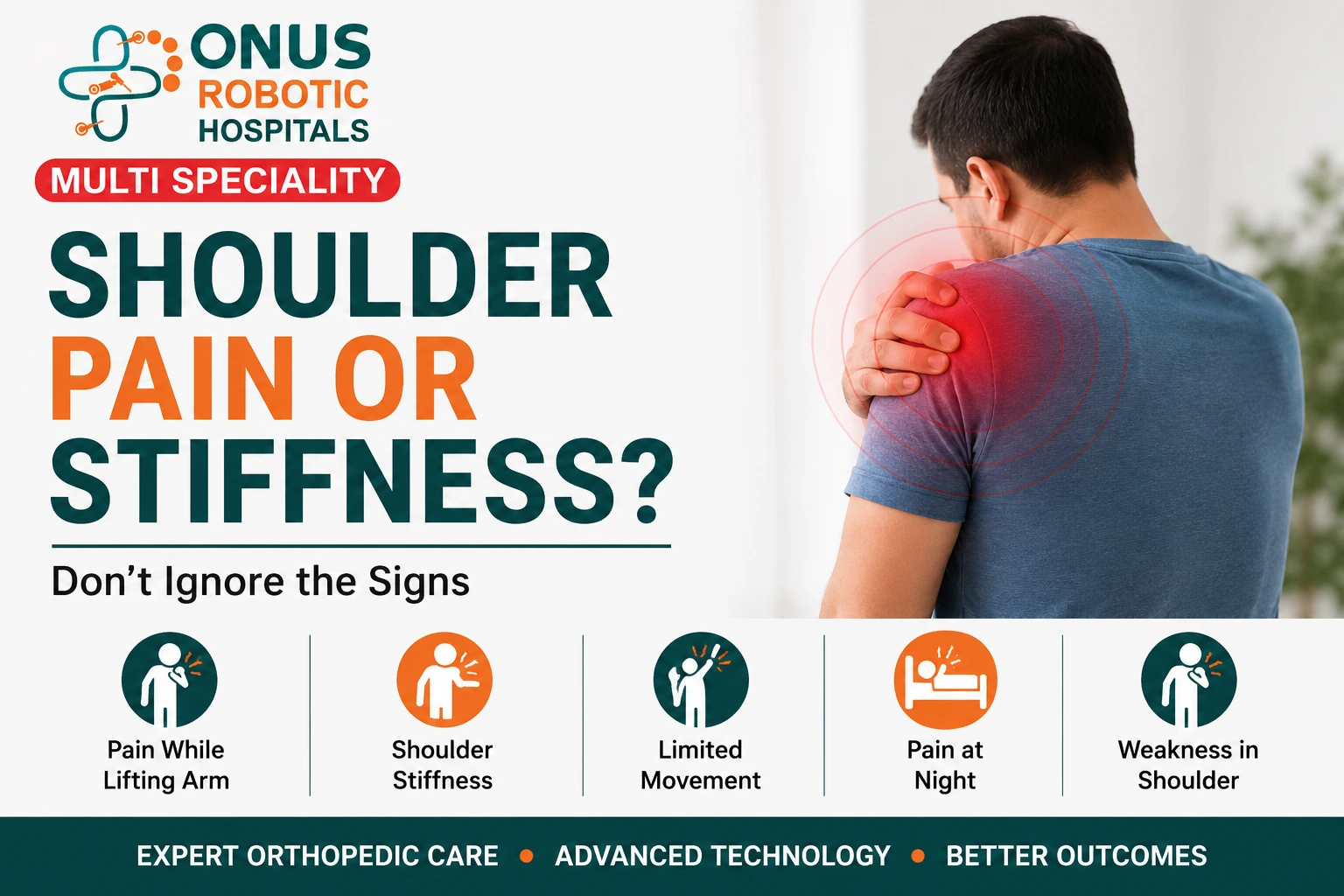
Cartilage Damage: Symptoms, Causes & Modern Regenerative Treatments: Dr. Balaraju Naidu, Robotic Orthopedic Surgeon – ONUS Robotic Hospitals
Introduction
Cartilage is the smooth, rubber-like tissue that cushions our joints and allows pain-free movement. Unlike skin or muscle, cartilage has no direct blood supply, which makes healing slow and often incomplete after injury. When cartilage is damaged — either due to trauma, wear and tear, or joint disease — it can lead to persistent pain, stiffness, and even early arthritis.
At Onus Robotic Hospitals, Dr. Balaraju Naidu and his team combine precision robotic surgery with regenerative orthopedic techniques to restore joint health and function — often helping patients avoid or delay joint replacement.
Understanding Cartilage and Its Role
Cartilage acts as a shock absorber between bones. It reduces friction, supports movement, and distributes joint load evenly.
There are three main types:
- Hyaline Cartilage: Found in joints — most commonly damaged type.
- Fibrocartilage: Found in the knee meniscus and intervertebral discs.
- Elastic Cartilage: Found in the ear and nose.
When hyaline cartilage wears out, bones start to rub against each other, leading to pain, swelling, and restricted mobility.
Common Causes of Cartilage Damage
Cartilage damage can occur due to several reasons:
- Sports or Traumatic Injury – Sudden twisting, falling, or impact can tear the cartilage.
- Age-Related Degeneration – Cartilage naturally thins out with age, increasing friction and stiffness.
- Repetitive Stress – Overuse in athletes, runners, or workers who do repetitive motions.
- Joint Misalignment or Imbalance – Uneven load distribution causes local wear.
- Obesity – Extra weight increases pressure on knee and hip joints.
- Arthritis – Osteoarthritis gradually erodes cartilage and bone surfaces.
Symptoms of Cartilage Damage
Cartilage injuries can be subtle at first, but progress over time. Look out for:
- Deep, aching joint pain during movement
- Swelling or stiffness after activity or rest
- Grinding or clicking sounds (crepitus) in the joint
- Reduced flexibility or range of motion
- Locking or giving way sensation in advanced cases
If untreated, cartilage damage can worsen and lead to early-onset arthritis, requiring major interventions later.
Diagnosis: How Doctors Identify Cartilage Damage
Dr. Balaraju Naidu uses a combination of clinical evaluation and advanced imaging:
- MRI Scans: Provide detailed view of cartilage quality and defects
- X-Rays: Help rule out bone changes or arthritis
- Arthroscopy: A minimally invasive diagnostic procedure to inspect the joint directly
Modern Regenerative and Surgical Treatments
1. Non-Surgical Regenerative Options
For early-stage damage, biological and regenerative therapies can stimulate healing and protect remaining cartilage:
- Platelet-Rich Plasma (PRP) Therapy: Uses patient’s own platelets to boost repair and reduce inflammation.
- Stem Cell Therapy: Mesenchymal stem cells (from bone marrow or fat) help regenerate cartilage tissue.
- Viscosupplementation (Hyaluronic Acid Injections): Improves joint lubrication and reduces pain.
These treatments are ideal for younger, active patients and can delay the need for surgery.
2. Minimally Invasive Surgical Techniques
When damage is moderate to severe, robotic-assisted procedures offer high precision and faster recovery.
Microfracture Surgery
Tiny holes are made in the underlying bone to release marrow cells that form new cartilage.
Autologous Chondrocyte Implantation (ACI)
Healthy cartilage cells are harvested, cultured in the lab, and re-implanted into the damaged area.
Osteochondral Grafting (Mosaicplasty)
Healthy cartilage from a non-weight-bearing area is transplanted to the damaged site.
Robotic-Assisted Realignment or Partial Joint Replacement
For advanced damage with deformity, Dr. Naidu uses robotic navigation systems to ensure accurate alignment, balance, and long-lasting results — preserving as much natural bone and tissue as possible.
Rehabilitation and Long-Term Care
After treatment, physiotherapy and lifestyle management are crucial:
- Guided strengthening exercises
- Weight management
- Low-impact activities like swimming or cycling
- Avoiding repetitive stress or high-impact sports
At Onus Robotic Hospitals, the rehabilitation program is customized for each patient to restore movement, reduce pain, and prevent recurrence.
When to See a Specialist
If you experience persistent joint pain, swelling, or stiffness lasting more than a few weeks, consult an orthopedic specialist. Early diagnosis can prevent cartilage loss and improve long-term joint health.
Dr. Balaraju Naidu’s Message
“Cartilage damage is not always a one-way path to arthritis. With the right diagnosis, modern regenerative medicine, and precision surgical tools, we can help patients regain pain-free mobility and protect their natural joints for years to come.”
Why Choose Onus Robotic Hospitals
- Robotic & Computer-Assisted Orthopedic Surgeries
- Advanced Imaging & Diagnostics
- Regenerative Orthopedic Therapies (PRP, Stem Cell)
- Personalized Rehabilitation Programs
- Multidisciplinary Joint Care Team