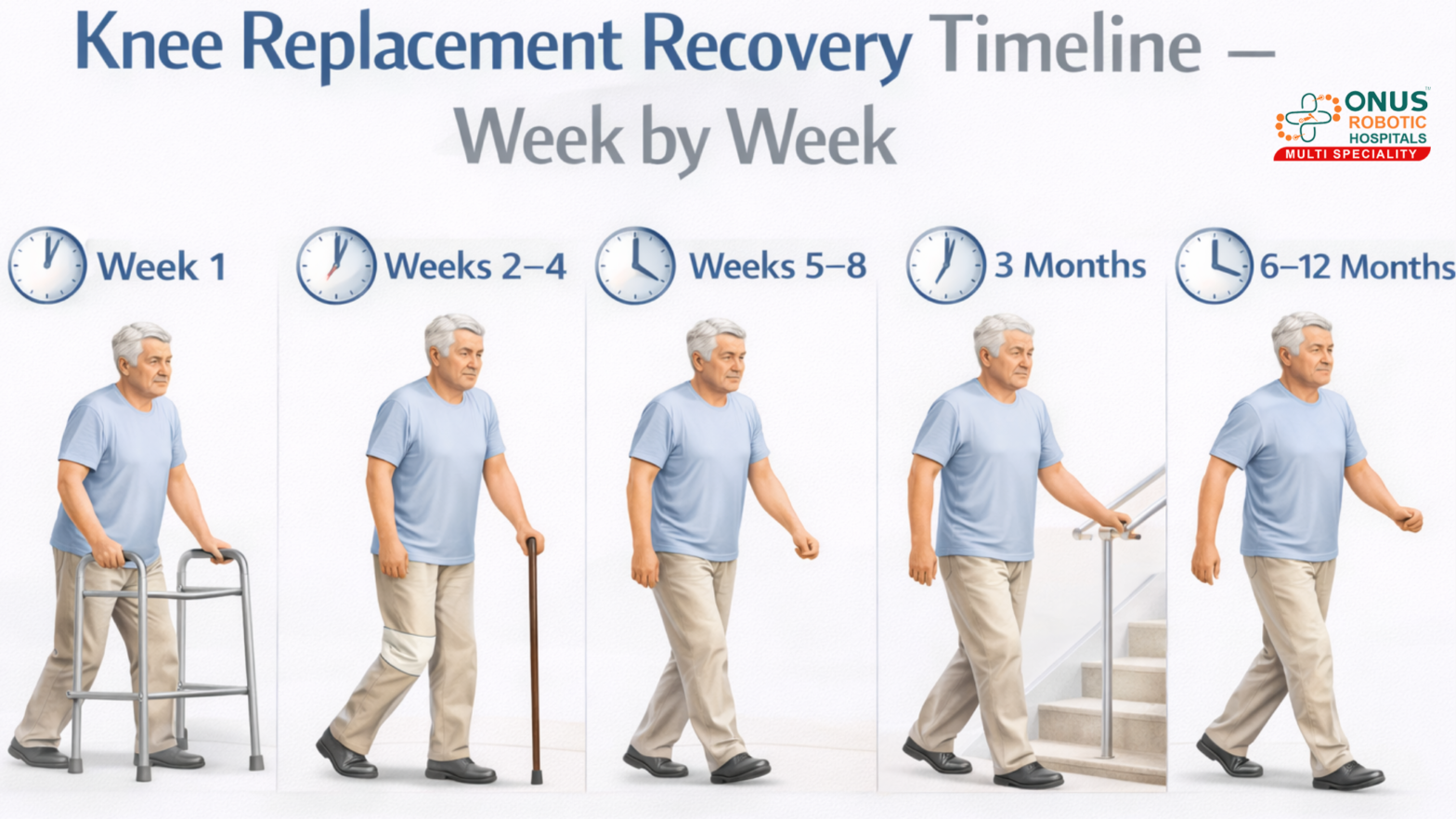
Knee Replacement Recovery Timeline – Week by Week Guide – By Dr. Balaraju Naidu, Robotic Orthopedic Surgeon, ONUS Robotic Hospitals
Knee replacement surgery is one of the most successful orthopedic procedures for relieving chronic knee pain caused by advanced arthritis. While the surgery itself is highly effective, recovery is a gradual process that requires structured rehabilitation and patient commitment.
Understanding what to expect after surgery helps patients prepare mentally and physically for the recovery journey.
This week-by-week guide explains how mobility, strength, and function improve after knee replacement.
What Happens After Knee Replacement Surgery?
During a Total knee replacement, the damaged cartilage and bone surfaces of the knee joint are replaced with artificial implants that restore smooth joint movement.
After surgery, recovery depends on:
-
Physiotherapy
-
Muscle strengthening
-
Joint mobility exercises
-
Pain management
-
Overall health and fitness
Most patients begin walking within 24 hours after surgery.
Knee Replacement Recovery Timeline
Immediate Post-Operative Phase (Days 1–7)
The first week focuses on early mobilization and preventing complications.
Patients typically:
-
Stand and walk within 24 hours after surgery
-
Use a walker for support
-
Begin gentle knee bending exercises
-
Start physiotherapy in the hospital
Goals during this stage:
-
Control pain and swelling
-
Improve blood circulation
-
Initiate knee movement
-
Prevent stiffness and blood clots
Most patients are discharged within 3–5 days, depending on recovery and medical condition.
Weeks 2–4: Early Mobility Phase
During the second to fourth week, mobility begins to improve gradually.
Typical progress includes:
-
Reduced pain and swelling
-
Transition from walker to walking stick or cane
-
Improved knee bending (range of motion)
-
Increased confidence while walking
Patients continue physiotherapy focusing on:
-
Quadriceps strengthening
-
Knee flexion exercises
-
Balance training
-
Gait correction
By the end of the first month, many patients can walk short distances comfortably.
Weeks 5–8: Strength Recovery Phase
Between the fifth and eighth week, significant improvements occur.
Most patients experience:
-
Improved muscle strength
-
Better joint stability
-
Increased walking endurance
-
Reduced dependency on walking aids
Patients can often resume basic daily activities such as:
-
Walking longer distances
-
Light household work
-
Driving short distances (if advised by the surgeon)
Physiotherapy continues to focus on strengthening muscles around the knee.
Around 3 Months: Major Functional Recovery
By 12 weeks after surgery, most functional recovery occurs.
Patients usually achieve:
-
Comfortable walking without support
-
Improved stair climbing
-
Better joint flexibility
-
Reduced pain during daily activities
At this stage, many patients return to routine lifestyle activities.
Low-impact activities like cycling and swimming may be recommended.
6–12 Months: Full Recovery Phase
The knee continues to improve gradually over the next several months.
During this phase:
-
Muscle strength continues to increase
-
Walking confidence improves
-
Balance and coordination stabilize
-
Patients regain normal activity levels
By 6–12 months, most patients achieve their maximum functional recovery.
Key Factors That Influence Recovery
Recovery speed varies among patients and depends on several important factors.
1️⃣ Preoperative Muscle Condition
Stronger muscles before surgery lead to faster recovery.
2️⃣ Surgical Accuracy
Proper implant alignment and balancing improve joint function and recovery outcomes.
3️⃣ Physiotherapy Compliance
Patients who follow rehabilitation programs strictly recover faster.
4️⃣ Body Weight
Excess weight increases stress on the knee joint.
5️⃣ Overall Health
Conditions like diabetes, obesity, and cardiovascular disease can influence recovery.
Tips for Faster Knee Replacement Recovery
✔ Follow physiotherapy regularly
✔ Perform strengthening exercises daily
✔ Maintain a healthy body weight
✔ Avoid high-impact activities
✔ Eat a balanced diet rich in protein
✔ Stay active but avoid overexertion
Consistency in rehabilitation plays a crucial role.
Final Thought
Knee replacement surgery provides excellent pain relief and restores mobility.
However, successful recovery depends more on rehabilitation discipline than surgery alone.
Patients who commit to physiotherapy, maintain healthy habits, and follow medical guidance achieve the best long-term outcomes.
For Appointments:
Dr. Balaraju Naidu, Robotic Orthopedic Surgeon
ONUS Robotic Hospitals – Hyderabad
👉 link: contact-us or book-appointment