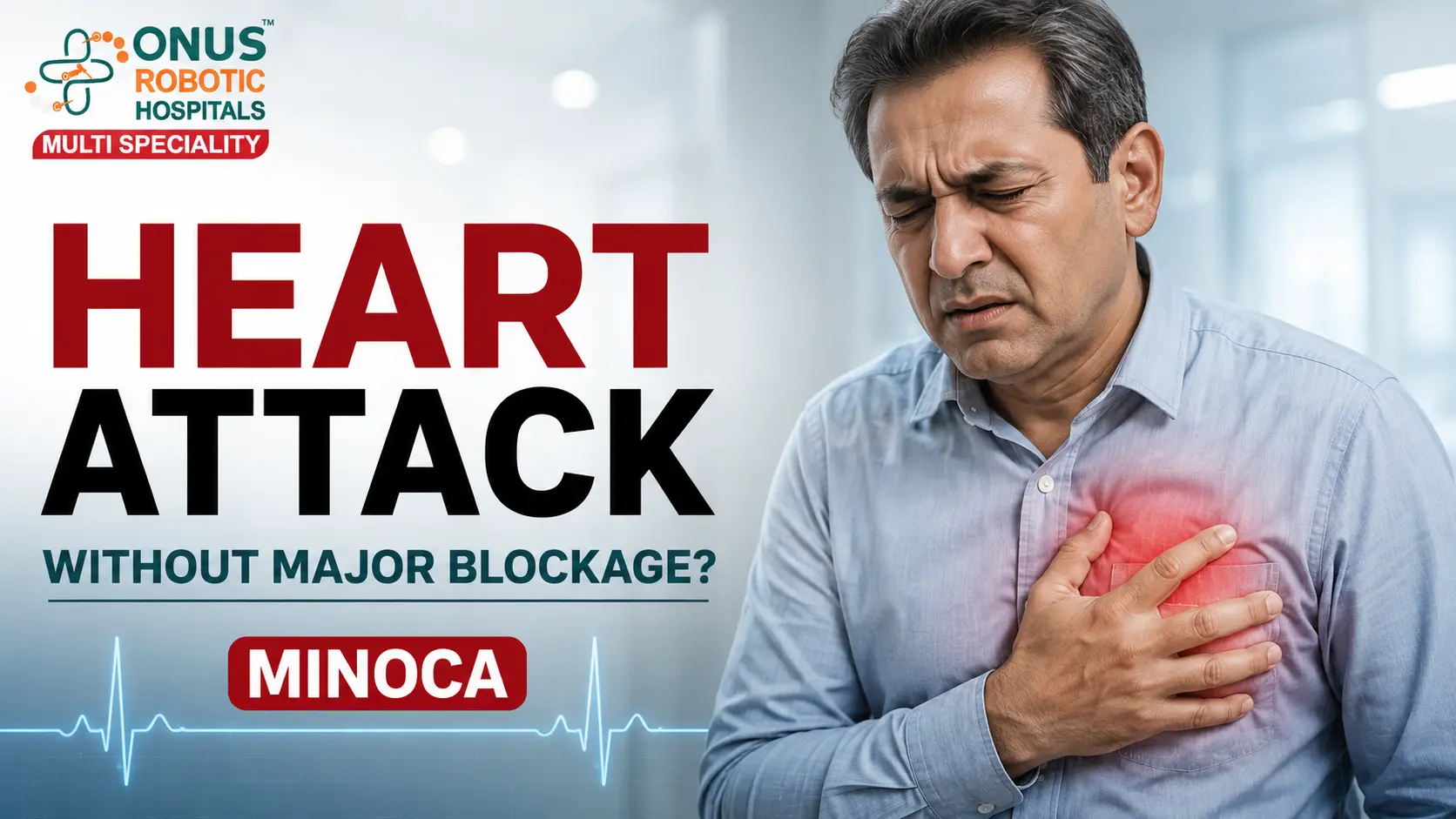
Possible Causes of MINOCA
1. Small Vessel Disease
The large coronary arteries may look normal, but the tiny blood vessels inside the heart muscle may not function properly. This can reduce blood flow and cause chest pain or heart injury.
2. Coronary Artery Spasm
A coronary artery can temporarily tighten or spasm, reducing blood flow to the heart. The spasm may settle before angiography, making the artery appear normal during testing.
3. Small Clot Formation
A clot may temporarily block blood flow and then dissolve before the angiogram is done. This can still injure the heart muscle.
4. Plaque Disruption
A small plaque rupture or erosion may occur without causing major visible blockage. Advanced imaging may sometimes be needed to detect such problems.
5. Spontaneous Coronary Artery Dissection
A tear can occur in the wall of a coronary artery, reducing blood flow. This may be more commonly discussed in younger women and needs careful cardiac evaluation.
6. Myocarditis
Inflammation of the heart muscle can mimic heart attack symptoms and cause elevated cardiac enzymes.
7. Takotsubo Syndrome
Also called stress cardiomyopathy, this condition can occur after severe emotional or physical stress and may mimic heart attack.
Cardiac MRI and advanced coronary imaging may help distinguish MINOCA from conditions like myocarditis and Takotsubo syndrome.
Why Chest Pain Should Not Be Ignored
Chest pain, sweating, breathlessness, chest heaviness, or sudden weakness should never be ignored—even if you are young, active, or have no known heart disease.
Seek urgent medical care if you have:
Chest pain lasting more than a few minutes
Chest heaviness or pressure
Breathlessness with sweating
Pain spreading to arm, jaw, shoulder, neck, or back
Sudden weakness or collapse
Repeated chest discomfort
Chest pain with nausea or dizziness
Symptoms during walking, climbing stairs, or stress
A normal-looking angiogram does not always mean there was no heart-related problem. Further cardiac evaluation may still be required.
How Is MINOCA Diagnosed?
Diagnosis usually involves a combination of clinical history, ECG, cardiac enzymes, echocardiography, angiography, and further tests when needed.
Tests may include:
ECG
Troponin or cardiac enzyme tests
2D Echo
Coronary angiography
Cardiac MRI
CT coronary evaluation in selected cases
Advanced coronary imaging such as OCT or IVUS in selected cases
Evaluation for spasm or microvascular disease
Blood tests for risk factors and inflammation
The ESC position paper emphasizes that MINOCA diagnosis requires evidence of acute myocardial infarction and non-obstructive coronary arteries, followed by evaluation to identify the real underlying cause.
Treatment Approach for MINOCA
Treatment depends on the cause. Since MINOCA has different mechanisms, every patient may not need the same treatment.
Treatment may include:
Medicines for heart protection
Antiplatelet medicines when indicated
Statins when appropriate
Medicines for coronary spasm
BP, diabetes, and cholesterol control
Lifestyle modification
Cardiac follow-up
Treatment for myocarditis or stress cardiomyopathy if diagnosed
Monitoring for recurrence
Self-medication is risky. Treatment should be decided by a cardiologist after complete evaluation.
Who Is at Risk?
MINOCA can occur in both men and women. Some studies suggest it is more commonly seen in women and younger patients compared with traditional obstructive heart attacks. It may also be associated with stress, coronary spasm, small vessel disease, inflammatory conditions, and clotting tendencies.
Risk factors may include:
Diabetes
High BP
Smoking
Obesity
High cholesterol
Stress
Family history of heart disease
Inflammatory conditions
Clotting disorders
Previous chest pain episodes
Why Early Cardiac Evaluation Matters
Early evaluation helps confirm whether symptoms are due to heart attack, MINOCA, myocarditis, Takotsubo syndrome, acidity, lung problem, anxiety, or another condition.
Timely diagnosis helps:
Prevent repeat cardiac events
Identify hidden heart problems
Start correct treatment
Reduce complications
Guide lifestyle changes
Improve long-term heart health
Expert Cardiac Care at ONUS Robotic Hospitals
At ONUS Robotic Hospitals, patients with chest pain, breathlessness, sweating, palpitations, suspected heart attack, MINOCA, BP, diabetes, and cardiac risk factors receive timely cardiac evaluation and personalized care.
For Appointments:
Senior Clinical Cardiologist
ONUS Robotic Hospitals – Hyderabad
👉 link: contact-us or book-appointment