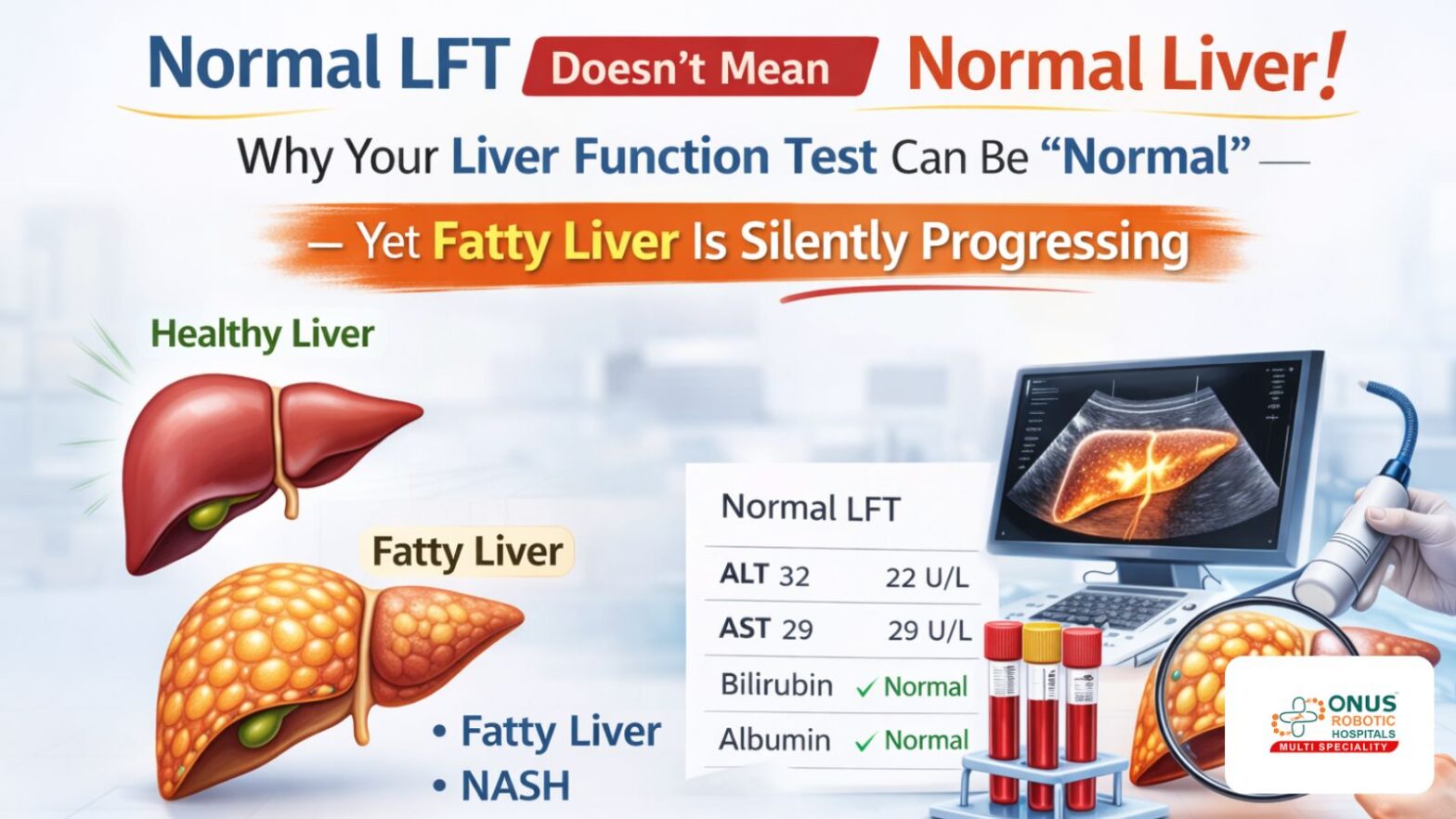
Normal LFT Doesn’t Mean Normal Liver Why Your Liver Function Test Can Be “Normal” — Yet Fatty Liver Is Silently Progressing: Dr. Ravi Kiran | Diabetologist, Onus Robotic Hospital
Introduction: The Most Dangerous Myth About Fatty Liver
Many patients feel reassured when their Liver Function Test (LFT) report comes back “normal.” They assume their liver is perfectly healthy.
But here’s the shocking truth:
A normal LFT does NOT mean a normal liver.
You can have:
-
Grade 1 Fatty Liver
-
Grade 2 Fatty Liver
-
NASH (Non-Alcoholic Steatohepatitis)
-
Liver Fibrosis
-
Early Cirrhosis
— all with completely normal liver enzymes.
This silent progression is one of the major reasons fatty liver disease is rapidly increasing in India, especially in urban populations.
What Is a Liver Function Test (LFT)?
A Liver Function Test measures enzymes and proteins in the blood, including:
-
ALT (Alanine Aminotransferase)
-
AST (Aspartate Aminotransferase)
-
ALP (Alkaline Phosphatase)
-
Bilirubin
-
Albumin
-
Total Protein
Doctors use LFTs to detect:
-
Liver inflammation
-
Hepatitis
-
Alcohol-related liver injury
-
Obstructive jaundice
-
Severe liver damage
The Key Limitation
LFT detects inflammation, not fat accumulation.
Fatty liver begins with fat deposition inside liver cells — not necessarily inflammation. That’s why early and even moderate fatty liver often shows normal ALT and AST levels.
How Can You Have Fatty Liver with Normal LFT?
1️⃣ Fat Deposition Happens First
In Non-Alcoholic Fatty Liver Disease (NAFLD):
-
Fat accumulates inside liver cells
-
No major inflammation initially
-
No significant enzyme leakage
-
LFT remains normal
2️⃣ Liver Enzymes Fluctuate
Liver enzymes can fluctuate daily. A single test may miss elevations.
3️⃣ Advanced Disease May Show Normal Enzymes
Ironically, in advanced fibrosis or cirrhosis:
-
Fewer healthy liver cells remain
-
Less enzyme leakage occurs
-
Enzyme levels may appear near-normal
Relying solely on LFT can be dangerously misleading.
What Actually Detects Fatty Liver?
To properly diagnose fatty liver, doctors may use:
-
Ultrasound Abdomen
-
FibroScan (Liver Elastography)
-
MRI Liver
-
CT Scan
-
Fatty Liver Index
-
Advanced Fibrosis Markers
A comprehensive metabolic evaluation is far more informative than a routine blood test alone.
Who Is at Risk of Fatty Liver Despite Normal LFT?
You are at high risk if you have:
-
Type 2 Diabetes
-
Obesity or Overweight
-
High Triglycerides
-
High Cholesterol
-
PCOS
-
Hypothyroidism
-
Metabolic Syndrome
-
Insulin Resistance
-
Sedentary Lifestyle
-
Family History of Liver Disease
Urban Indian populations are witnessing an epidemic of NAFLD due to lifestyle and metabolic disorders.
The Silent Progression of Fatty Liver
Fatty liver progresses in stages:
🔹 Stage 1: Simple Steatosis
Fat accumulation without inflammation.
🔹 Stage 2: NASH
Fat + inflammation.
🔹 Stage 3: Fibrosis
Scar tissue formation begins.
🔹 Stage 4: Cirrhosis
Severe irreversible scarring.
🔹 Stage 5: Liver Cancer (HCC)
Life-threatening stage.
And remember — LFT may remain normal during early and moderate stages.
Why Early Diagnosis Is Critical
Early fatty liver is reversible.
With appropriate lifestyle and medical management, you can:
-
Reduce liver fat
-
Improve insulin sensitivity
-
Prevent fibrosis
-
Avoid cirrhosis
-
Lower cancer risk
Delay can lead to irreversible damage.
Symptoms You Should Not Ignore
Fatty liver often has no symptoms. But some warning signs include:
-
Persistent fatigue
-
Abdominal bloating
-
Mild right upper abdomen discomfort
-
Unexplained weight gain
-
Dark neck pigmentation (insulin resistance sign)
If you have these symptoms along with diabetes or obesity — even with normal LFT — evaluation is recommended.
What Tests Should You Ask For?
If you suspect fatty liver, consider:
-
Ultrasound Abdomen
-
FibroScan
-
HbA1c
-
Lipid Profile
-
Insulin Levels
-
HOMA-IR
-
BMI & Waist Circumference
A metabolic risk assessment is essential.
Can Fatty Liver Be Reversed?
Yes — especially in early stages.
Treatment Strategies Include:
-
7–10% weight loss
-
Low-carb or Mediterranean diet
-
Regular exercise (150 minutes/week)
-
Control of diabetes
-
Cholesterol management
-
Avoid alcohol
-
Reduce processed sugar
-
Improve gut health
Early intervention can reverse Grade 1 and Grade 2 fatty liver within months.
Common Myths About Normal LFT
❌ Normal ALT means no fatty liver
✔ ALT can be normal in fatty liver
❌ Only alcohol causes fatty liver
✔ NAFLD is more common than alcoholic liver disease
❌ Fatty liver is harmless
✔ It can lead to cirrhosis and cancer
Final Takeaway
A normal LFT report is not a guarantee of a healthy liver.
Fatty liver is silent.
It progresses quietly.
It can become life-threatening.
Do not rely on one blood test.
Early screening and comprehensive evaluation are essential — especially if you have metabolic risk factors.
Consultation
📍 Dr. Ravi Kiran
Diabetologist & Preventive Medicine Specialist
Onus Robotic Hospital, Hyderabad