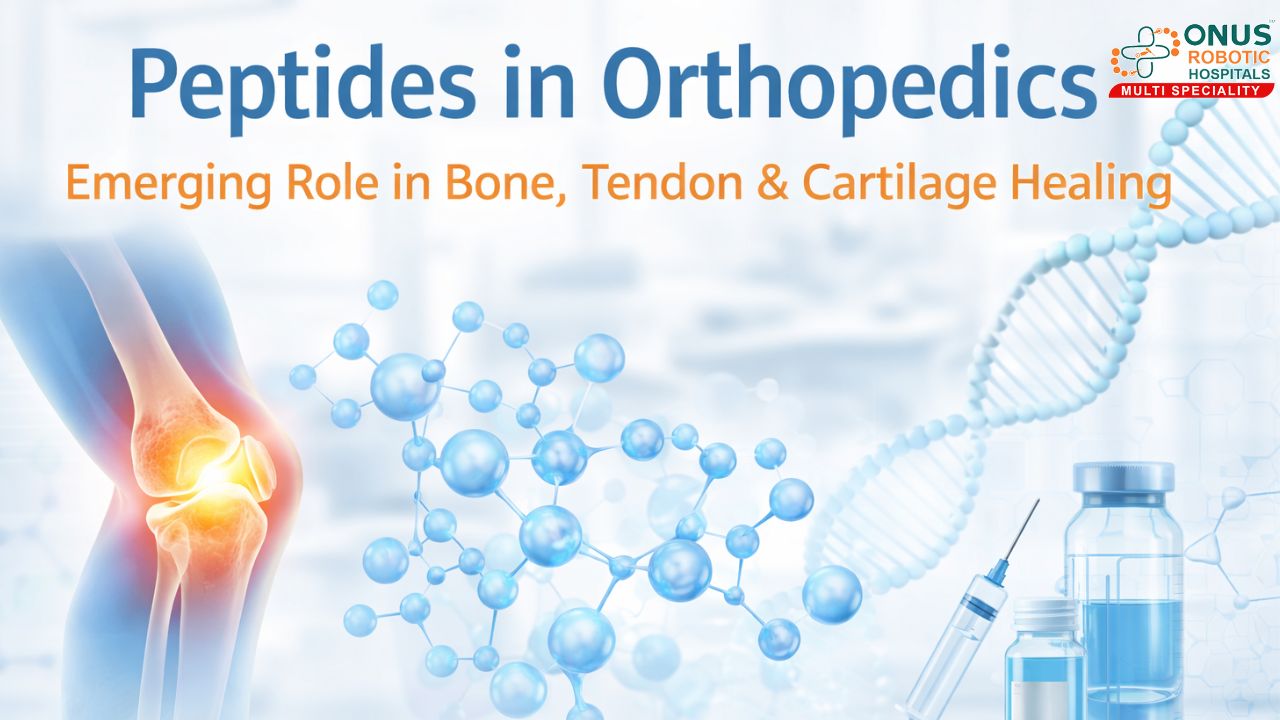
Peptides in Orthopedics: Emerging Role in Bone, Tendon & Cartilage Healing – By Dr. Balaraju Naidu, Robotic Orthopedic Surgeon, ONUS Robotic Hospitals
Introduction
Orthopedic medicine is evolving beyond traditional mechanical repair techniques toward biological and regenerative enhancement strategies. As surgical precision improves through robotics and navigation systems, parallel advancements are occurring at the molecular level.
Among the most promising tools in regenerative orthopedics are peptides — short chains of amino acids that function as highly specific cellular signaling molecules.
Peptides are gaining scientific attention for their potential role in:
-
Fracture healing
-
Tendon and ligament repair
-
Cartilage regeneration
-
Inflammation modulation
-
Sports injury recovery
While some peptide therapies are evidence-based, others remain investigational and require careful clinical evaluation.
What Are Peptides?
Peptides are small protein fragments composed of 2–50 amino acids. Unlike full proteins, peptides are shorter and more targeted in action.
They function as:
-
Growth modulators
-
Cellular communication signals
-
Tissue repair enhancers
-
Immune and inflammatory regulators
Importantly, peptides do not transform into tissues like stem cells. Instead, they activate the body’s own regenerative pathways, stimulating natural healing responses.
Mechanism of Action in Orthopedics
In musculoskeletal medicine, peptides may support healing through multiple biological pathways:
-
Stimulating collagen synthesis (Type I & II collagen)
-
Enhancing angiogenesis (new blood vessel formation)
-
Activating osteoblasts for bone formation
-
Modulating inflammatory cytokines
-
Promoting tissue remodeling and repair
This makes peptides particularly relevant in conditions where healing is delayed, compromised, or biologically limited.
Clinical Applications Being Explored
1️⃣ Fracture Healing
Teriparatide, a parathyroid hormone analog peptide, has demonstrated strong clinical evidence in:
-
Osteoporosis-related fractures
-
Delayed union
-
Non-union cases
It enhances osteoblastic activity and accelerates bone remodeling.
2️⃣ Tendon & Ligament Repair
Experimental peptides such as:
-
BPC-157
-
Thymosin Beta-4
are being studied for:
-
Tendon-to-bone healing
-
Rotator cuff repair
-
Achilles tendinopathy
-
ACL graft integration
Most evidence remains preclinical or early-stage human trials.
3️⃣ Cartilage Regeneration
Peptide growth factors present in PRP (Platelet-Rich Plasma) may:
-
Stimulate chondrocyte activity
-
Enhance cartilage matrix synthesis
-
Slow early osteoarthritis progression
While not cartilage “replacement,” peptides may support early degenerative joint disease management.
4️⃣ Sports Injury & Recovery Medicine
Potential applications include:
-
Muscle strain recovery
-
Ligament healing
-
Post-surgical tissue repair
-
Rotator cuff injuries
-
Meniscal healing
However, regulatory status varies internationally.
Current Evidence Status
✅ Strong Clinical Evidence
-
Teriparatide for osteoporosis and fracture healing
⚖️ Moderate Evidence
-
PRP growth factor therapies
🔬 Limited / Investigational
-
BPC-157
-
Thymosin Beta-4
-
Designer regenerative peptides
It is important to distinguish approved therapies from experimental protocols.
Risks & Ethical Considerations
Despite growing interest, peptide therapy requires careful consideration:
-
Off-label use
-
Limited long-term safety data
-
Misuse in sports performance enhancement
-
Variable manufacturing quality
-
Regulatory restrictions in certain countries
Peptide therapy must always be:
✔ Evidence-based
✔ Clinically justified
✔ Medically supervised
✔ Ethically prescribed
The Future of Peptides in Orthopedics
The future of regenerative orthopedics may include:
-
Peptide-loaded bio-scaffolds
-
Targeted nano-peptide delivery systems
-
Personalized molecular healing protocols
-
Integration with robotic-assisted surgical precision
-
Combination therapy with stem cells and biologics
Orthopedics is gradually transitioning toward molecularly guided healing, where biology complements biomechanics.
Conclusion
Peptides represent an exciting frontier in regenerative orthopedic medicine. While certain applications such as Teriparatide are supported by strong evidence, others remain experimental.
When used responsibly and scientifically, peptides may enhance tissue repair, improve recovery timelines, and optimize patient outcomes — but they are not a replacement for sound surgical judgment, structured rehabilitation, or established orthopedic protocols.
Regenerative innovation must always be guided by science, ethics, and patient safety.
For Appointments:
Dr. Balaraju Naidu, Robotic Orthopedic Surgeon
ONUS Robotic Hospitals – Hyderabad
👉 link: contact-us or book-appointment