Retrocalcaneal Bursitis: Why You Have Pain at the Back of Your Heel and How to Treat It- By Dr. Balaraju Naidu, Robotic Orthopedic Surgeon, ONUS Robotic Hospitals
Retrocalcaneal Bursitis: Why You Have Pain at the Back of Your Heel and How to Treat It- By Dr. Balaraju Naidu, Robotic Orthopedic Surgeon, ONUS Robotic Hospitals
Understanding the Causes, Symptoms, and Effective Treatment for Persistent Heel Pain
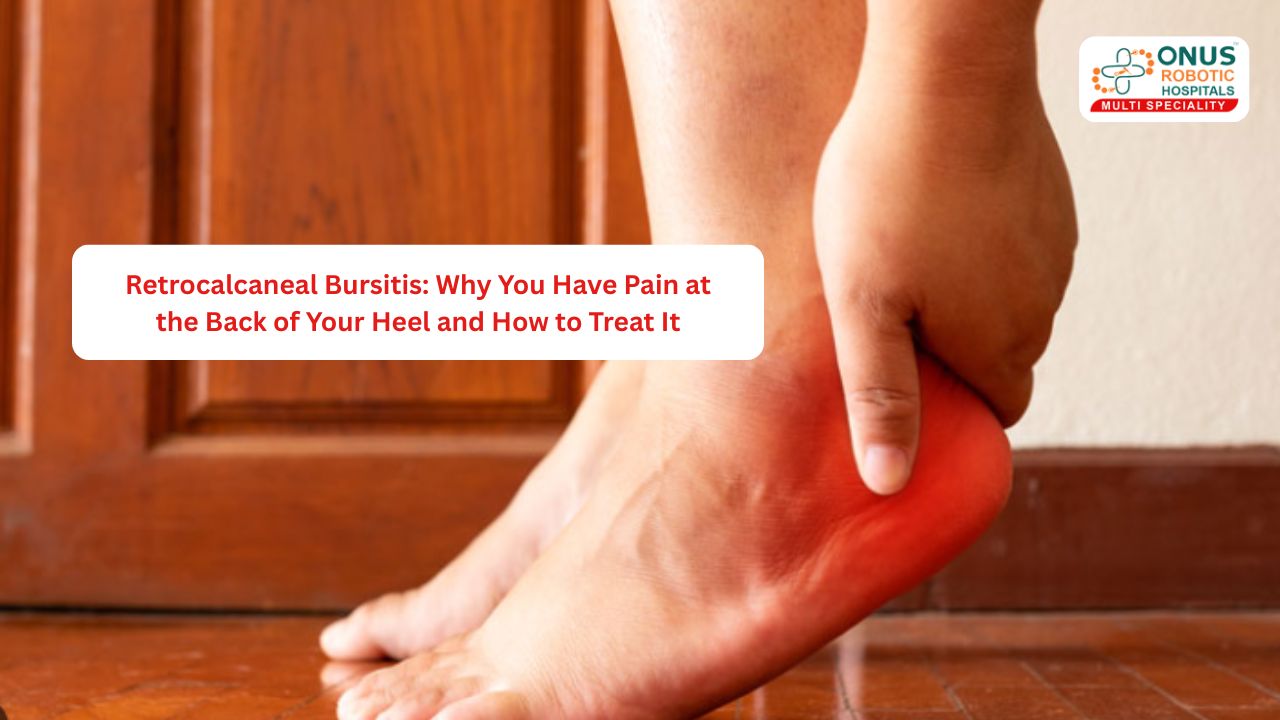
Are you experiencing pain at the back of your heel, especially while walking, running, or wearing tight shoes? You may be suffering from Retrocalcaneal Bursitis, a common cause of heel pain among athletes, active individuals, and people who wear tight footwear.
At ONUS Robotic Hospitals, specialists like Dr. Balaraju Naidu frequently diagnose and treat heel pain conditions using conservative therapy, footwear correction, and advanced orthopedic care when required.
The key message: Early treatment prevents chronic pain and avoids long-term tendon damage.
What Is Retrocalcaneal Bursitis?
Retrocalcaneal bursitis is inflammation of a small fluid-filled sac called the bursa, located between:
The Achilles tendon
The heel bone (calcaneus)
This bursa reduces friction during walking and running. When it becomes irritated or inflamed, it causes pain and swelling behind the heel.
Where Does the Pain Occur?
Pain is typically felt:
At the back of the heel
Near the Achilles tendon
While walking or running
When wearing tight shoes
During stair climbing
Morning stiffness is also common.
Common Symptoms of Retrocalcaneal Bursitis
Watch for these symptoms.
Typical Symptoms
Pain behind the heel
Swelling near the Achilles tendon
Tenderness while touching the heel
Morning stiffness
Difficulty walking or running
Pain while climbing stairs
Redness or warmth in severe cases
Symptoms often worsen with activity.
Causes of Retrocalcaneal Bursitis
Several factors can trigger inflammation.
1) Overuse or Repetitive Activity
Common in:
Runners
Athletes
Gym users
Individuals who walk long distances
Repeated stress irritates the bursa.
2) Tight Footwear
Shoes that press against the heel can cause friction.
Examples:
Tight shoes
Hard shoe backs
High heels
This is one of the most common causes.
3) Sudden Increase in Activity
Increasing exercise intensity too quickly can overload the tendon and bursa.
Examples:
Starting a new workout
Sudden running
Increased walking
4) Tight Calf Muscles
Reduced flexibility increases tension on the Achilles tendon.
This leads to:
Increased pressure
Heel irritation
Pain
Risk Factors
People at higher risk include:
Athletes
Runners
Individuals wearing high heels
People with flat feet
Individuals with tight calf muscles
People with obesity
Workers standing for long hours
Diagnosis of Retrocalcaneal Bursitis
Doctors diagnose the condition using:
Clinical Examination
Pain location assessment
Swelling evaluation
Movement testing
Imaging Tests
X-ray
Ultrasound
MRI
These tests help rule out tendon tears or bone problems.
Treatment Options for Retrocalcaneal Bursitis
Most cases improve without surgery.
Non-Surgical Treatment
Common Treatments
Rest
Ice therapy
Anti-inflammatory medications
Physiotherapy
Footwear modification
Heel pads or orthotics
These treatments reduce inflammation and promote healing.
Physiotherapy and Stretching Exercises
Stretching improves flexibility and reduces pressure.
Recommended Exercises
Calf stretching
Achilles tendon stretching
Heel raises
Ankle mobility exercises
Regular exercise speeds recovery.
Advanced Treatment Options
If symptoms persist, advanced care may be required.
Advanced Treatments
Injection therapy
Shockwave therapy
Arthroscopic treatment
Surgical intervention (rare cases)
Early treatment reduces the need for surgery.
Prevention Tips for Heel Pain
Simple lifestyle changes can protect your heel.
Prevention Strategies
Wear comfortable footwear
Avoid tight shoes
Stretch calf muscles daily
Increase activity gradually
Maintain healthy body weight
Warm up before exercise
These steps reduce injury risk.
When Should You See an Orthopedic Specialist?
Consult a doctor immediately if:
Heel pain lasts more than 2 weeks
Swelling increases
Walking becomes difficult
Pain worsens with activity
Symptoms do not improve with rest
Early evaluation prevents chronic tendon problems.
Final Takeaway
Retrocalcaneal bursitis is a common and treatable cause of heel pain.