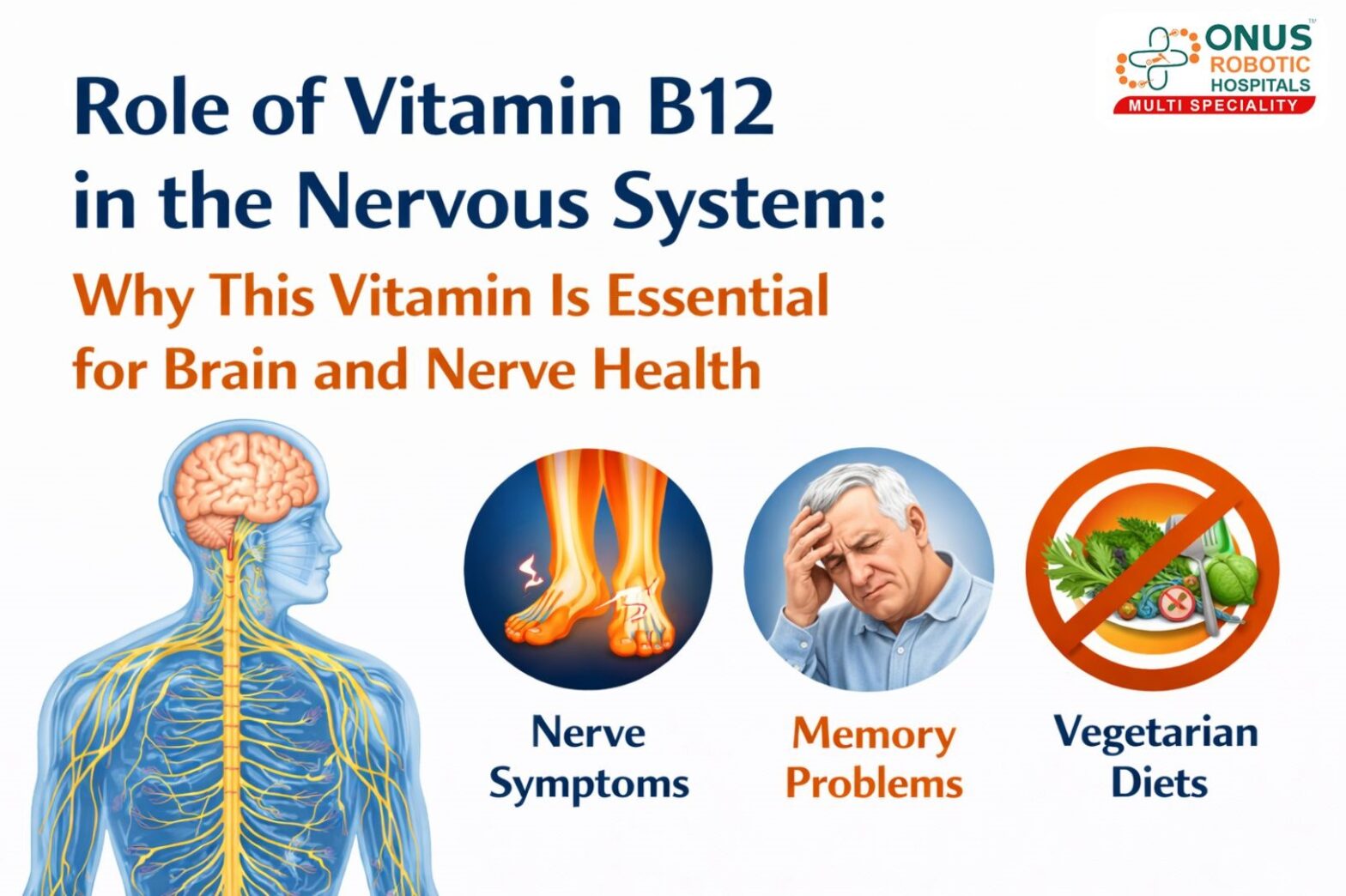
Role of Vitamin B12 in the Nervous System: Why This Vitamin Is Essential for Brain and Nerve Health – By Dr.Krishna Chaithanya Reddy, Neurologist, ONUS Robotic Hospitals
The nervous system is one of the most complex and delicate systems in the human body. It controls movement, sensation, thinking, memory, and coordination. Among the many nutrients required to maintain its proper function, Vitamin B12 plays a particularly critical role.
Vitamin B12 is essential for the health of the brain, spinal cord, and peripheral nerves. When the body lacks sufficient vitamin B12, nerve cells can become damaged, leading to neurological symptoms such as numbness, tingling, burning sensations, memory problems, and difficulty walking.
In clinical practice, vitamin B12 deficiency is one of the most common and treatable causes of nerve-related problems, especially among vegetarians, elderly individuals, and patients taking certain medications.
Early recognition and treatment are important to prevent long-term neurological complications.
What Is Vitamin B12?
Vitamin B12, also called cobalamin, is a water-soluble vitamin required for several critical biological functions.
It is essential for:
-
Proper functioning of the nervous system
-
Formation of healthy red blood cells
-
DNA synthesis
-
Maintenance of brain function
-
Energy metabolism
Unlike many vitamins, vitamin B12 is primarily found in animal-based foods.
Common dietary sources include:
-
Milk
-
Curd (yogurt)
-
Paneer
-
Eggs
-
Fish
-
Meat
Because of this, individuals following strict vegetarian or vegan diets are more likely to develop vitamin B12 deficiency.
Role of Vitamin B12 in the Nervous System
Formation and Maintenance of the Myelin Sheath
Nerve fibers in the body are surrounded by a protective covering known as the myelin sheath. This insulating layer allows nerve signals to travel rapidly and efficiently between the brain and different parts of the body.
Vitamin B12 plays a vital role in maintaining this myelin sheath.
When vitamin B12 levels fall:
-
The myelin sheath begins to deteriorate
-
Nerve signal transmission slows down
-
Nerve fibers become vulnerable to damage
This process, known as demyelination, can result in symptoms such as tingling, numbness, and burning sensations in the hands and feet.
Supporting Brain Function and Cognitive Health
Vitamin B12 is essential for the production of neurotransmitters, which are chemical messengers that allow communication between brain cells.
Adequate vitamin B12 levels support:
-
Memory and learning
-
Concentration and mental clarity
-
Mood regulation
-
Emotional stability
Low levels of vitamin B12 can lead to:
-
Memory impairment
-
Difficulty concentrating
-
Mood changes
-
Depression
-
Cognitive decline
In severe cases, prolonged vitamin B12 deficiency may mimic symptoms of dementia.
Protection of the Spinal Cord
Severe and prolonged deficiency of vitamin B12 can damage the spinal cord. This condition is known as **Subacute combined degeneration of the spinal cord.
This disorder affects specific pathways within the spinal cord responsible for balance, coordination, and muscle control.
Patients may experience:
-
Difficulty walking
-
Loss of balance
-
Reduced vibration sensation
-
Weakness or stiffness in the legs
If untreated, these neurological changes may become permanent.
Neurological Symptoms of Vitamin B12 Deficiency
Vitamin B12 deficiency can produce a wide range of neurological symptoms. These symptoms often develop gradually and may initially be subtle.
Common neurological signs include:
-
Tingling or numbness in hands and feet
-
Burning sensation in the feet
-
Difficulty walking or maintaining balance
-
Weakness in limbs
-
Memory problems
-
Mood disturbances
-
Reduced concentration
Many patients mistakenly attribute these symptoms to aging, diabetes, or stress, which can delay diagnosis.
Who Is at Risk of Vitamin B12 Deficiency?
Certain groups of people are more vulnerable to developing vitamin B12 deficiency.
These include:
-
Strict vegetarians or vegans
-
Elderly individuals
-
Patients who have undergone gastric surgery
-
Individuals with **Pernicious anemia
-
People taking long-term metformin for diabetes
-
Patients using proton pump inhibitors (acid-reducing medications)
-
Individuals with malabsorption disorders
Because the body stores vitamin B12 for several years, symptoms may appear slowly and remain unnoticed for a long time.
Sources of Vitamin B12
Natural dietary sources of vitamin B12 include:
-
Milk and dairy products
-
Eggs
-
Fish
-
Meat and poultry
Vegetarians may obtain small amounts from dairy products but often require supplementation to maintain adequate levels.
Diagnosis of Vitamin B12 Deficiency
Diagnosis is usually straightforward and can be confirmed with blood tests.
Common investigations include:
-
Serum vitamin B12 levels
-
Complete blood count (CBC)
-
Homocysteine levels
-
Methylmalonic acid levels in certain cases
These tests help determine whether symptoms are related to vitamin deficiency.
Treatment of Vitamin B12 Deficiency
The good news is that vitamin B12 deficiency is highly treatable.
Treatment usually involves supplementation, which may be given as:
-
Oral vitamin B12 tablets
-
Intramuscular vitamin B12 injections
Many patients experience significant improvement in neurological symptoms once treatment begins, especially if the deficiency is detected early.
When Should You Consult a Doctor?
Medical evaluation is recommended if you experience symptoms such as:
-
Persistent numbness or tingling in hands or feet
-
Burning sensation in the feet
-
Difficulty walking or imbalance
-
Unexplained fatigue
-
Memory problems or confusion
Early diagnosis helps prevent permanent nerve damage.
Final Thoughts
Vitamin B12 plays a vital role in maintaining the health of the brain, spinal cord, and peripheral nerves. Deficiency of this essential vitamin can lead to serious neurological problems, including neuropathy, balance disturbances, and cognitive decline.
Fortunately, vitamin B12 deficiency is easy to diagnose and treat.
Recognizing symptoms early and seeking medical evaluation can help protect the nervous system and maintain long-term neurological health.
For Appointments:
Dr. Krishna Chaithanya Reddy
Consultant – Interventional Neurologist
ONUS Robotic Hospitals – Hyderabad
👉 link: contact-us or book-appointment