Septoplasty – Straightening Your Nose, Improving Your Breathing- By Dr. Akshitha Reddy, ENT Specialist, ONUS Robotic Hospitals
A Complete Guide to Deviated Septum, Symptoms, Surgery & Recovery
Breathing through your nose should feel natural—but for many people, it doesn’t. Constant nasal blockage, mouth breathing, snoring, or repeated sinus infections may be due to a Deviated Nasal Septum.
A highly effective solution for this condition is Septoplasty, a minimally invasive ENT surgery that restores normal airflow and significantly improves quality of life.
At ONUS Robotic Hospitals, procedures are performed by experts like Dr. Akshitha Reddy using advanced endoscopic techniques for safe and effective outcomes.
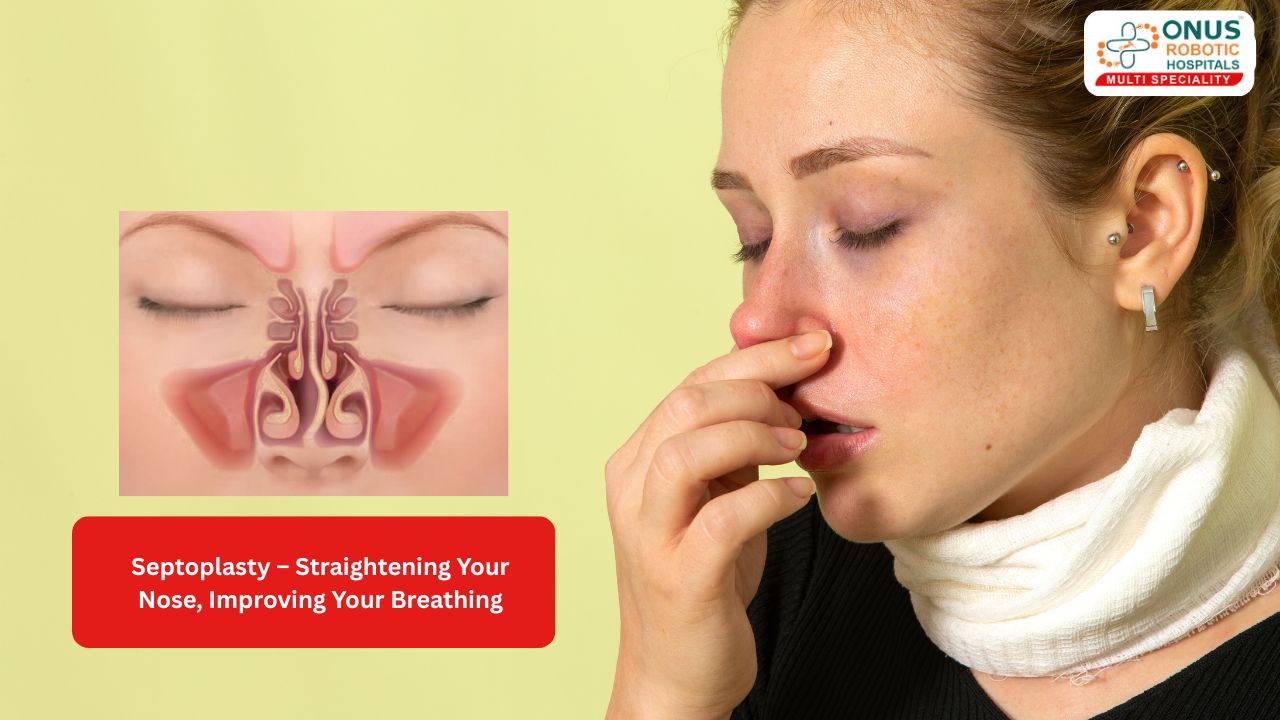
What Is a Deviated Nasal Septum?
The nasal septum is the thin wall dividing the nose into two halves.
When this septum is:
- Bent
- Shifted
- Uneven
…it can block airflow and cause breathing problems.
Common Symptoms of Deviated Septum
You may have a deviated septum if you experience:
- One-sided or both-sided nasal blockage
- Difficulty breathing through the nose
- Frequent sinus infections
- Headaches or facial pain
- Snoring or disturbed sleep
- Mouth breathing
👉 If one nostril always feels blocked — this is a strong indicator.
When Do You Need Septoplasty?
Not everyone with a deviated septum needs surgery.
Surgery is recommended if:
- Medications (nasal sprays, antihistamines) are not helping
- You have chronic sinusitis
- Breathing difficulty affects daily life
- You have recurrent nasal infections
- Sleep quality is affected
👉 Surgery is considered only when symptoms are significant.
How Is Septoplasty Done?
Septoplasty is a minimally invasive, internal procedure.
Key Highlights
- Done under anesthesia
- Takes about 30–60 minutes
- No external cuts or scars
- Performed through the nostrils
Advanced Techniques Used
- Endoscopic septoplasty (high precision)
- Coblation-assisted techniques (less bleeding)
- Laser-assisted correction (selected cases)
These modern methods improve safety and recovery.
Recovery After Septoplasty
Recovery is usually smooth and quick.
What to Expect
- Same-day or next-day discharge
- Mild discomfort for a few days
- Nasal blockage improves gradually in 1–2 weeks
- Complete healing in a few weeks
Post-Surgery Care
- Avoid blowing nose forcefully
- Follow medication instructions
- Attend follow-up visits
- Maintain nasal hygiene
👉 Most patients return to normal activities quickly.
Benefits of Septoplasty
Septoplasty offers long-term relief and improved quality of life.
Key Benefits
- Improved nasal breathing
- Better sleep quality
- Reduced sinus infections
- Less dependency on nasal sprays
- Improved exercise tolerance
- Enhanced overall comfort
Common Doubts About Septoplasty
Will My Nose Shape Change?
❌ No. Septoplasty is internal and does not change appearance
✔ Only combined cosmetic procedures affect shape
Is the Surgery Painful?
✔ Minimal pain with modern techniques
✔ Well-controlled with medications
Is It Safe?
✔ Yes, when performed by experienced ENT specialists
✔ Complications are rare
Risks of Ignoring Deviated Septum
Leaving the condition untreated can lead to:
- Chronic sinusitis
- Poor sleep
- Mouth breathing
- Reduced oxygen intake
- Recurrent infections
👉 Long-term neglect affects overall health.
When Should You See an ENT Specialist?
Consult a doctor if:
- Nasal blockage persists for weeks
- You rely on nasal sprays daily
- You have repeated sinus infections
- Sleep is disturbed due to breathing issues
👉 Early evaluation prevents complications.
Final Takeaway
A blocked nose is not “normal”—it’s treatable.
Septoplasty is a simple, safe, and effective solution for long-standing breathing problems.
👉 Better breathing = Better sleep + Better life
For Appointments:
👩⚕️ Dr. Akshitha Reddy
ENT Specialist
Providing ethical, evidence-based care for ear, nose, throat, sinus, and airway conditions.
ONUS Robotic Hospitals – Hyderabad
👉 link: contact-us or book-appointment