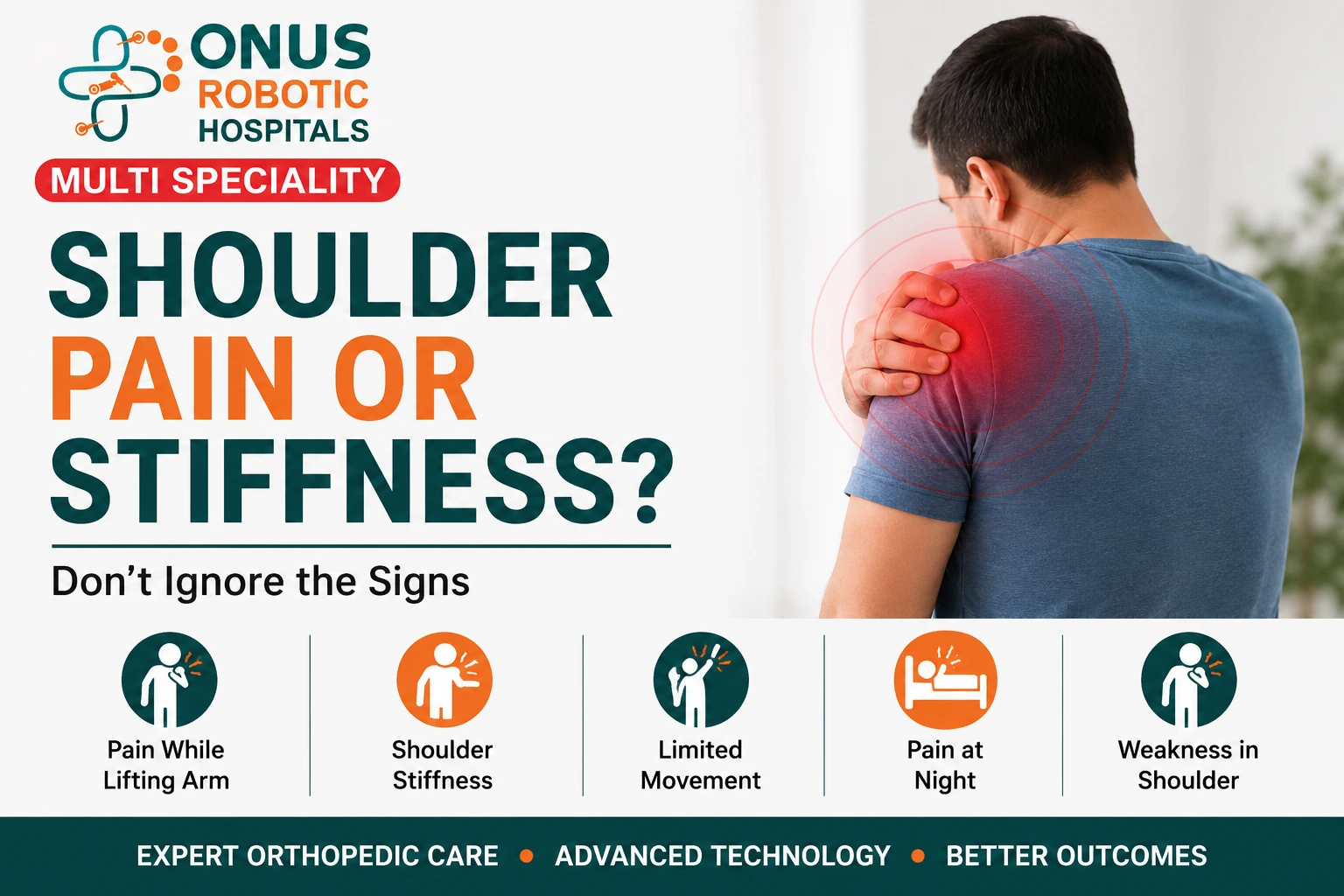
Shoulder pain is one of the most common musculoskeletal complaints affecting people of all ages. Whether it develops gradually or occurs suddenly after an injury, shoulder pain can significantly impact daily activities such as dressing, lifting objects, driving, or even sleeping comfortably.
Many individuals ignore early symptoms, assuming the pain will resolve on its own. However, persistent shoulder pain, stiffness, or difficulty lifting your hand may indicate an underlying condition that requires medical attention.
Understanding the Shoulder Joint
The shoulder is one of the most mobile joints in the human body. It consists of bones, muscles, tendons, ligaments, and cartilage that work together to provide a wide range of motion.
Because of its complex structure and constant use, the shoulder is vulnerable to injuries, inflammation, and degenerative conditions.
Common Symptoms
Patients experiencing shoulder problems may notice:
- Shoulder pain during movement
- Pain while lifting the arm
- Difficulty reaching overhead
- Shoulder stiffness
- Weakness in the arm
- Pain at night
- Clicking or grinding sensation
- Limited range of motion
- Difficulty combing hair or wearing clothes
The severity of symptoms often depends on the underlying cause.
Common Causes of Shoulder Pain and Stiffness
1. Frozen Shoulder (Adhesive Capsulitis)
Frozen shoulder occurs when the shoulder capsule becomes inflamed and thickened, leading to progressive stiffness and pain.
Symptoms:
- Gradual onset of pain
- Severe stiffness
- Difficulty lifting the arm
- Reduced range of motion
It is more common in people with diabetes, thyroid disorders, and individuals between 40 and 60 years of age.
2. Rotator Cuff Injury
The rotator cuff consists of muscles and tendons that stabilize the shoulder joint.
Injuries can occur due to:
- Repetitive overhead activities
- Sports injuries
- Age-related wear and tear
- Sudden trauma
Symptoms:
- Pain while lifting the arm
- Weakness
- Difficulty reaching overhead
- Night pain
3. Shoulder Impingement Syndrome
This condition occurs when the tendons of the rotator cuff become compressed between the shoulder bones.
Symptoms:
- Pain during arm elevation
- Pain while reaching behind the back
- Shoulder weakness
- Reduced mobility
4. Shoulder Arthritis
Arthritis causes degeneration of cartilage within the shoulder joint.
Symptoms:
- Chronic pain
- Joint stiffness
- Grinding sensation
- Reduced movement
It commonly affects older adults.
5. Tendinitis and Bursitis
Inflammation of shoulder tendons or bursae can cause pain and restricted movement.
Symptoms:
- Swelling
- Tenderness
- Pain during movement
- Difficulty lifting the arm
Risk Factors
You may be at higher risk if you:
- Are over 40 years old
- Have diabetes
- Participate in repetitive overhead activities
- Play sports involving throwing motions
- Have previous shoulder injuries
- Lead a sedentary lifestyle
- Have poor posture
When Should You See an Orthopedic Specialist?
Consult an orthopedic surgeon if:
- Pain persists for more than two weeks
- You cannot lift your arm properly
- Shoulder movement becomes restricted
- Pain interferes with sleep
- You experience weakness in the arm
- Symptoms worsen despite rest and medications
Early diagnosis can prevent long-term complications and improve recovery outcomes.
How Is Shoulder Pain Diagnosed?
An orthopedic specialist may recommend:
Physical Examination
Assessment of shoulder strength, flexibility, and range of motion.
Imaging Tests
- X-rays
- Ultrasound
- MRI Scan
- CT Scan (when required)
These tests help identify tendon tears, arthritis, inflammation, and structural abnormalities.
Treatment Options
Treatment depends on the underlying cause and severity.
Conservative Management
Most shoulder conditions respond well to:
- Rest
- Ice application
- Anti-inflammatory medications
- Physiotherapy
- Stretching exercises
- Posture correction
Injection Therapy
In selected cases, corticosteroid injections may reduce inflammation and pain.
Advanced Surgical Treatment
When conservative measures fail, surgery may be recommended for:
- Rotator cuff tears
- Severe arthritis
- Chronic impingement
- Frozen shoulder resistant to treatment
Modern minimally invasive arthroscopic techniques allow faster recovery with smaller incisions.
Preventing Shoulder Problems
You can reduce the risk of shoulder injuries by:
- Maintaining proper posture
- Performing shoulder strengthening exercises
- Warming up before physical activity
- Avoiding repetitive strain
- Managing diabetes effectively
- Seeking early treatment for shoulder pain
Recovery and Rehabilitation
Recovery varies depending on the diagnosis and treatment.
Most patients benefit from:
- Guided physiotherapy
- Strengthening exercises
- Gradual return to daily activities
- Regular follow-up with their orthopedic specialist
Consistency with rehabilitation is essential for restoring shoulder function.
Conclusion
Shoulder pain, stiffness, or difficulty lifting your hand should never be ignored. Conditions such as frozen shoulder, rotator cuff injuries, arthritis, and impingement syndrome can worsen if left untreated. Early evaluation by an orthopedic specialist allows timely diagnosis and effective treatment, helping patients regain mobility, reduce pain, and return to their normal activities.
For Appointments:
Dr. Balaraju Naidu, Robotic Orthopedic Surgeon
ONUS Robotic Hospitals – Hyderabad
👉 link: contact-us or book-appointment