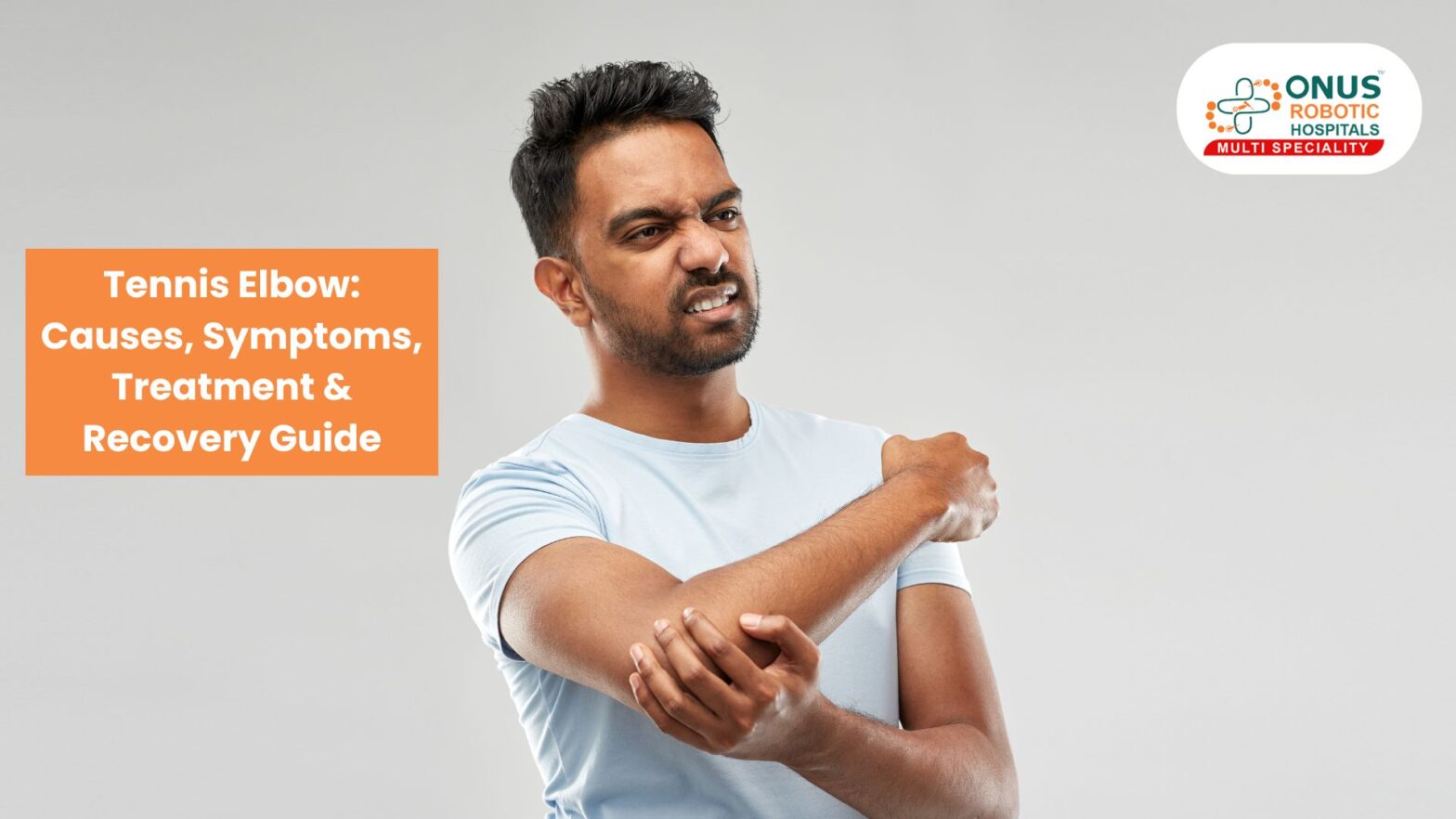
Tennis Elbow: Causes, Symptoms, Treatment & Recovery Guide: Dr. Balaraju Naidu, Robotic Orthopedic Surgeon
Tennis Elbow, medically known as Lateral Epicondylitis, is one of the most common causes of pain on the outer side of the elbow.
Despite its name, you do not need to play tennis to get this condition. In fact, most people who develop Tennis Elbow are office workers, gym-goers, homemakers, and individuals with repetitive hand movements.
Let’s understand this condition clearly, and how to treat it effectively.
What is Tennis Elbow?
Your forearm has muscles that help you grip, lift, and twist your wrist. These muscles are attached to your elbow through tendons.
When these muscles are overused, tiny tears form in the tendon near the lateral epicondyle (outer elbow bone). Over time, these tears lead to inflammation, pain, and weakness.
Who Is at Risk?
Tennis Elbow commonly affects people who repeatedly strain their forearm muscles, such as:
- Computer users / IT professionals (typing, mouse use)
- Gym and fitness enthusiasts (lifting weights with improper form)
- Housemaids / Home workers
- Painters, carpenters, and plumbers
- Chefs, bakers, and people who chop or stir frequently
- Musicians (guitarists, drummers)
So basically, anyone using their hands intensively can develop Tennis Elbow.
Common Symptoms
You may be experiencing Tennis Elbow if you notice:
- Pain on the outer side of the elbow
- Pain increases when:
- Lifting a cup or water bottle
- Turning a door handle
- Shaking hands
- Typing or working on a laptop
- Weak grip strength
- Pain spreading down the forearm to the wrist
- Difficulty holding or gripping objects
The pain may start gradually and worsen over weeks or months if untreated.
Why Early Treatment is Important
If ignored, Tennis Elbow can become chronic, making treatment slower and more difficult.
Early intervention leads to faster and more complete recovery.
How is Tennis Elbow Treated?
Treatment focuses on reducing strain and healing the tendon:
✅ 1. Rest & Activity Modification
Avoid or reduce repetitive gripping and lifting for a few weeks.
✅ 2. Cold Therapy
Apply ice pack for 10–15 minutes, 2–3 times a day to reduce inflammation.
✅ 3. Elbow Brace / Forearm Strap
Helps reduce tension on the affected tendon during daily activities.
✅ 4. Pain Relief Medication (If required)
Short-course anti-inflammatory medication may be prescribed by your doctor.
✅ 5. Physiotherapy (Most Important)
- Forearm stretching
- Strengthening exercises for wrist and grip
- Manual therapy
- Ultrasound / TENS / Shockwave therapy if needed
Physiotherapy helps heal the tendon and prevents recurrence.
✅ 6. In Resistant Cases
If pain persists for months:
- PRP Injection (Platelet-Rich Plasma)
- Dry needling
- Local corticosteroid injection (in selected cases)
- Very rarely, minimally invasive surgery
Most patients recover without surgery.
Home Exercises to Prevent Recurrence (Do under guidance initially)
- Wrist flexor stretch
- Wrist extensor stretch
- Grip strengthening with a soft ball
- Wrist curls with light dumbbells
Consistency is key.
How Long Does Recovery Take?
- Mild cases: 2–6 weeks
- Moderate cases: 6–12 weeks
- Chronic cases: 3–6 months
The earlier you start treatment → the faster the recovery.
When to See a Doctor
Seek medical help if:
- Pain lasts more than 2 weeks
- Pain interferes with daily work
- Grip strength is decreasing
- Pain is increasing instead of improving
Early consultation prevents long-term damage.
Conclusion
Tennis Elbow is common, treatable, and reversible with the right approach.
Ignoring the pain or continuing heavy activities can delay recovery.
With proper rest, physiotherapy, and guided strengthening, most people return to normal pain-free activity.
If you are experiencing elbow pain — don’t wait.
Early evaluation leads to faster healing.