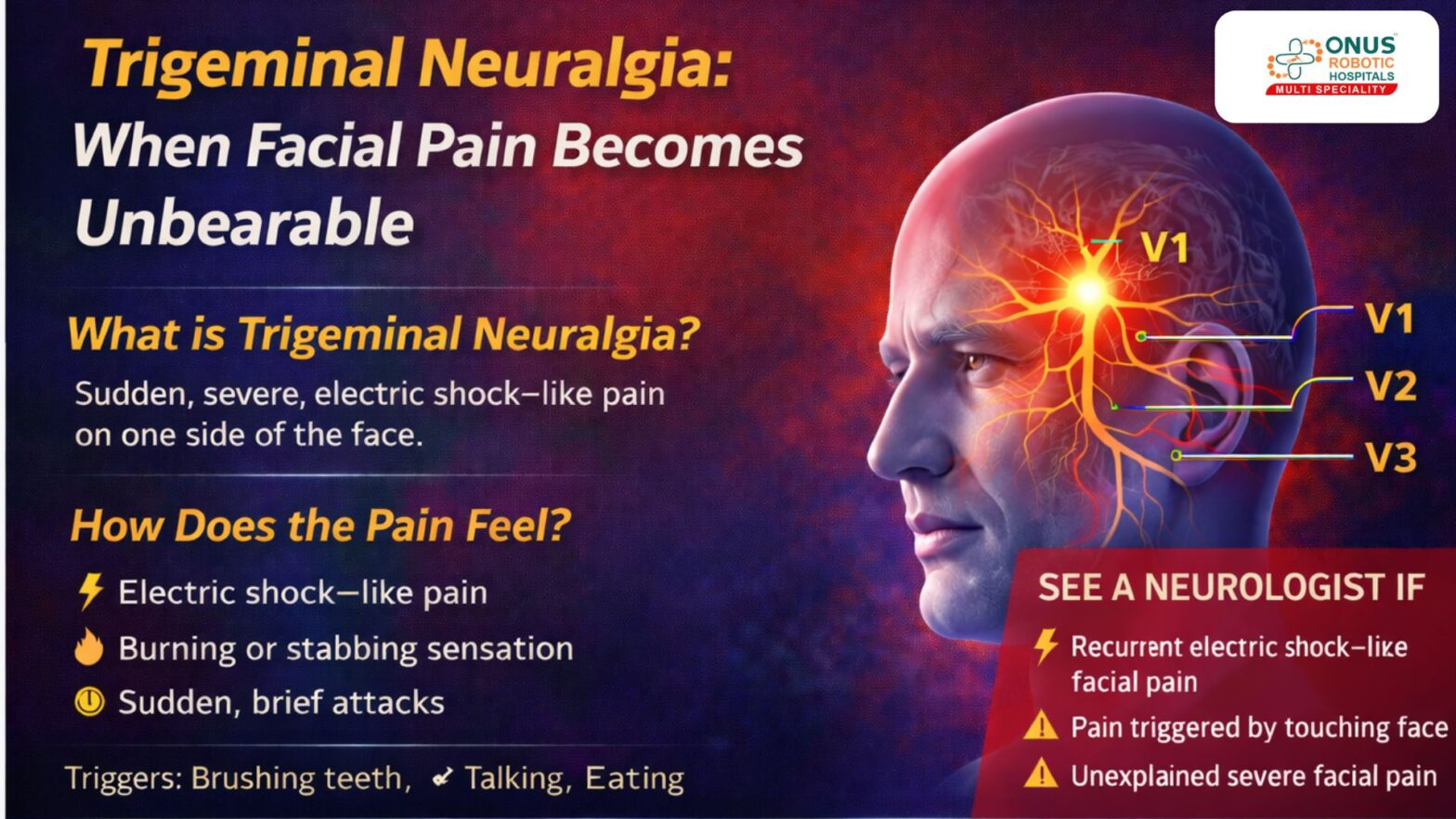
Trigeminal Neuralgia: When Facial Pain Becomes Unbearable – By Dr.Krishna Chaithanya Reddy, Neurologist, ONUS Robotic Hospitals
Introduction
Trigeminal Neuralgia (TN) is often called one of the most painful conditions known in medicine. Patients describe it as a lightning bolt striking the face — sudden, severe, and completely disabling.
Unlike routine dental pain or sinus issues, trigeminal neuralgia is a neurological disorder involving the fifth cranial nerve — the trigeminal nerve.
Early diagnosis and appropriate neurological treatment can dramatically improve quality of life.
What is Trigeminal Neuralgia?
The trigeminal nerve provides sensation to three major areas of the face:
-
V1 (Ophthalmic branch) – Forehead and eye region
-
V2 (Maxillary branch) – Cheek and upper jaw
-
V3 (Mandibular branch) – Lower jaw
Trigeminal neuralgia causes sudden, recurrent attacks of intense facial pain along one or more of these branches.
It typically affects only one side of the face.
How Does the Pain Feel?
Patients commonly describe:
⚡ Electric shock–like sensation
🔥 Burning or stabbing pain
⏳ Attacks lasting seconds to minutes
🔁 Repeated episodes in clusters
Triggers may include:
-
Brushing teeth
-
Washing face
-
Shaving
-
Talking
-
Chewing
-
Cold wind exposure
Even light touch can provoke extreme pain.
Why Does Trigeminal Neuralgia Happen?
1️⃣ Vascular Compression (Most Common Cause)
A nearby blood vessel compresses the trigeminal nerve near the brainstem. Over time, this causes nerve irritation and abnormal pain signaling.
2️⃣ Secondary Causes
Less commonly, TN may result from:
-
Multiple sclerosis
-
Brain tumors
-
Structural lesions
-
Arteriovenous malformations
This is why proper imaging is essential.
How is It Diagnosed?
Diagnosis is mainly clinical, based on:
-
Characteristic pain pattern
-
Trigger zones
-
Neurological examination
An MRI brain with contrast is performed to:
-
Rule out tumors
-
Detect vascular compression
-
Identify demyelinating diseases
Treatment Options
💊 First-Line: Medications
-
Carbamazepine
-
Oxcarbazepine
These stabilize nerve firing and reduce attack frequency.
💉 If Medicines Fail
-
Microvascular decompression (MVD surgery)
-
Radiofrequency ablation
-
Gamma Knife radiosurgery
Microvascular decompression offers long-term relief in many patients.
When Should You See a Neurologist?
Seek evaluation if you experience:
-
Recurrent electric shock-like facial pain
-
Pain triggered by touching the face
-
Unexplained severe unilateral facial pain
⚠️ Many patients undergo unnecessary dental procedures before correct diagnosis.
Final Message
Trigeminal neuralgia is treatable.
You do not have to live with unbearable facial pain.
Early neurological consultation can prevent years of suffering.
For Appointments:
Dr. Krishna Chaithanya Reddy
Consultant – Interventional Neurologist
ONUS Robotic Hospitals – Hyderabad
👉 link: contact-us or book-appointment