Why 70% of People with Type 2 Diabetes Have Fatty Liver: Dr. Ravi Kiran | Diabetologist, Onus Robotic Hospital
The Strong, Silent, and Dangerous Link Between Diabetes and NAFLD
If you are living with Type 2 diabetes, there is a high probability that you also have fatty liver disease — even if your liver tests are normal and you feel completely healthy.
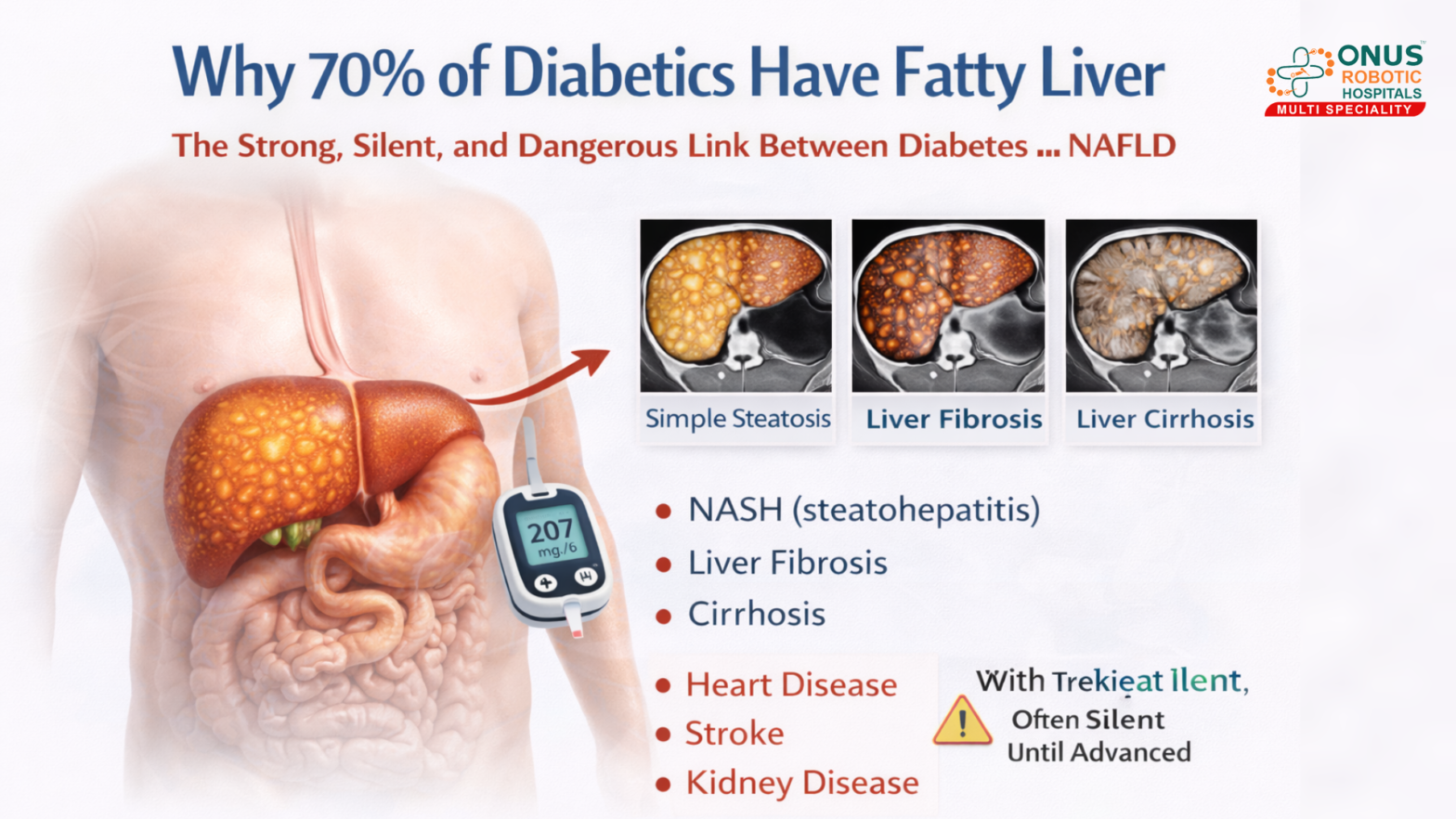
Medical research shows that 60–70% of individuals with Type 2 diabetes develop Non-Alcoholic Fatty Liver Disease (NAFLD). Among them, a significant proportion progress to more serious stages such as:
-
Non-Alcoholic Steatohepatitis (NASH)
-
Liver fibrosis
-
Cirrhosis
-
Hepatocellular carcinoma (liver cancer)
Fatty liver in diabetics is often silent — but metabolically aggressive. Early detection can prevent irreversible damage.
What Is NAFLD?
Non-alcoholic fatty liver disease (NAFLD) is a condition in which excess fat accumulates inside liver cells in people who consume little or no alcohol.
It is strongly associated with:
-
Insulin resistance
-
Type 2 diabetes
-
Obesity
-
High triglycerides
-
Metabolic syndrome
-
Polycystic ovarian syndrome (PCOS)
-
Hypertension
With rising diabetes prevalence, NAFLD is becoming one of the most common liver disorders in India.
Why Do 70% of Diabetics Develop Fatty Liver?
The core mechanism is insulin resistance.
1️⃣ Insulin Resistance: The Metabolic Trigger
In Type 2 diabetes:
-
Cells become resistant to insulin
-
Blood sugar rises
-
The pancreas produces more insulin
-
Excess insulin circulates chronically
High insulin levels stimulate the liver to convert glucose into fat — a process known as de novo lipogenesis.
This leads to:
-
Triglyceride accumulation in liver cells
-
Hepatic steatosis
-
Progressive fatty infiltration
Over time, the liver becomes overloaded with fat.
2️⃣ Excess Free Fatty Acids Flood the Liver
Insulin resistance causes fat tissue to break down more easily.
As a result:
-
Free fatty acids increase in circulation
-
The liver absorbs these fatty acids
-
Fat accumulates inside liver cells
This process further worsens fatty liver.
3️⃣ Chronic High Blood Sugar Damages Liver Cells
Persistent hyperglycemia causes:
-
Oxidative stress
-
Mitochondrial dysfunction
-
Cellular injury
-
Chronic inflammation
Inflammation transforms simple fatty liver into:
Non-alcoholic steatohepatitis (NASH) — a more aggressive form that can lead to scarring.
Stages of Fatty Liver in Diabetics
Stage 1: Simple Steatosis
Fat accumulation without inflammation. Reversible.
Stage 2: NASH
Fat + inflammation + liver cell injury.
Stage 3: Liver Fibrosis
Scar tissue begins replacing healthy liver tissue.
Stage 4: Cirrhosis
Advanced scarring; largely irreversible.
Stage 5: Liver Cancer
High-risk stage; potentially life-threatening.
Diabetics tend to progress faster through these stages compared to non-diabetics.
Why Fatty Liver Is More Dangerous in Diabetics
Fatty liver is not just a liver problem. It increases the risk of:
-
Cardiovascular disease
-
Heart attack
-
Stroke
-
Chronic kidney disease
-
Advanced liver fibrosis
-
Liver cancer
In fact, cardiovascular disease is the leading cause of death in patients with NAFLD and diabetes.
Symptoms of Fatty Liver in Diabetes
Fatty liver is often silent.
Some patients may experience:
-
Persistent fatigue
-
Abdominal bloating
-
Mild right upper abdominal discomfort
-
Unexplained weight gain
-
Acanthosis nigricans (darkened skin around neck)
Importantly, many patients have normal liver function tests (LFTs) despite significant fatty liver.
Essential Tests for Diabetic Patients
If you have diabetes, consider regular liver evaluation including:
-
Ultrasound abdomen
-
FibroScan (liver stiffness measurement)
-
Liver function tests
-
HbA1c
-
Lipid profile
-
Fasting insulin
-
HOMA-IR
-
BMI and waist circumference
FibroScan is especially useful for assessing fibrosis risk non-invasively.
Can Fatty Liver Be Reversed in Diabetics?
Yes — especially in early stages.
Proven Strategies to Reverse Fatty Liver
✔ Strict blood sugar control
✔ 7–10% weight reduction
✔ Low-carbohydrate dietary approach
✔ High-protein balanced nutrition
✔ Mediterranean-style eating pattern
✔ 150–300 minutes of weekly exercise
✔ Strength training
✔ Triglyceride control
✔ Avoidance of sugary beverages and processed foods
With structured metabolic management, Grade 1 and Grade 2 fatty liver can often be reversed within months.
Why Early Action Matters
Fatty liver may take years to progress to cirrhosis. However, once advanced fibrosis develops:
-
Damage becomes irreversible
-
Cancer risk increases
-
Liver transplant may become necessary
Screening and early intervention dramatically reduce long-term complications.
Frequently Asked Questions
Is fatty liver common in Type 1 diabetes?
Less common than Type 2, but possible.
Can fatty liver worsen diabetes?
Yes. Fatty liver increases insulin resistance, worsening glycemic control.
Should every diabetic undergo liver screening?
Yes — especially those with obesity, high triglycerides, or long-standing diabetes.
Final Takeaway
If you have Type 2 diabetes, assume your liver may be at risk.
Do not wait for symptoms.
Do not rely only on normal LFT results.
Screen early.
Act early.
Reverse early.
Metabolic health includes liver health.
Consultation
📍 Dr. Ravi Kiran
Diabetologist & Preventive Medicine Specialist
Onus Robotic Hospital, Hyderabad