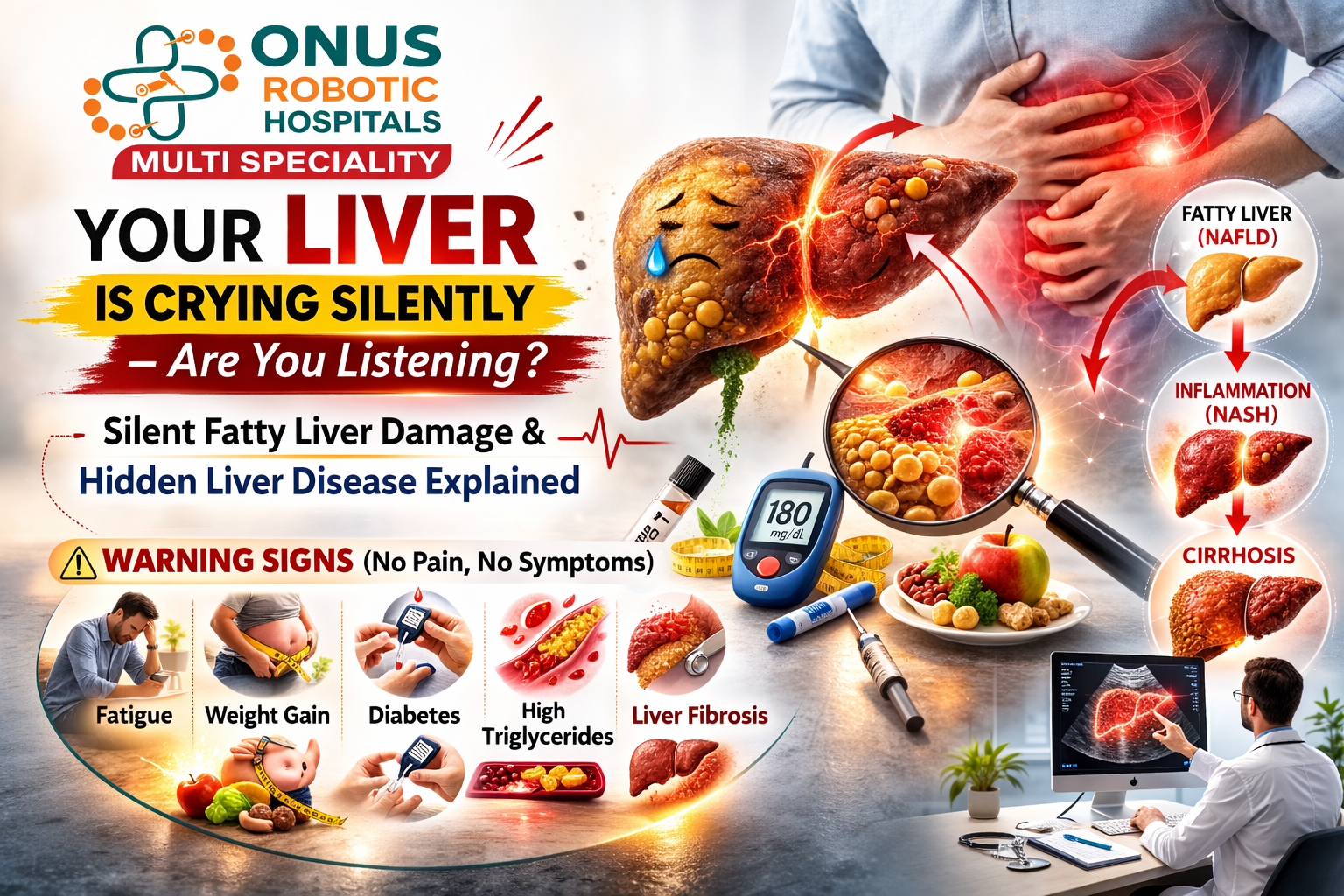
Your Liver Is Crying Silently — Are You Listening? Silent Fatty Liver Damage and Hidden Liver Disease Explained: Dr. Ravi Kiran | Diabetologist, Onus Robotic Hospital
Introduction: The Organ That Suffers in Silence
Your liver works 24 hours a day without complaint.
It performs more than 500 vital functions, including:
-
Regulating blood sugar
-
Processing fats and cholesterol
-
Detoxifying harmful substances
-
Producing essential proteins
-
Storing vitamins and minerals
-
Maintaining hormone balance
Yet when fatty liver disease begins, it does not cause severe pain.
It does not create dramatic symptoms.
It progresses quietly.
This is why silent fatty liver (Non-Alcoholic Fatty Liver Disease – NAFLD) is one of the most underestimated metabolic diseases today.
What Is Silent Fatty Liver?
Silent fatty liver refers to the accumulation of excess fat inside liver cells without obvious symptoms.
Most patients feel:
-
Completely normal
-
Mild fatigue
-
Occasional abdominal heaviness
-
No pain
Many discover it incidentally during:
-
Routine ultrasound
-
Diabetes evaluation
-
Health check-ups
This lack of symptoms makes it dangerous.
Silent liver damage may be progressing even when you feel perfectly healthy.
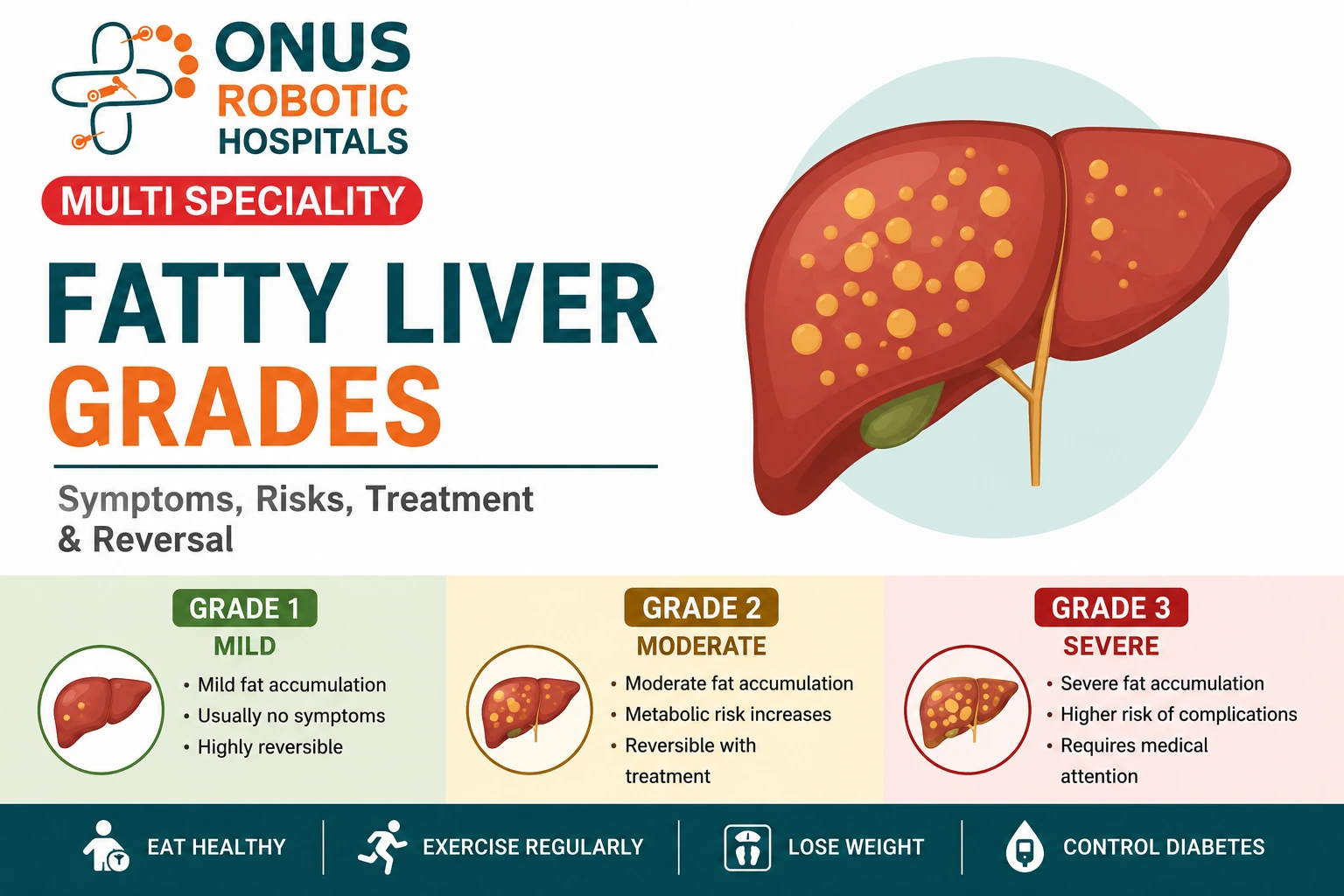
Stages of Fatty Liver Disease (NAFLD Progression)
Understanding the progression is crucial.
1️⃣ Simple Steatosis
Fat accumulates in liver cells without significant inflammation.
Reversible with lifestyle modification.
2️⃣ Non-Alcoholic Steatohepatitis (NASH)
Fat + inflammation + liver cell injury.
Higher risk of progression.
3️⃣ Liver Fibrosis
Scar tissue begins forming inside the liver.
Early fibrosis may still be reversible.
4️⃣ Liver Cirrhosis
Advanced scarring leads to permanent structural damage.
Complications increase.
5️⃣ Hepatocellular Carcinoma (Liver Cancer)
In some advanced cases, fatty liver can progress to cancer.
Most patients are unaware they are moving through these stages.
Early detection can halt progression before fibrosis develops.
Why Silent Fatty Liver Is Dangerous
Silent fatty liver is not just a liver issue.
It is a metabolic disease closely linked to:
-
Type 2 diabetes
-
Insulin resistance
-
High triglycerides
-
Obesity
-
Metabolic syndrome
Research consistently shows that patients with NAFLD have increased risk of:
-
Heart attack
-
Stroke
-
Chronic kidney disease
In fact, cardiovascular disease is the leading cause of death in fatty liver patients — not liver failure.
Managing fatty liver protects both liver and heart.
Warning Signs of Silent Liver Damage
Even without symptoms, subtle red flags may appear:
-
Elevated ALT (SGPT)
-
Elevated AST (SGOT)
-
High HbA1c
-
Triglycerides above 150–200 mg/dL
-
Central abdominal obesity
-
Persistent fatigue
Important:
Liver Function Tests (LFT) can be normal while fibrosis is developing.
Normal blood tests do NOT always mean a healthy liver.
Why Urban Patients Are at Higher Risk
Modern lifestyle significantly contributes to NAFLD:
-
High refined carbohydrate intake
-
Excess rice and sugar consumption
-
Sedentary work patterns
-
Poor sleep quality
-
Chronic stress
-
Low muscle mass
Insulin resistance plays a central role in fatty liver progression.
Without correcting metabolic dysfunction, fat continues accumulating inside liver cells.
How Silent Fatty Liver Is Diagnosed
Comprehensive evaluation includes:
✔️ Ultrasound Abdomen
Detects fatty infiltration.
✔️ FibroScan
Measures liver stiffness and fibrosis stage.
✔️ Liver Function Tests (LFT)
Evaluates ALT and AST levels.
✔️ Lipid Profile
Assesses triglycerides and cholesterol.
✔️ Fasting Insulin / HOMA-IR
Detects insulin resistance.
✔️ HbA1c
Evaluates long-term glucose control.
Early fibrosis detection changes the treatment strategy dramatically.
Can Silent Fatty Liver Be Reversed?
Yes — especially in early stages.
Evidence-based reversal strategies include:
🔹 Reduce Refined Carbohydrates
Lower sugar and processed starch intake.
🔹 Structured High-Protein Diet
Preserves muscle and improves metabolic rate.
🔹 Strength Training
Improves insulin sensitivity.
🔹 7–10% Weight Reduction
Significantly decreases liver fat.
🔹 Tight Diabetes Control
Maintain HbA1c within target range.
With structured metabolic correction, many patients see improvement within 3–6 months.
When Should You Seek Medical Consultation?
Immediate evaluation is recommended if you have:
-
Persistent elevated liver enzymes
-
Grade 2 or Grade 3 fatty liver
-
Diabetes with fatty liver
-
Triglycerides >200 mg/dL
-
Family history of liver disease
-
Central obesity
Delaying management increases fibrosis risk.
Frequently Asked Questions
❓ Can silent fatty liver cause cirrhosis?
Yes. Untreated NAFLD can progress to fibrosis and cirrhosis over years.
❓ Does fatty liver increase heart disease risk?
Yes. NAFLD significantly increases cardiovascular risk.
❓ Can fatty liver exist with normal LFT?
Yes. Many patients with fibrosis have normal ALT and AST.
❓ How long does reversal take?
Improvement is often seen within 3–6 months with structured treatment.
Final Message
Your liver does not scream.
It scars quietly.
If you have diabetes, obesity, or high triglycerides, do not ignore screening.
Early detection prevents irreversible damage.
Protect your liver before it reaches a stage where it cannot heal.
Consultation
📍 Dr. Ravi Kiran
Diabetologist & Preventive Medicine Specialist
Onus Robotic Hospital, Hyderabad