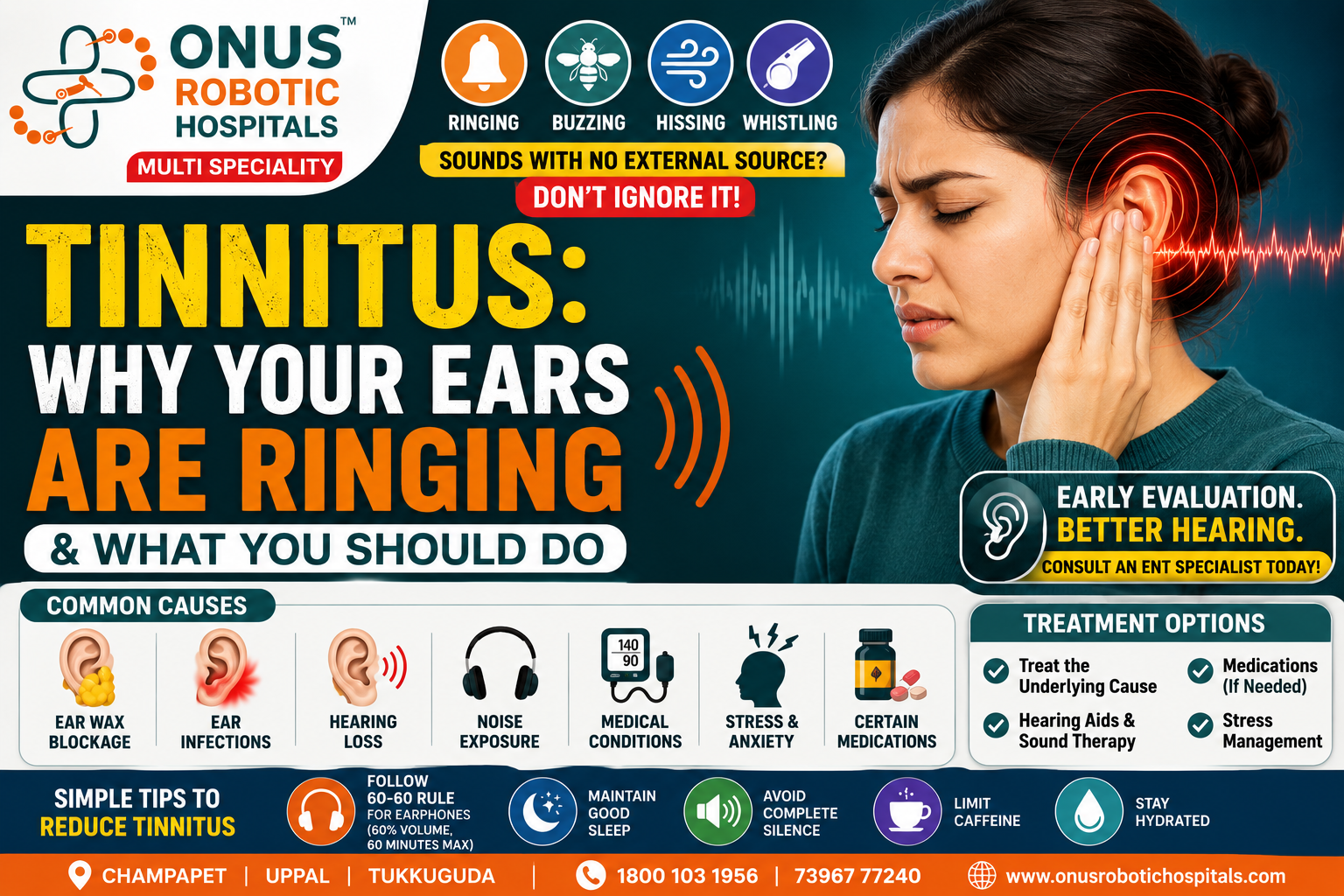
Tinnitus: Why Your Ears Are Ringing & What You Should Do- By Dr. Akshitha Reddy, ENT Specialist, ONUS Robotic Hospitals
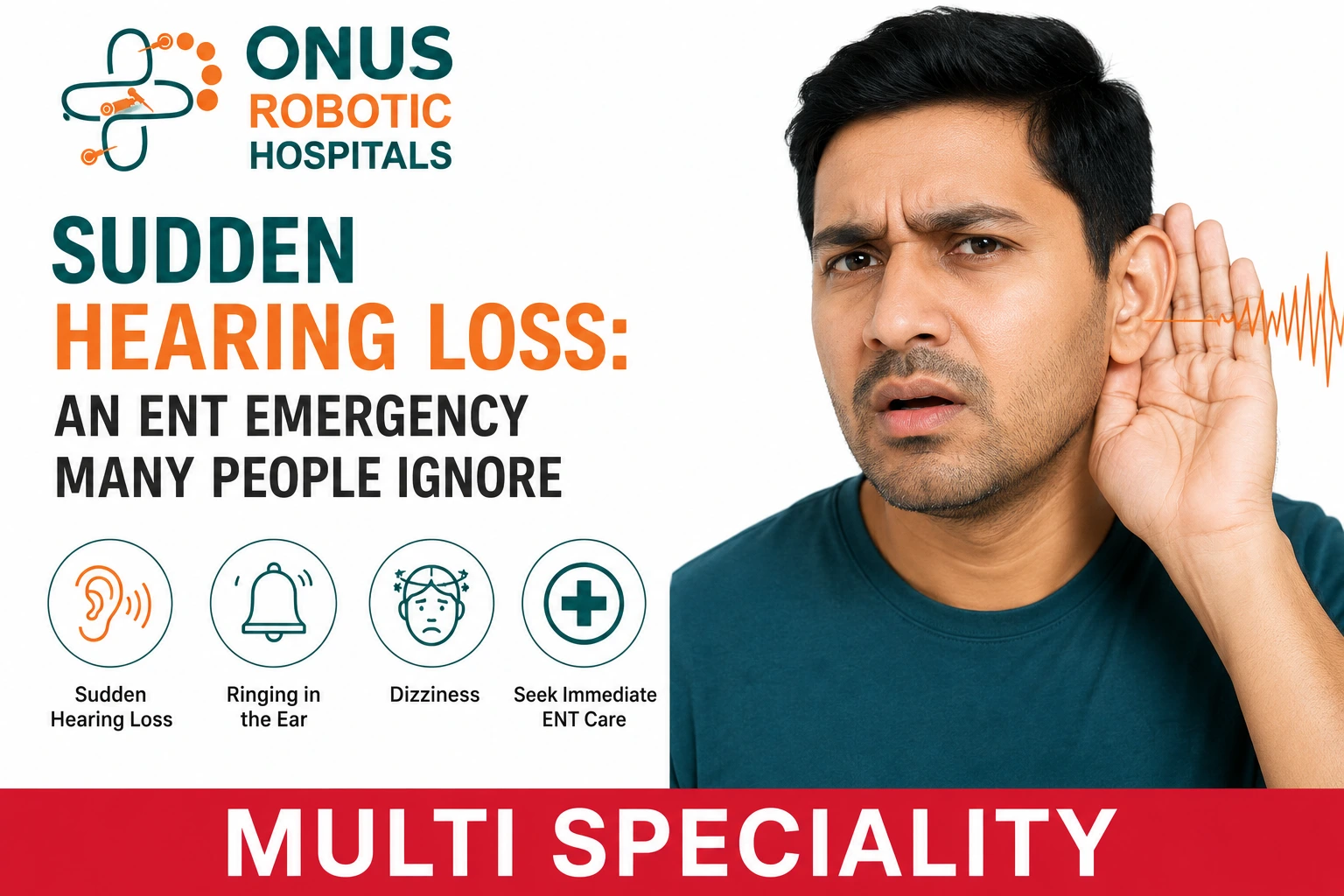
Many people experience a ringing, buzzing, or hissing sound in their ears even when the surroundings are completely silent. This condition is called Tinnitus.
Tinnitus is not a disease by itself — it is usually a symptom of an underlying ear problem, hearing issue, lifestyle factor, or medical condition.
At ONUS Robotic Hospitals, ENT specialists like Dr. Akshitha Reddy help diagnose and manage tinnitus using modern evaluation and treatment approaches.
What is Tinnitus?
Tinnitus is the perception of sound without any external source.
Patients commonly describe tinnitus as:
- Ringing 🔔
- Buzzing 🐝
- Hissing 🌬️
- Whistling
- Clicking
- Roaring sounds
It may occur:
- In one ear
- In both ears
- Inside the head
Some people experience mild occasional symptoms, while others may have persistent tinnitus that affects sleep, concentration, and quality of life.
How Common is Tinnitus?
Tinnitus affects millions of people worldwide.
It is more common in:
- Older adults
- People exposed to loud noise
- Individuals using earphones frequently
- Patients with hearing loss
- Those under high stress
Why Does Tinnitus Happen?
The ear and brain work together to process sound. When there is abnormal stimulation anywhere in the hearing pathway, the brain may perceive sounds that are not actually present.
Common Causes of Tinnitus
1. Ear Wax Blockage
Excess ear wax can block the ear canal and interfere with hearing, leading to ringing sensations.
Symptoms
- Ear blockage
- Reduced hearing
- Ringing sound
- Fullness in ear
2. Hearing Loss
Age-related hearing loss or damage due to loud noise exposure is one of the most common causes of tinnitus.
Common Risk Factors
- Frequent earphone use
- Loud music
- Industrial noise
- Factory work
- Traffic exposure
3. Ear Infections
Middle or outer ear infections can irritate the hearing system and trigger tinnitus.
Symptoms
- Ear pain
- Fever
- Ear discharge
- Temporary hearing reduction
4. Noise Exposure
Repeated exposure to loud environments can permanently damage delicate inner ear cells.
Examples
- DJs and musicians
- Factory workers
- Construction workers
- Frequent headphone users
5. Medical Conditions
Several health problems can contribute to tinnitus.
These include:
- High blood pressure
- Diabetes
- Thyroid disorders
- Anemia
- Poor blood circulation
6. Stress & Anxiety
Stress does not directly damage the ear but can amplify tinnitus symptoms.
Many patients notice tinnitus worsening during:
- Anxiety
- Sleep deprivation
- Emotional stress
- Fatigue
7. Certain Medications
Some medicines may trigger or worsen tinnitus.
Examples:
- Certain antibiotics
- Painkillers (high doses)
- Chemotherapy drugs
- Some antidepressants
Never stop medications without consulting your doctor.
Symptoms Associated with Tinnitus
Apart from ringing sounds, patients may experience:
- Difficulty concentrating
- Disturbed sleep
- Irritation
- Anxiety
- Reduced hearing
- Ear fullness
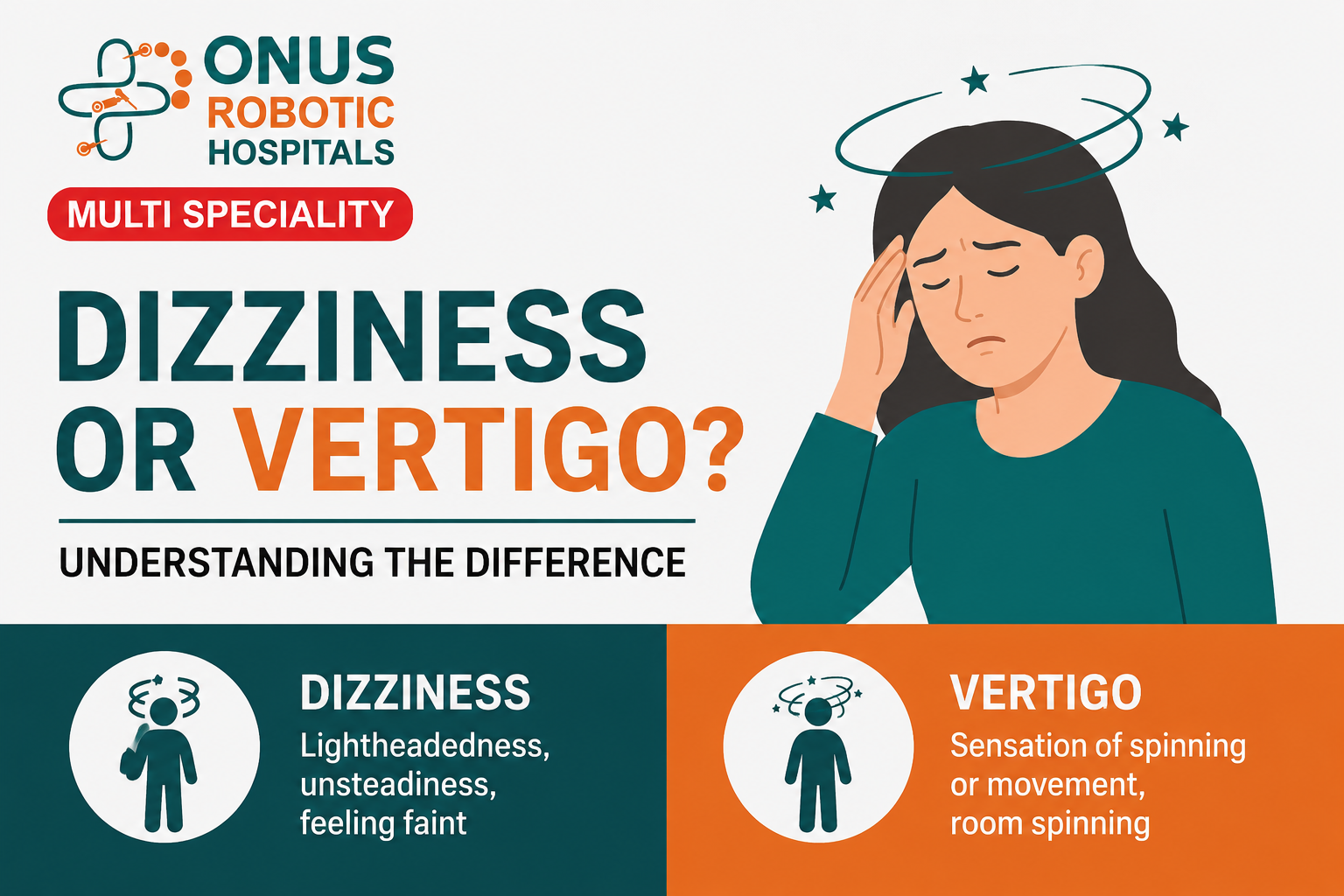
- Dizziness (in some cases)
When Should You See an ENT Specialist?
Tinnitus should not be ignored if it is:
⚠ Sudden in onset
⚠ Associated with hearing loss
⚠ Present only in one ear
⚠ Associated with dizziness or imbalance
⚠ Persistent for weeks
These symptoms may indicate a more serious underlying condition.
How is Tinnitus Diagnosed?
An ENT specialist may evaluate tinnitus using:
Ear Examination
To check for:
- Wax
- Infection
- Eardrum issues
Hearing Test (Audiometry)
This is one of the most important tests for tinnitus evaluation.
It helps identify:
- Hearing loss
- Frequency affected
- Severity
Imaging Tests (If Needed)
In selected cases:
- MRI scan
- CT scan
may be advised to rule out structural problems.
Treatment Options for Tinnitus
Treatment depends on the underlying cause.
1. Ear Wax Removal
If wax blockage is causing tinnitus, professional ear cleaning may immediately improve symptoms.
2. Medications
If infections or inflammation are present, medicines may help.
3. Hearing Aids
Patients with hearing loss may benefit significantly from hearing aids.
Hearing aids help:
- Improve hearing
- Reduce tinnitus perception
- Improve communication
4. Sound Therapy
Soft background sounds may help the brain focus less on tinnitus.
Examples:
- White noise
- Nature sounds
- Soft instrumental music
5. Stress Management
Managing stress can significantly reduce tinnitus severity.
Helpful methods include:
- Meditation
- Yoga
- Proper sleep
- Relaxation techniques
Lifestyle Tips to Reduce Tinnitus
Follow the 60-60 Rule 🎧
- Maximum 60% volume
- Maximum 60 minutes continuously
Avoid Loud Noise
Use ear protection in noisy environments.
Improve Sleep 😴
Poor sleep can worsen tinnitus perception.
Reduce Caffeine & Nicotine
These may aggravate symptoms in some patients.
Stay Hydrated
Good hydration supports overall ear health.
Avoid Complete Silence
Soft background sounds often help reduce awareness of tinnitus.
Can Tinnitus Be Cured?
Some tinnitus cases improve completely when the underlying cause is treated.
Examples:
✔ Wax removal
✔ Ear infection treatment
✔ Medication adjustment
However, chronic tinnitus related to hearing loss may require long-term management strategies rather than a complete cure.
Can Tinnitus Lead to Serious Problems?
Tinnitus itself is usually not dangerous, but persistent untreated tinnitus can affect:
- Sleep
- Mental health
- Concentration
- Daily functioning
- Quality of life
That is why early evaluation is important.
Prevention Tips
✔ Avoid excessive earphone usage
✔ Use hearing protection in loud places
✔ Control BP and diabetes
✔ Avoid inserting earbuds inside ears
✔ Get regular hearing checkups if exposed to loud noise
Final Takeaway
Tinnitus is common but should never be ignored if persistent.
👉 Early ENT evaluation can identify the underlying cause and help prevent long-term hearing complications.
If you experience ringing, buzzing, or hissing sounds in your ears, consult an ENT specialist for proper diagnosis and personalized treatment.
For Appointments:
👩⚕️ Dr. Akshitha Reddy
ENT Specialist
Providing ethical, evidence-based care for ear, nose, throat, sinus, and airway conditions.
ONUS Robotic Hospitals – Hyderabad
👉 link: contact-us or book-appointment