Sudden Hearing Loss: An ENT Emergency Many People Ignore- By Consultant ENT Head & Neck Surgeon, ONUS Robotic Hospitals

Sudden Hearing Loss: An ENT Emergency Many People Ignore- By Consultant ENT Head & Neck Surgeon, ONUS Robotic Hospitals

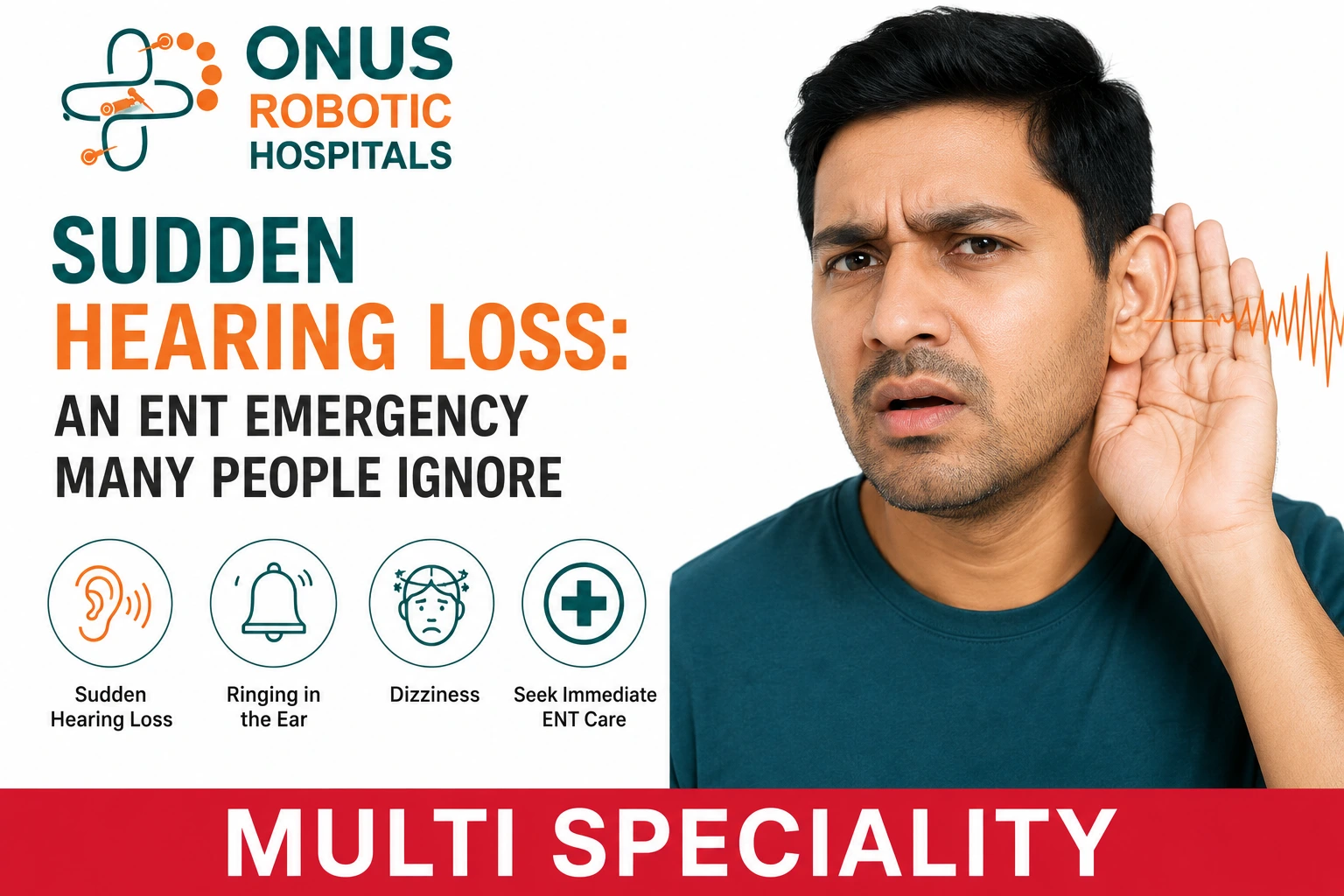
Hearing is one of our most valuable senses, yet many people ignore sudden changes in their ability to hear, assuming the problem will resolve on its own. Unfortunately, Sudden Hearing Loss (SHL) is considered an ENT emergency, and delaying treatment can significantly reduce the chances of recovering normal hearing.

If you suddenly notice hearing loss in one ear, muffled hearing, ringing sounds, or dizziness, seek immediate medical attention. Early diagnosis and treatmentβ€”ideally within the first 24 to 72 hoursβ€”can make a significant difference in restoring hearing.


What Is Sudden Hearing Loss?

Sudden Hearing Loss, also called Sudden Sensorineural Hearing Loss (SSNHL), is a rapid loss of hearing that occurs over a few hours or within three days. It usually affects one ear and often happens without warning.

Many patients first notice the problem when:

  • Waking up in the morning
  • Using the telephone
  • Wearing earphones
  • Realizing one ear cannot hear properly

Unlike hearing loss caused by earwax, sudden sensorineural hearing loss affects the inner ear or hearing nerve and requires urgent medical evaluation.


Common Symptoms of Sudden Hearing Loss

Symptoms may include:

  • Sudden decrease in hearing in one ear
  • Muffled or distorted hearing
  • Ringing in the ear (Tinnitus)
  • Ear fullness or pressure
  • Dizziness or Vertigo
  • Difficulty understanding speech
  • Feeling that sounds are unusually soft
  • Loss of balance in some cases

These symptoms should never be ignored, even if they seem mild.


What Causes Sudden Hearing Loss?

In many cases, the exact cause remains unknown. However, several conditions may contribute:

Viral Infections

Viruses affecting the inner ear are one of the most common suspected causes.

Reduced Blood Supply

Poor circulation to the delicate structures of the inner ear can damage hearing.

Autoimmune Disorders

The immune system may mistakenly attack the inner ear.

Head Injury

Trauma to the head or ear may result in sudden hearing loss.

Inner Ear Disorders

Conditions affecting the cochlea or auditory nerve can interfere with hearing.

Certain Medications

Some medicines may damage hearing when used in high doses or over long periods.

Neurological Conditions

Rarely, tumors such as acoustic neuroma or other nerve disorders may cause hearing loss.


Who Is at Risk?

Although sudden hearing loss can occur at any age, it is more common in:

  • Adults between 30 and 60 years
  • Individuals with diabetes
  • People with hypertension
  • Patients with autoimmune diseases
  • Individuals recovering from viral infections
  • Smokers
  • People with cardiovascular disease

Why Is Sudden Hearing Loss an Emergency?

The inner ear contains delicate sensory cells that cannot regenerate once permanently damaged.

Without prompt treatment:

  • Permanent hearing loss may occur.
  • Persistent tinnitus may develop.
  • Balance problems may continue.
  • Speech understanding may worsen.
  • Quality of life may be significantly affected.

Starting treatment within 24 to 72 hours offers the best chance of hearing recovery.


How Is Sudden Hearing Loss Diagnosed?

An ENT specialist will perform a detailed evaluation, including:

Medical History

Understanding when the hearing loss started and associated symptoms.

Ear Examination

Checking for wax, infection, or other visible causes.

Hearing Tests (Audiometry)

Measures the degree and type of hearing loss.

Tympanometry

Evaluates middle ear function.

MRI Scan

May be recommended to rule out nerve-related conditions or tumors.

Blood Tests

Sometimes performed to identify underlying medical conditions.


Treatment Options

Treatment depends on the cause but often includes:

Corticosteroid Therapy

Steroids are the primary treatment for sudden sensorineural hearing loss and help reduce inflammation in the inner ear.

Intratympanic Steroid Injections

Medication is injected directly into the middle ear in selected patients.

Antiviral Medications

May be prescribed if a viral infection is suspected.

Treatment of Underlying Conditions

Managing diabetes, hypertension, or autoimmune diseases can improve outcomes.

Hearing Rehabilitation

If hearing does not fully recover, hearing aids or other assistive devices may be recommended.


Can Hearing Recover?

Yes. Many patients experience partial or complete recovery, especially when treatment begins early.

Recovery depends on:

  • How quickly treatment starts
  • Severity of hearing loss
  • Patient’s age
  • Underlying cause
  • Presence of dizziness or vertigo

The sooner you seek medical attention, the better the chances of restoring hearing.


How Can You Protect Your Hearing?

While not all cases are preventable, these steps may help maintain ear health:

  • Seek immediate care for sudden hearing changes.
  • Control diabetes and blood pressure.
  • Avoid exposure to loud noise.
  • Use hearing protection in noisy environments.
  • Avoid unnecessary use of earphones at high volume.
  • Do not insert objects into the ear.
  • Schedule regular ENT check-ups if you have recurring ear problems.

When Should You See an ENT Specialist Immediately?

Visit an ENT specialist without delay if you experience:

  • Sudden hearing loss in one or both ears
  • Ringing in the ears with hearing loss
  • Hearing loss associated with dizziness
  • Ear fullness that does not improve
  • Difficulty understanding speech suddenly
  • Hearing changes after head injury

Do not wait to see if your hearing returns on its own. Early treatment can prevent permanent hearing damage.


Expert ENT Care at ONUS Robotic Hospitals

At ONUS Robotic Hospitals, our experienced ENT specialists provide prompt evaluation and advanced treatment for sudden hearing loss using modern diagnostic equipment and evidence-based therapies. Early diagnosis and timely intervention are essential to preserving your hearing and improving recovery outcomes.

If you notice sudden hearing loss or ringing in your ears, seek immediate medical attention. Acting quickly could save your hearing.


Conclusion

Sudden hearing loss is not just a minor inconvenienceβ€”it is a true medical emergency. Ignoring the symptoms or delaying treatment can result in permanent hearing impairment and significantly affect your quality of life. Recognizing the warning signs, consulting an ENT specialist promptly, and beginning treatment within the critical early window offer the best chance for recovery. If you or someone you know experiences sudden hearing loss, don’t waitβ€”seek expert ENT care immediately.

Consultant ENT Head & Neck Surgeon

ONUS Robotic Hospitals – Hyderabad

πŸ‘‰ link: contact-us or book-appointment
Β 

Book Doctor Appointment
Book Free Appointment
Please enable JavaScript in your browser to complete this form.