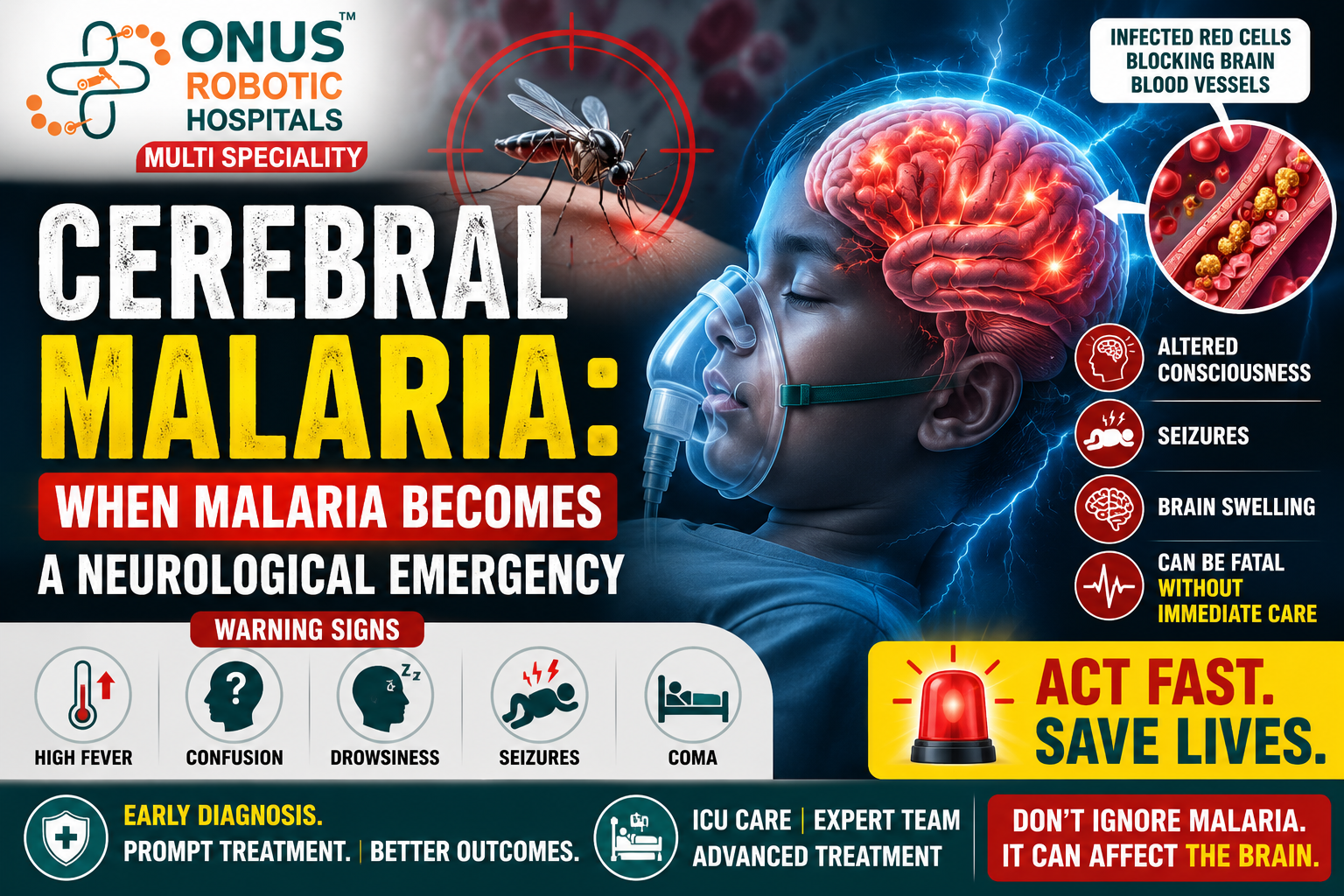
Cerebral Malaria: When Malaria Becomes a Neurological Emergency – By Dr.Krishna Chaithanya Reddy, Neurologist, ONUS Robotic Hospitals
Cerebral malaria is one of the most dangerous complications of malaria and a true neurological emergency. It occurs when severe malaria affects the brain, leading to altered consciousness, seizures, coma, and sometimes death.
Most cases are caused by Plasmodium falciparum, the deadliest form of malaria parasite. Despite advances in treatment, cerebral malaria continues to cause significant mortality and long-term neurological disability, especially in children and young adults living in endemic regions.
At ONUS Robotic Hospitals, early recognition and emergency treatment of severe infections and neurological emergencies remain critical for improving outcomes.
What Is Cerebral Malaria?
Cerebral malaria is a severe form of malaria in which the infection causes dysfunction of the brain.
Doctors diagnose cerebral malaria when a patient develops:
- Altered consciousness
- Severe confusion
- Repeated seizures
- Unresponsiveness or coma
along with laboratory evidence of malaria infection after ruling out other causes like meningitis, encephalitis, stroke, or metabolic disorders.
In simple terms:
👉 Cerebral malaria is not just “malaria fever.”
👉 It is malaria attacking the brain.
How Does Cerebral Malaria Affect the Brain?
The disease process is complex, but the major problem occurs when infected red blood cells block tiny blood vessels in the brain.
This reduces oxygen delivery and triggers severe inflammation.
Main Mechanisms of Brain Injury
1. Sequestration of Infected Red Blood Cells
Malaria-infected red blood cells become sticky and attach to blood vessel walls inside the brain.
This causes:
- Reduced blood flow
- Reduced oxygen supply
- Brain tissue injury
2. Endothelial Dysfunction
The inner lining of blood vessels becomes inflamed and damaged.
This worsens:
- Brain swelling
- Capillary leakage
- Reduced circulation
3. Blood–Brain Barrier Damage
Inflammation weakens the protective barrier surrounding the brain.
This can lead to:
- Cerebral edema (brain swelling)
- Raised intracranial pressure
4. Neuroinflammation
The body releases excessive inflammatory chemicals called cytokines.
This inflammatory storm further damages brain cells and worsens neurological dysfunction.
5. Seizures & Metabolic Injury
Repeated seizures, low blood sugar, acidosis, and tissue hypoxia can further damage the brain.
Who Is at Risk?
Cerebral malaria is more common in:
- Children in malaria-endemic areas
- Travelers without immunity
- Pregnant women
- Immunocompromised individuals
- Adults with severe falciparum malaria
Children are particularly vulnerable to:
- Brain swelling
- Recurrent seizures
Adults often develop:
- Kidney failure
- Shock
- Multi-organ dysfunction
Symptoms of Cerebral Malaria
The illness may begin like ordinary malaria but can rapidly progress.
Early Symptoms
Common Early Features
- High fever with chills
- Severe headache
- Vomiting
- Body pains
- Weakness
- Confusion or irritability
Neurological Danger Signs
⚠ Altered behavior
⚠ Drowsiness
⚠ Delirium
⚠ Repeated seizures
⚠ Abnormal posturing
⚠ Weakness
⚠ Unresponsiveness
⚠ Coma
In severe cases, patients may develop:
- Abnormal breathing
- Brainstem dysfunction
- Loss of reflexes
These are poor prognostic signs.
Diagnosis of Cerebral Malaria
Cerebral malaria is primarily a clinical diagnosis supported by laboratory testing.
Important Diagnostic Tests
Malaria Tests
✔ Peripheral blood smear
✔ Rapid malaria antigen test
Blood Tests
✔ CBC
✔ Blood glucose
✔ Liver function tests
✔ Kidney function tests
✔ Electrolytes
✔ ABG/lactate
Neuroimaging
MRI or CT scan may be performed if:
- Focal neurological deficits are present
- Diagnostic uncertainty exists
MRI may show:
- Brain swelling
- Cerebral edema
Treatment: A True ICU Emergency
Cerebral malaria requires immediate intensive care treatment.
👉 Delay can be fatal.
1. IV Artesunate (Life-Saving Treatment)
The treatment of choice is:
Intravenous Artesunate
This medicine is superior to quinine and significantly reduces mortality.
Typical dosing:
- 0 hours
- 12 hours
- 24 hours
- Then daily until oral therapy is possible
2. Seizure Control
Repeated seizures must be controlled quickly.
Doctors may use:
- IV benzodiazepines
- Antiepileptic medications
3. Blood Sugar Monitoring
Low blood sugar (hypoglycemia) is very common and dangerous.
Frequent glucose monitoring is essential.
4. Management of Brain Swelling
Treatment may include:
- Head elevation
- Oxygen support
- Avoiding excess fluids
- Ventilator support if required
5. Intensive Supportive Care
Patients may require:
- ICU monitoring
- Dialysis
- Blood transfusions
- Shock management
- Electrolyte correction
Important Mistakes to Avoid
❌ Delaying treatment while waiting for reports
❌ Overhydrating the patient
❌ Ignoring hypoglycemia
❌ Missing meningitis or stroke mimics
Complications of Cerebral Malaria
Even survivors may suffer long-term neurological problems.
Short-Term Complications
- Status epilepticus
- Respiratory failure
- Shock
- Kidney injury
- DIC
- Raised intracranial pressure
Long-Term Complications
- Epilepsy
- Cognitive decline
- Learning difficulties
- Behavioral changes
- Motor weakness
- Speech problems
Prognosis
Cerebral malaria carries a high mortality rate even with treatment.
Poor prognostic signs include:
⚠ Deep coma
⚠ Recurrent seizures
⚠ Severe acidosis
⚠ Hypoglycemia
⚠ Shock
⚠ Kidney failure
⚠ Brainstem signs
Prevention of Cerebral Malaria
The best prevention is early diagnosis and treatment of uncomplicated malaria.
Prevention Tips
✔ Mosquito control
✔ Insecticide-treated bed nets
✔ Indoor spraying
✔ Early malaria treatment
✔ Chemoprophylaxis for travelers
✔ Public awareness in endemic areas
Final Takeaway
Cerebral malaria is one of the most severe neurological emergencies associated with infection.
👉 It can rapidly progress from fever to seizures, coma, brain injury, or death.
Early recognition, immediate IV artesunate, seizure control, and aggressive ICU care are critical for survival.
For Appointments:
Dr. Krishna Chaithanya Reddy
Consultant – Interventional Neurologist
ONUS Robotic Hospitals – Hyderabad
👉 link: contact-us or book-appointment