Early Symptoms of AVN Hip
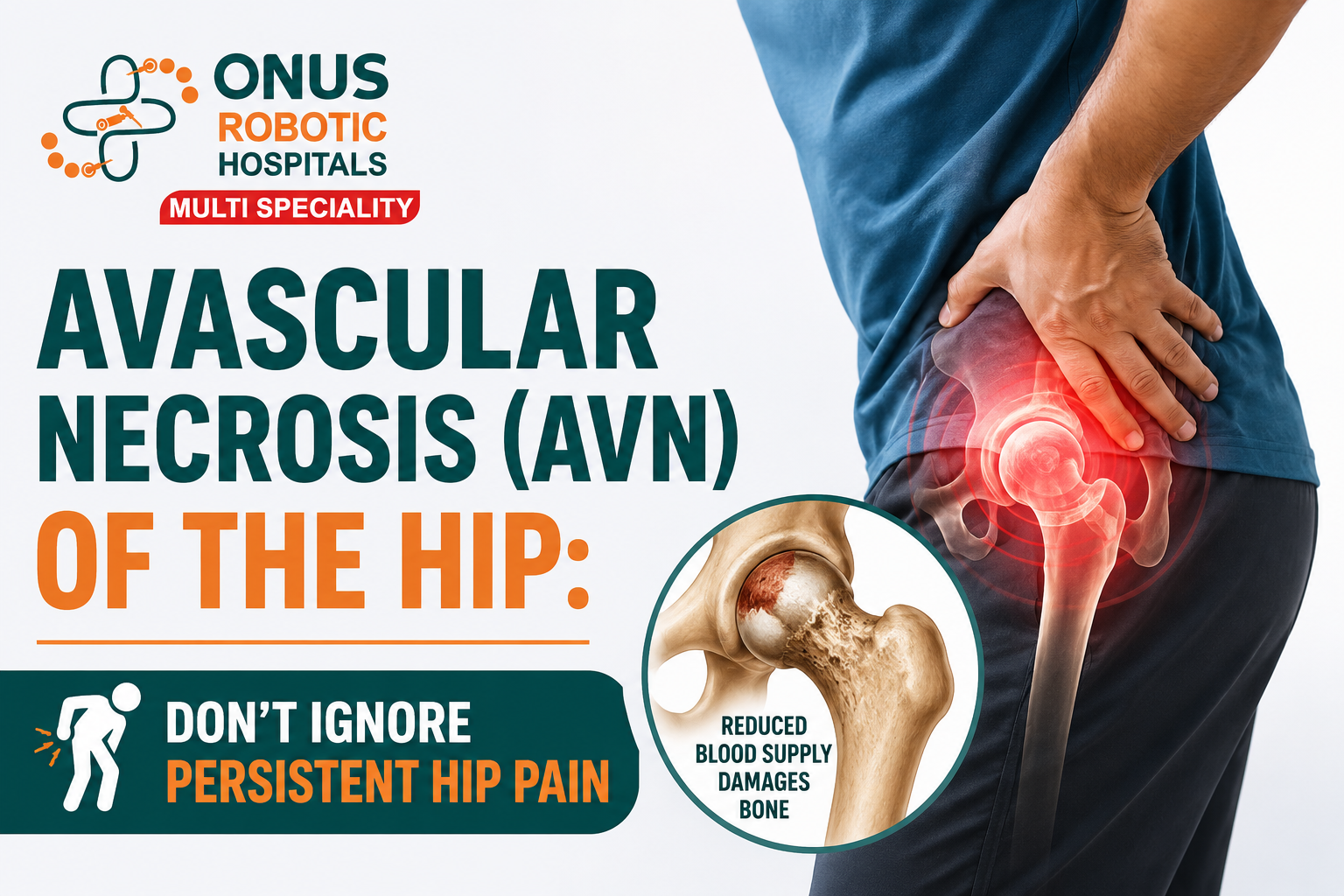
In early stages, symptoms may be mild and often ignored.
Common Symptoms Include:
- Hip pain while walking
- Groin pain
- Pain while climbing stairs
- Limping while walking
- Stiffness in hip movement
- Difficulty sitting cross-legged
- Pain increasing gradually over months
- Reduced range of motion
Pain may initially occur only during activity but later become constant, even at rest.
Stages of AVN Hip
Stage 1 – Early AVN
- MRI changes visible
- X-ray may appear normal
- Mild pain
👉 Best stage for joint preservation treatment
Stage 2 – Bone Damage Begins
- Bone structure weakens
- Early collapse risk
- Pain increases
Stage 3 – Joint Collapse
- Femoral head begins collapsing
- Severe pain and limping
- Reduced mobility
Stage 4 – Advanced Arthritis
- Hip joint completely damaged
- Severe stiffness and pain
- Daily activities become difficult
👉 Hip replacement usually needed
How is AVN Diagnosed?
Clinical Examination
Orthopedic evaluation helps assess:
- Hip movement
- Limping
- Pain location
- Joint stiffness
Imaging Tests
X-ray
Useful in moderate and advanced stages.
MRI Scan (Most Important)
MRI detects AVN very early before X-ray changes appear.
CT Scan
Sometimes used for detailed bone evaluation.
Treatment Options for AVN Hip
Treatment depends on:
- Stage of AVN
- Age of patient
- Severity of bone damage
- Activity level
Non-Surgical Treatment (Early Stages)
Medicines
Pain relief medications and bone-supportive therapy may help in selected cases.
Lifestyle Changes
- Stop alcohol consumption
- Avoid smoking
- Weight management
- Reduce stress on hip joint
Physiotherapy
Helps improve:
- Hip mobility
- Muscle strength
- Walking pattern
Joint Preservation Procedures
Core Decompression
This is commonly performed in early-stage AVN.
Procedure:
- Small channels are created inside the bone
- Pressure is reduced
- Blood flow improves
- Bone healing may be stimulated
👉 Helps delay or prevent joint collapse in selected patients.
Advanced Surgical Treatment
Robotic Hip Replacement Surgery
When AVN progresses and the joint collapses, hip replacement becomes the best option.
Benefits of Robotic Hip Replacement:
- Precise implant positioning
- Better joint alignment
- Improved mobility
- Faster recovery
- Reduced pain
- Long-term durability
At ONUS Robotic Hospitals, advanced robotic technology helps improve surgical accuracy and patient outcomes.
Why Early Diagnosis Matters
Ignoring AVN can lead to:
- Joint collapse
- Severe arthritis
- Permanent limp
- Chronic pain
- Need for major surgery at younger age
👉 Early treatment can help preserve the natural hip joint.
When Should You Consult an Orthopedic Specialist?
Consult immediately if you have:
- Persistent hip or groin pain
- Difficulty walking
- Pain while climbing stairs
- Limping
- Reduced hip movement
- History of steroid use or alcohol intake
Prevention Tips
Although not all AVN cases are preventable, risk can be reduced by:
- Avoiding unnecessary steroid use
- Limiting alcohol intake
- Maintaining healthy weight
- Early treatment after hip injuries
- Regular orthopedic checkups for persistent hip pain
Final Takeaway
Hip pain at a young age should never be ignored.
Avascular Necrosis (AVN) is a progressive condition, but early diagnosis and timely treatment can help preserve your joint and prevent disability.
👉 Early treatment = Better mobility + Better quality of life + Delayed joint replacement
For Appointments:
Dr. Balaraju Naidu, Robotic Orthopedic Surgeon
ONUS Robotic Hospitals – Hyderabad
👉 link: contact-us or book-appointment