Knee replacement surgery is one of the most successful procedures for relieving chronic knee pain caused by arthritis and improving mobility. However, the surgery itself is only the first step toward recovery. Physiotherapy plays a vital role in helping patients regain strength, flexibility, balance, and confidence after knee replacement surgery.
Many patients ask, “If my surgery is successful, do I still need physiotherapy?” The answer is yes. Even after a perfectly performed knee replacement, rehabilitation is essential to achieve the best possible outcome.
In this article, Dr. Balaraju Naidu, Robotic Orthopedic Surgeon at ONUS Robotic Hospitals, explains why physiotherapy is important after knee replacement surgery, how it supports recovery, and what happens if rehabilitation is neglected.
Why Is Physiotherapy Important After Knee Replacement?
During knee replacement surgery, damaged joint surfaces are replaced with artificial implants. While the implants restore the knee joint, the surrounding muscles, ligaments, and soft tissues still need time to heal and adapt.
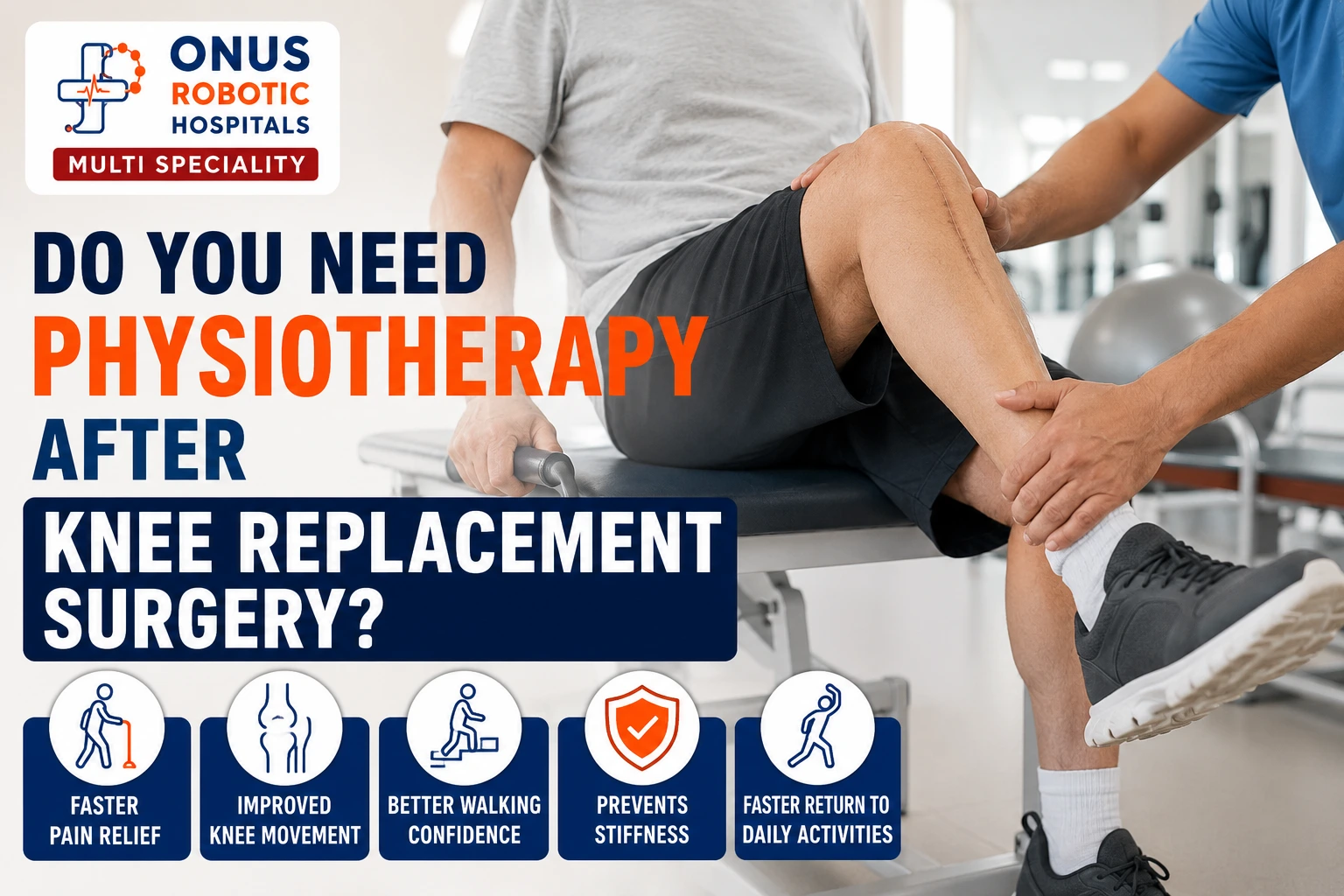
Physiotherapy helps patients:
- Reduce pain and swelling
- Improve knee flexibility
- Restore muscle strength
- Improve walking ability
- Increase confidence in movement
- Prevent stiffness
- Return to daily activities safely
Without proper rehabilitation, recovery may be slower and the full benefits of surgery may not be achieved.
Types of Knee Replacement Surgery
Conventional Knee Replacement
Traditional knee replacement relies on standard surgical instruments and the surgeon’s expertise for implant placement.
Navigation-Assisted Knee Replacement
Navigation technology provides additional guidance during surgery to improve implant alignment and positioning.
Robotic Knee Replacement
Robotic-assisted knee replacement combines advanced imaging, computerized planning, and robotic technology to help surgeons perform procedures with greater precision.
It is important to remember that the robotic system assists the surgeon—the surgeon remains in complete control throughout the operation.
Benefits of Physiotherapy After Knee Replacement
1. Faster Pain Relief
Gentle exercises and guided movements improve blood circulation, reduce swelling, and help decrease pain during recovery.
2. Improved Knee Movement
One of the primary goals of physiotherapy is restoring knee bending (flexion) and straightening (extension).
Better range of motion helps patients:
- Sit comfortably
- Climb stairs
- Walk normally
- Perform everyday activities with ease
3. Stronger Muscles
After surgery, the muscles around the knee may become weak.
Physiotherapy strengthens:
- Quadriceps
- Hamstrings
- Calf muscles
- Hip muscles
Stronger muscles provide better support and stability for the new knee joint.
4. Better Walking Confidence
Patients often hesitate to put weight on the operated leg.
Physiotherapists guide patients through:
- Walking techniques
- Balance training
- Stair climbing
- Gait correction
These exercises help restore confidence and improve independence.
5. Prevention of Knee Stiffness
One of the most common complications after knee replacement is stiffness caused by inadequate movement.
Regular physiotherapy helps maintain:
- Joint flexibility
- Muscle elasticity
- Functional movement
Early rehabilitation significantly reduces the risk of stiffness.
6. Prevention of Flexion Deformity
Keeping the knee bent continuously after surgery may result in flexion deformity, making it difficult to fully straighten the leg.
Physiotherapy includes exercises that encourage full knee extension, helping patients achieve a normal walking pattern.
7. Faster Return to Daily Activities
With regular rehabilitation, many patients gradually return to:
- Walking independently
- Household activities
- Office work
- Recreational activities
- Social engagements
Recovery varies depending on age, overall health, and commitment to physiotherapy.
How Long Is Physiotherapy Needed?
Although recovery differs for every patient, many surgeons recommend 10–15 days of supervised physiotherapy immediately after surgery, followed by a structured home exercise program.
Your orthopedic surgeon and physiotherapist will tailor the rehabilitation plan to your specific needs.
What Happens If You Skip Physiotherapy?
Patients who avoid rehabilitation may experience:
- Knee stiffness
- Reduced range of motion
- Persistent pain
- Muscle weakness
- Difficulty walking
- Poor balance
- Slower recovery
- Flexion deformity
- Difficulty climbing stairs
Skipping physiotherapy can limit the long-term benefits of knee replacement surgery.
What Does a Typical Rehabilitation Program Include?
Your physiotherapy plan may include:
Pain and Swelling Management
- Ice therapy
- Leg elevation
- Gentle movements
Range of Motion Exercises
- Knee bending exercises
- Knee straightening exercises
Muscle Strengthening
- Quadriceps strengthening
- Straight leg raises
- Hip strengthening
Walking Training
- Walker-assisted walking
- Cane-assisted walking
- Independent walking
Balance and Functional Exercises
- Standing balance
- Stair climbing
- Sit-to-stand practice
The intensity of exercises gradually increases as healing progresses.
Tips for a Smooth Recovery
To achieve the best results after knee replacement:
- Follow your physiotherapy schedule
- Perform home exercises regularly
- Take medications as prescribed
- Maintain a healthy weight
- Stay active without overexertion
- Attend follow-up appointments
- Inform your doctor about persistent pain or swelling
Consistency is the key to successful recovery.
When Should You Contact Your Doctor?
Seek medical attention if you experience:
- Increasing pain
- Excessive swelling
- Fever
- Redness around the surgical site
- Persistent wound discharge
- Difficulty moving the knee
- Sudden calf pain or swelling
Prompt evaluation helps identify complications early.
Comprehensive Knee Replacement Care at ONUS Robotic Hospitals
At ONUS Robotic Hospitals, knee replacement treatment extends beyond the operating room.
Our multidisciplinary team combines robotic-assisted surgery, personalized rehabilitation programs, and advanced physiotherapy to help patients regain mobility and return to an active lifestyle.
Under the guidance of Dr. Balaraju Naidu, patients receive comprehensive care from diagnosis through rehabilitation, ensuring the best possible functional recovery.
About the Doctor
Dr. Balaraju Naidu
Robotic Orthopedic Surgeon
ONUS Robotic Hospitals
Dr. Balaraju Naidu specializes in robotic knee replacement, robotic hip replacement, arthritis management, sports injuries, trauma care, fracture treatment, and advanced orthopedic procedures. His patient-focused approach emphasizes precision surgery, evidence-based rehabilitation, and long-term functional recovery.
Frequently Asked Questions (FAQs)
Is physiotherapy mandatory after knee replacement surgery?
Yes. Physiotherapy is an important part of recovery and helps restore movement, strength, and function after knee replacement surgery.
How soon should physiotherapy begin after surgery?
In many cases, rehabilitation begins within the first day after surgery, depending on the patient’s condition and the surgeon’s advice.
How long does recovery take after knee replacement?
Most patients notice significant improvement within a few weeks, while complete recovery may take several months. Recovery varies from person to person.
Can I recover without physiotherapy?
Skipping physiotherapy may increase the risk of stiffness, weakness, reduced knee movement, and slower recovery. Following the rehabilitation plan recommended by your healthcare team is important.
Does robotic knee replacement reduce recovery time?
Robotic-assisted surgery can improve surgical precision. Recovery still depends on several factors, including physiotherapy, overall health, and adherence to post-operative care.
For Appointments:
Dr. Balaraju Naidu, Robotic Orthopedic Surgeon
ONUS Robotic Hospitals – Hyderabad
👉 link: contact-us or book-appointment