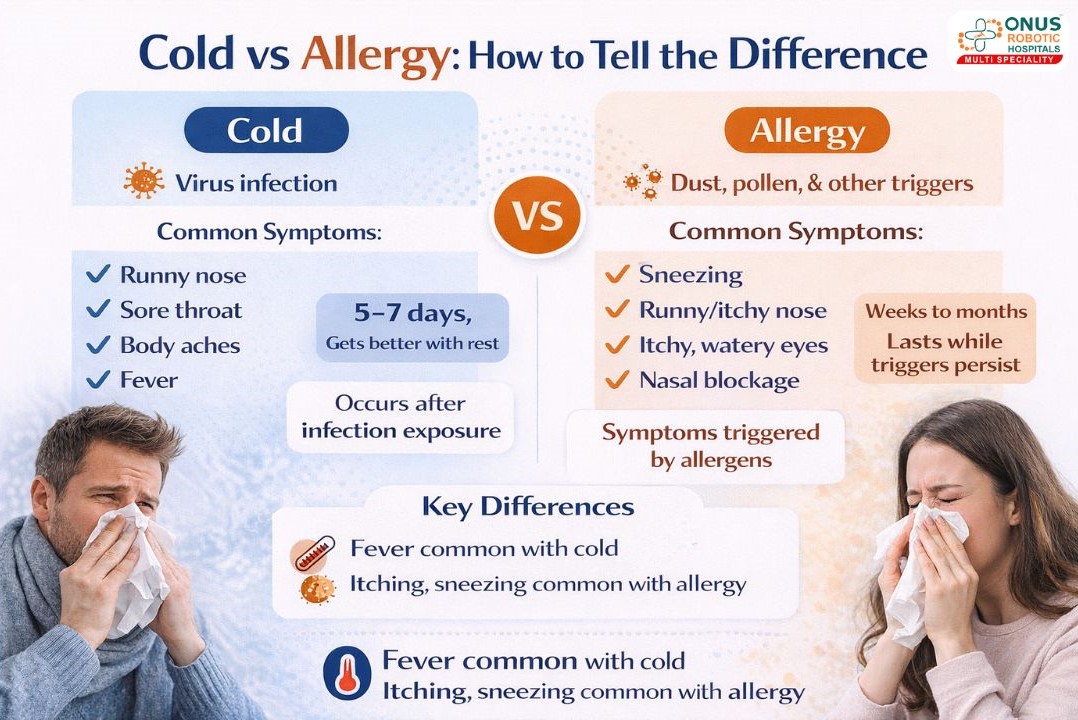
Cold vs Allergy: How to Tell the Difference (ENT Specialist Guide) – By Dr. Akshitha Reddy, ENT Specialist, ONUS Robotic Hospitals
Many patients frequently ask:
“Doctor, I keep getting cold again and again. Is it infection or allergy?”
This confusion is extremely common. The symptoms of a common cold and nasal allergy often overlap, but they are fundamentally different conditions with different causes, treatments, and long-term implications.
Understanding the difference is essential to avoid unnecessary medications, repeated antibiotic use, and delayed proper treatment.
What Is a Common Cold?
The common cold is a viral infection that affects the upper respiratory tract, including the nose and throat.
It spreads through:
-
Droplets from coughing or sneezing
-
Direct contact with infected individuals
-
Contaminated surfaces
Colds are usually self-limiting and resolve within a few days.
Symptoms of a Common Cold
Typical symptoms include:
-
Runny nose
-
Nasal congestion
-
Sore throat
-
Fever
-
Body aches
-
Fatigue
-
Mild cough
These symptoms usually last 5–7 days and gradually improve with rest and supportive care.
What Is Nasal Allergy?
Nasal allergy, medically called Allergic Rhinitis, is an immune system reaction to environmental triggers.
Common allergens include:
-
Dust
-
Pollen
-
Pollution
-
Pet dander
-
Mold
When exposed to these triggers, the immune system releases chemicals like histamine, leading to allergy symptoms.
Symptoms of Nasal Allergy
Unlike a cold, allergy symptoms are more persistent and may include:
-
Frequent sneezing
-
Watery nasal discharge
-
Nasal itching
-
Itchy or watery eyes
-
Nasal blockage
-
Symptoms worsening in dusty environments
These symptoms can last for weeks or even months, especially if exposure to allergens continues.
Key Differences Between Cold and Allergy
| Feature | Cold | Allergy |
|---|---|---|
| Cause | Virus | Allergic reaction |
| Fever | Common | Rare |
| Sneezing | Occasional | Frequent |
| Body Pain | Common | Usually absent |
| Itching (nose/eyes) | Rare | Very common |
| Duration | 5–7 days | Weeks to months |
| Trigger | Infection exposure | Dust, pollen, allergens |
Why Correct Diagnosis Matters
Misinterpreting allergy as a cold can lead to:
-
Repeated unnecessary medications
-
Overuse of antibiotics
-
Persistent symptoms without relief
On the other hand, ignoring recurrent cold-like symptoms could delay the diagnosis of chronic allergy or sinus issues.
Proper diagnosis ensures:
-
Targeted treatment
-
Symptom control
-
Prevention of complications
When Should You Consult an ENT Specialist?
You should seek medical advice if:
-
Symptoms occur repeatedly
-
Nasal blockage persists for weeks
-
Sneezing or itching is severe
-
Breathing through the nose is difficult
-
Sleep is disturbed due to nasal symptoms
An ENT specialist can differentiate between:
-
Viral infections
-
Allergies
-
Sinusitis
-
Structural nasal problems
Treatment Approach
For Common Cold
-
Rest and hydration
-
Steam inhalation
-
Symptomatic medications
-
Usually no need for antibiotics
For Nasal Allergy
-
Avoidance of triggers
-
Antihistamines
-
Nasal sprays
-
Long-term allergy management
In some cases, allergy testing and immunotherapy may be recommended.
Practical Clinical Tip
-
If symptoms start suddenly with fever and body pain → likely a cold
-
If symptoms include itching, sneezing, and watery discharge without fever → likely allergy
Final Thought
Cold and allergy may look similar—but they are not the same.
Correct identification is the key to effective treatment and long-term relief.
If symptoms are frequent or persistent, consult an ENT specialist for proper evaluation rather than relying on repeated medications.
For Appointments:
👩⚕️ Dr. Akshitha Reddy
ENT Specialist
Providing ethical, evidence-based care for ear, nose, throat, sinus, and airway conditions.
ONUS Robotic Hospitals – Hyderabad
👉 link: contact-us or book-appointment