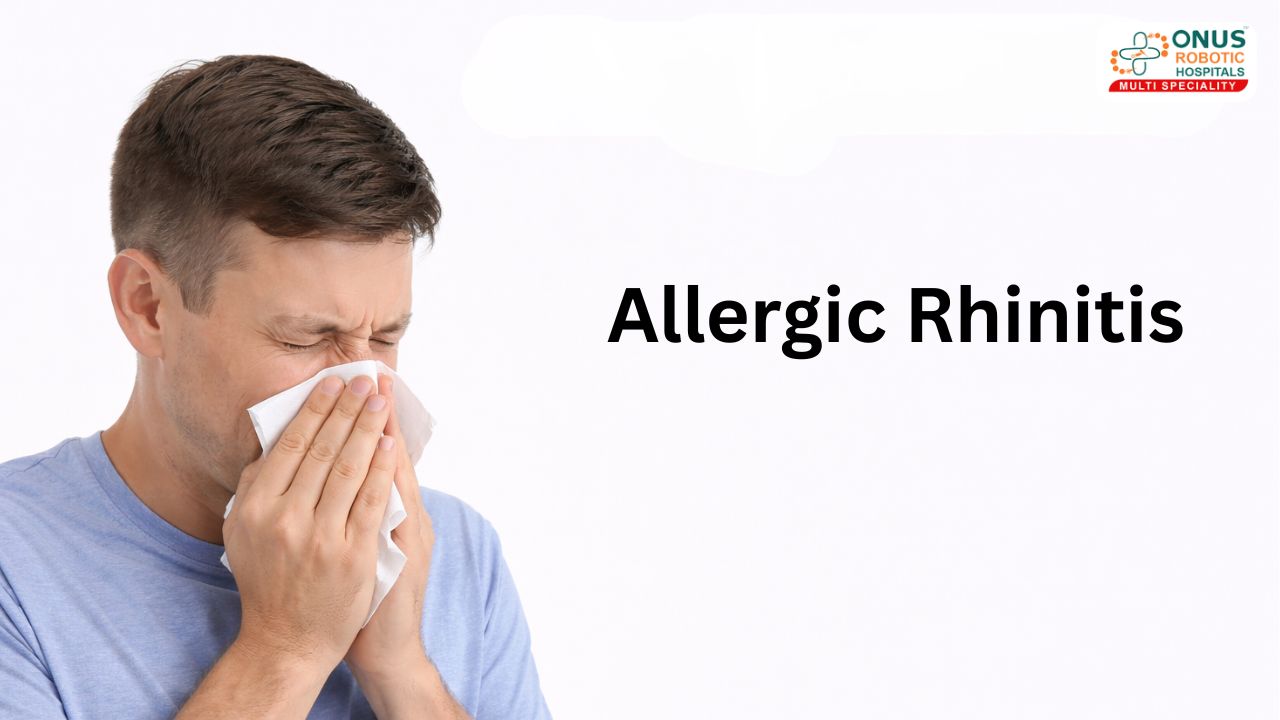
Allergic Rhinitis: Causes, Symptoms & When to See an ENT Specialist – By Dr. Akshitha Reddy, ENT Specialist, ONUS Robotic Hospitals
Do you frequently wake up with sneezing, a runny nose, or nasal blockage—especially in the morning or during seasonal changes?
Many patients assume it’s just a common cold. But in reality, these symptoms are often due to Allergic Rhinitis, a chronic but highly manageable condition.
Ignoring it can affect your sleep, productivity, and overall quality of life.
What is Allergic Rhinitis?
Allergic Rhinitis is an inflammatory condition of the nasal lining caused by an overreaction of the immune system to airborne allergens.
These allergens are usually harmless, but in sensitive individuals, they trigger a strong immune response leading to persistent nasal symptoms.
It is commonly referred to as nasal allergy.
Common Causes of Allergic Rhinitis
Allergic rhinitis develops when your body reacts to environmental triggers such as:
-
House dust and dust mites
-
Pollen (seasonal allergens)
-
Pet hair and dander
-
Mold spores
-
Air pollution and smoke
👉 With increasing urban pollution and indoor allergen exposure, cases are rising rapidly, especially in cities.
Symptoms You Should Not Ignore
Many patients suffer for months without realizing it is an allergy.
Common Symptoms:
-
Repeated sneezing (especially in the morning)
-
Runny nose (clear, watery discharge)
-
Persistent nasal blockage
-
Itching in nose, throat, or eyes
-
Postnasal drip
Associated Symptoms:
-
Headache
-
Poor sleep quality
-
Fatigue
-
Reduced sense of smell
👉 These symptoms may seem mild but can significantly impact daily functioning.
Types of Allergic Rhinitis
1. Seasonal Allergic Rhinitis
Occurs during specific seasons due to pollen exposure.
2. Perennial Allergic Rhinitis
Occurs throughout the year due to dust, mites, or indoor allergens.
Understanding the type helps in targeted treatment and prevention.
Why You Should Not Ignore Allergic Rhinitis
Untreated nasal allergies can lead to complications such as:
-
Chronic sinus infections
-
Ear blockage and ear infections
-
Worsening asthma
-
Sleep disturbances
-
Reduced concentration and productivity
👉 What starts as “just sneezing” can evolve into chronic ENT problems if ignored.
How is Allergic Rhinitis Diagnosed?
Diagnosis is usually clinical, based on symptoms and examination by an ENT specialist.
In selected cases, additional tests may be required:
-
Allergy testing (to identify triggers)
-
Nasal endoscopy
-
Blood investigations
👉 Identifying the cause helps in long-term control rather than temporary relief.
When Should You See an ENT Specialist?
Consult an ENT specialist if:
-
Symptoms persist for more than 2–3 weeks
-
Sneezing or nasal blockage affects daily life
-
Symptoms recur frequently
-
You have associated ear or sinus problems
-
Over-the-counter medications are not helping
👉 Early consultation ensures accurate diagnosis and effective management.
Long-Term Outlook
Allergic rhinitis is a chronic condition, but it is highly controllable.
With proper treatment:
-
Symptoms can be significantly reduced
-
Frequency of episodes decreases
-
Quality of life improves
👉 The key is early recognition and consistent management.
Final Takeaway
✔ Frequent sneezing is not always a cold
✔ Nasal allergy is common but often ignored
✔ Early diagnosis prevents complications
✔ Proper treatment can give long-term relief
👉 Don’t ignore recurring symptoms—your nose is signaling something important.
About the Doctor
Dr. Akshitha Reddy
ENT Specialist
Known for accurate diagnosis and patient-focused care, with expertise in managing a wide range of ENT conditions. Focuses on ethical, evidence-based treatment, prioritizing medical management.
About the Hospital
ONUS Robotic Hospitals
Providing advanced ENT care with modern diagnostic facilities and comprehensive treatment options.
For Appointments:
👩⚕️ Dr. Akshitha Reddy
ENT Specialist
Providing ethical, evidence-based care for ear, nose, throat, sinus, and airway conditions.
ONUS Robotic Hospitals – Hyderabad
👉 link: contact-us or book-appointment