Sciatica – Causes, Symptoms & Treatment for Shooting Pain from Back to Leg – By Dr. Balaraju Naidu, Robotic Orthopedic Surgeon, ONUS Robotic Hospitals
Do you feel pain starting from your lower back and shooting down your leg while sitting, walking, or standing?
This type of pain is often caused by Sciatica, a common condition affecting the sciatic nerve—the largest nerve in the body.
Sciatica is frequently misunderstood as simple back pain, but it actually indicates nerve irritation or compression. Early diagnosis and treatment can prevent long-term nerve damage and improve mobility.
What Is Sciatica?
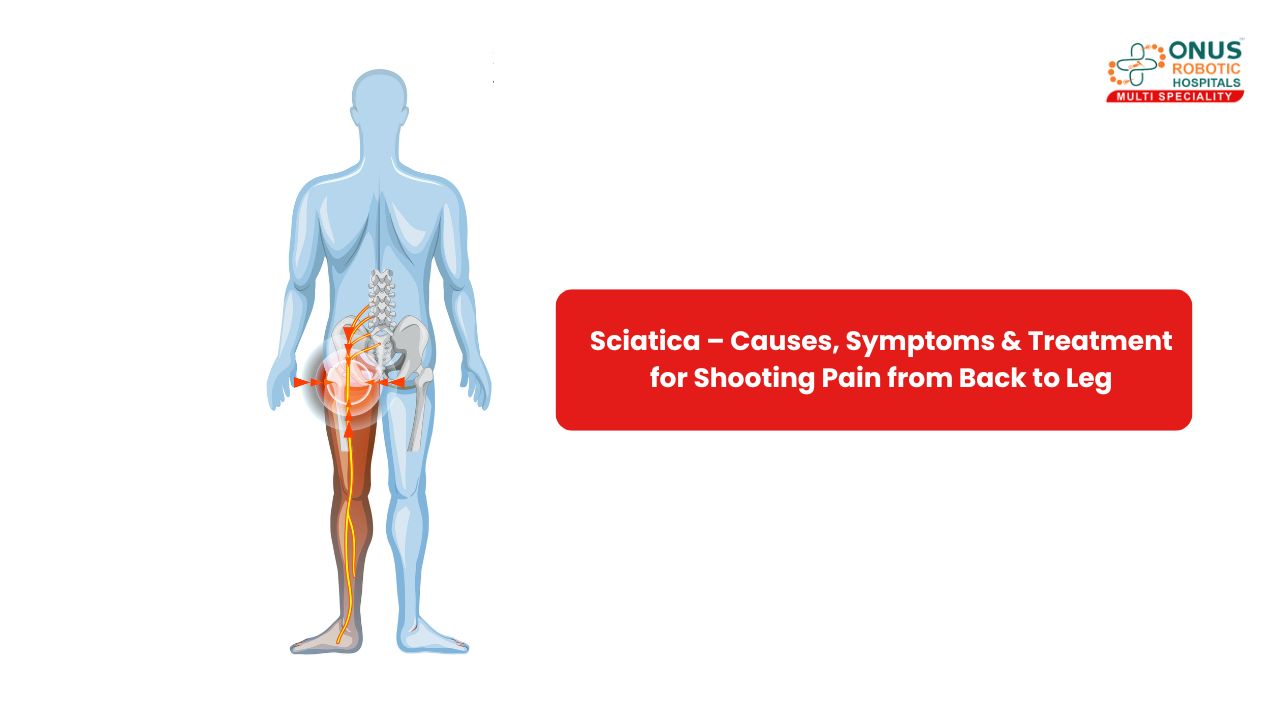
Sciatica refers to pain that travels along the path of the sciatic nerve.
The sciatic nerve runs from:
- Lower back
- Through the buttock
- Down the leg
- Into the foot
When this nerve becomes compressed or irritated, it causes pain radiating from the back to the leg.
Why Does Sciatica Occur?
Sciatica occurs when the spinal nerves in the lower back are compressed.
Common mechanisms include:
- Disc bulge or slipped disc
- Degenerative spine changes
- Muscle tightness
- Poor posture
- Prolonged sitting
These factors increase pressure on spinal nerves.
Common Causes of Sciatica
1. Herniated Disc (Slipped Disc)
Herniated Disc is the most common cause of sciatica.
The disc bulges outward and presses on nearby nerves.
Symptoms:
- Sharp shooting pain
- Burning sensation
- Leg numbness
- Pain worsening while sitting
2. Lumbar Spondylosis
Lumbar Spondylosis refers to age-related wear and tear of the spine.
It can cause:
- Nerve compression
- Back stiffness
- Leg pain
3. Muscle Spasm or Piriformis Syndrome
Tight muscles in the buttock can compress the sciatic nerve.
Common triggers:
- Prolonged sitting
- Heavy lifting
- Sudden movement
4. Spinal Stenosis
Narrowing of the spinal canal can compress nerves.
Common in:
- Older adults
- Patients with arthritis
Common Symptoms of Sciatica
Sciatica symptoms vary from mild to severe.
Typical symptoms include:
- Shooting pain from back to leg
- Burning sensation in the leg
- Tingling or numbness
- Weakness in the leg
- Difficulty walking or standing
- Pain worsening while sitting
Pain usually affects one side of the body.
Red Flag Symptoms (Urgent Medical Attention Needed)
Certain symptoms indicate serious nerve compression.
Seek medical help immediately if you have:
- Progressive leg weakness
- Loss of bladder or bowel control
- Severe persistent pain
- Numbness in the groin area
- Difficulty walking
These may indicate severe nerve compression.
How Is Sciatica Diagnosed?
Diagnosis typically involves:
Clinical Examination
Doctors evaluate:
- Pain pattern
- Nerve function
- Muscle strength
- Reflexes
Imaging Tests
If required:
- MRI scan
- X-ray
- CT scan
These tests help identify nerve compression.
Treatment for Sciatica
Most patients improve with non-surgical treatment.
1. Physiotherapy
First-line treatment for sciatica.
Benefits:
- Reduces nerve pressure
- Improves flexibility
- Strengthens muscles
- Prevents recurrence
2. Medications
Doctors may prescribe:
- Pain relief medication
- Anti-inflammatory drugs
- Nerve pain medication
These reduce inflammation and discomfort.
3. Lifestyle Modifications
Simple changes significantly improve recovery.
Important steps:
- Avoid prolonged sitting
- Maintain proper posture
- Exercise regularly
- Maintain healthy weight
4. Injection Therapy (Selected Cases)
Used when pain is severe.
Examples:
- Epidural steroid injection
- Nerve block injection
These reduce inflammation around nerves.
5. Surgery (Rare but Necessary in Some Cases)
Surgery may be recommended if:
- Severe nerve compression
- Persistent pain
- Progressive weakness
- Failure of conservative treatment
Modern spine procedures are:
- Minimally invasive
- Faster recovery
- Highly effective
Exercises for Sciatica Relief
Regular exercises help reduce nerve compression.
Common exercises include:
- Hamstring stretch
- Back extension exercise
- Core strengthening
- Walking
These improve spinal stability.
Prevention Tips for Sciatica
Daily habits can reduce the risk of nerve pain.
Preventive Measures
- Maintain proper posture
- Avoid prolonged sitting
- Strengthen core muscles
- Lift objects correctly
- Maintain healthy body weight
Prevention reduces recurrence.
When Should You See an Orthopedic or Spine Specialist?
Consult a doctor if:
- Pain lasts more than 1–2 weeks
- Pain spreads to the leg
- Numbness develops
- Walking becomes difficult
- Symptoms worsen
Early treatment prevents permanent nerve damage.
Final Takeaway
Sciatica is:
✔ Common
✔ Treatable
✔ Preventable
Ignoring nerve pain can lead to chronic disability.
Early evaluation protects long-term mobility.
For Appointments:
Dr. Balaraju Naidu, Robotic Orthopedic Surgeon
ONUS Robotic Hospitals – Hyderabad
👉 link: contact-us or book-appointment