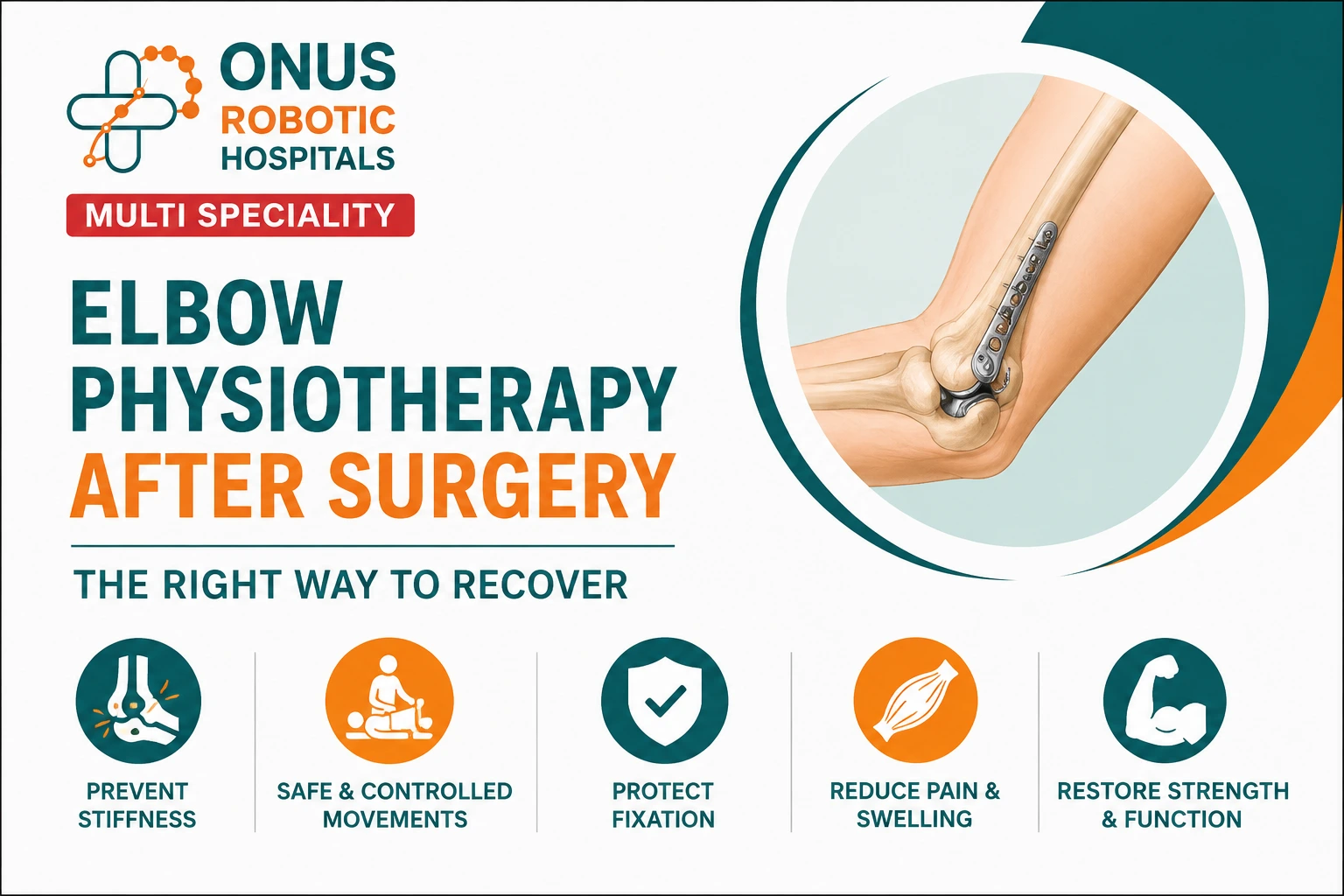
Recovering from elbow surgery involves much more than allowing the surgical wound to heal. One of the most important aspects of recovery is restoring elbow movement safely and effectively through physiotherapy. The elbow is a complex joint that can become stiff very quickly after injury or surgery. However, moving the joint too aggressively can also compromise surgical fixation and delay healing.
Successful recovery depends on finding the right balance between protecting the repaired structures and gradually restoring mobility. With a carefully planned rehabilitation program under expert supervision, patients can regain movement, strength, and function while minimizing complications.
Why Does the Elbow Become Stiff So Quickly?
The elbow is one of the joints most prone to stiffness after trauma or surgery. Following an injury or surgical procedure, inflammation develops around the joint. The body’s natural healing process can lead to scar tissue formation, tightening of soft tissues, and reduced flexibility.
Several factors contribute to elbow stiffness:
- Post-surgical inflammation
- Joint swelling
- Scar tissue formation
- Prolonged immobilization
- Pain-related avoidance of movement
- Muscle tightness around the elbow
Even a short period of inactivity can significantly affect elbow mobility, making early and appropriate rehabilitation essential.
Why Physiotherapy is Important After Elbow Surgery
Physiotherapy plays a vital role in helping patients regain functional movement and return to daily activities. The goals of post-surgical elbow rehabilitation include:
- Restoring joint mobility
- Reducing stiffness
- Preventing muscle weakness
- Improving flexibility
- Controlling pain and swelling
- Enhancing overall arm function
Without proper rehabilitation, patients may experience long-term limitations in elbow movement, affecting activities such as eating, dressing, lifting, writing, and working.
When Can Physiotherapy Usually Be Started?
The timing of physiotherapy depends on:
- Type of surgery performed
- Nature of the fracture or injury
- Stability of fixation
- Bone quality
- Individual healing progress
In many cases, gentle and supervised movement may begin relatively early after surgery. However, every patient is different, and rehabilitation should always follow the surgeon’s recommendations.
Starting physiotherapy too late may increase the risk of severe stiffness, while starting too aggressively may jeopardize healing.
The Importance of Slow and Controlled Movements
One of the most important principles of elbow rehabilitation is gradual progression.
During the early stages of recovery, physiotherapy should focus on:
Assisted Range-of-Motion Exercises
These exercises help improve flexibility without placing excessive stress on healing structures.
Gentle Stretching
Controlled stretching helps reduce stiffness while minimizing discomfort.
Gradual Functional Training
As healing progresses, patients gradually return to daily activities and strengthening exercises.
The objective is not to force movement but to encourage safe and progressive improvement.
Risks of Aggressive Physiotherapy
Many patients assume that pushing through pain will speed up recovery. In reality, aggressive physiotherapy can cause significant problems.
Potential risks include:
Damage to Surgical Fixation
Excessive force may place stress on plates, screws, wires, or other fixation devices used during surgery.
Increased Pain and Swelling
Overly aggressive exercises can worsen inflammation and delay healing.
Soft Tissue Injury
Muscles, ligaments, and tendons around the elbow may become irritated or damaged.
Delayed Recovery
Excessive stress on healing tissues can prolong rehabilitation and reduce overall outcomes.
For this reason, rehabilitation must be tailored to each patient’s condition and surgical procedure.
Protecting Plates and Screws During Recovery
Modern orthopedic surgery often involves fixation devices such as plates and screws to stabilize fractures and support healing.
Although these implants provide stability, they still require protection during the recovery phase.
Patients should:
- Follow weight-bearing restrictions
- Avoid sudden jerking movements
- Perform only prescribed exercises
- Attend regular follow-up appointments
- Inform their doctor about unusual pain or swelling
A structured rehabilitation plan helps protect the fixation while promoting safe mobility.
Understanding Myositis Ossificans
One potential complication after elbow injury or surgery is Myositis Ossificans.
This condition occurs when abnormal bone formation develops within muscles or soft tissues around the joint.
Symptoms May Include:
- Persistent pain
- Swelling
- Reduced range of motion
- Hard lumps around the elbow
- Progressive stiffness
Aggressive physiotherapy, repeated trauma, or excessive stretching during early recovery may increase the risk of developing this condition.
Early recognition and appropriate management are essential to minimize long-term limitations.
Common Rehabilitation Phases After Elbow Surgery
Phase 1: Protection and Healing
Focus on:
- Controlling pain
- Reducing swelling
- Protecting surgical repair
- Gentle guided movements
Phase 2: Mobility Restoration
Focus on:
- Improving range of motion
- Preventing stiffness
- Gradually increasing flexibility
Phase 3: Strengthening
Focus on:
- Muscle strengthening
- Functional training
- Improving endurance
Phase 4: Return to Activity
Focus on:
- Restoring normal daily activities
- Returning to work or sports
- Maintaining long-term joint function
The progression between phases depends on individual healing and surgeon recommendations.
Tips for a Successful Recovery
Patients can improve rehabilitation outcomes by:
- Following medical advice carefully
- Attending all physiotherapy sessions
- Performing prescribed exercises regularly
- Avoiding unsupervised aggressive stretching
- Maintaining proper nutrition for healing
- Reporting unusual symptoms promptly
Consistency is often more important than intensity during rehabilitation.
When Should You Consult a Specialist?
Seek medical evaluation if you experience:
- Persistent elbow stiffness
- Severe pain during movement
- Swelling that does not improve
- Difficulty performing daily activities
- Reduced range of motion despite therapy
- Concerns about surgical implants
Early intervention can help prevent complications and improve long-term outcomes.
Conclusion
Elbow rehabilitation after surgery requires a careful balance between protecting the surgical repair and restoring movement. Because the elbow joint becomes stiff quickly, timely physiotherapy is essential. However, exercises must be performed gradually and under professional supervision to avoid damaging fixation devices or causing complications such as myositis ossificans.
With expert guidance, structured physiotherapy, and patient commitment, most individuals can successfully regain mobility, strength, and function after elbow surgery.
Expert Orthopedic Care at ONUS Robotic Hospitals
Dr. Balaraju Naidu, Robotic Orthopedic Surgeon, specializes in advanced orthopedic procedures and post-surgical rehabilitation strategies. Proper guidance and supervised physiotherapy can help patients recover safely while protecting surgical repairs and achieving the best possible outcome.
For Appointments:
Dr. Balaraju Naidu, Robotic Orthopedic Surgeon
ONUS Robotic Hospitals – Hyderabad
👉 link: contact-us or book-appointment