Why Willpower Alone Is Not Enough to Control Obesity and Diabetes- By Dr. Ravi Kiran | Diabetologist, Onus Robotic Hospital
Many people struggling with obesity or diabetes are often told to “eat less,” “exercise more,” or simply “have more willpower.” While self-discipline certainly plays a role in maintaining healthy habits, modern medical science has shown that obesity and diabetes are far more complex than a lack of motivation or determination.
Weight gain and blood sugar control are influenced by a combination of biological, hormonal, psychological, environmental, and lifestyle factors. This is why many people find themselves repeatedly starting diets, losing weight temporarily, and then regaining it despite their best efforts.
Understanding the science behind obesity and diabetes can help remove guilt, improve treatment outcomes, and lead to more effective long-term solutions.
The Myth of Willpower
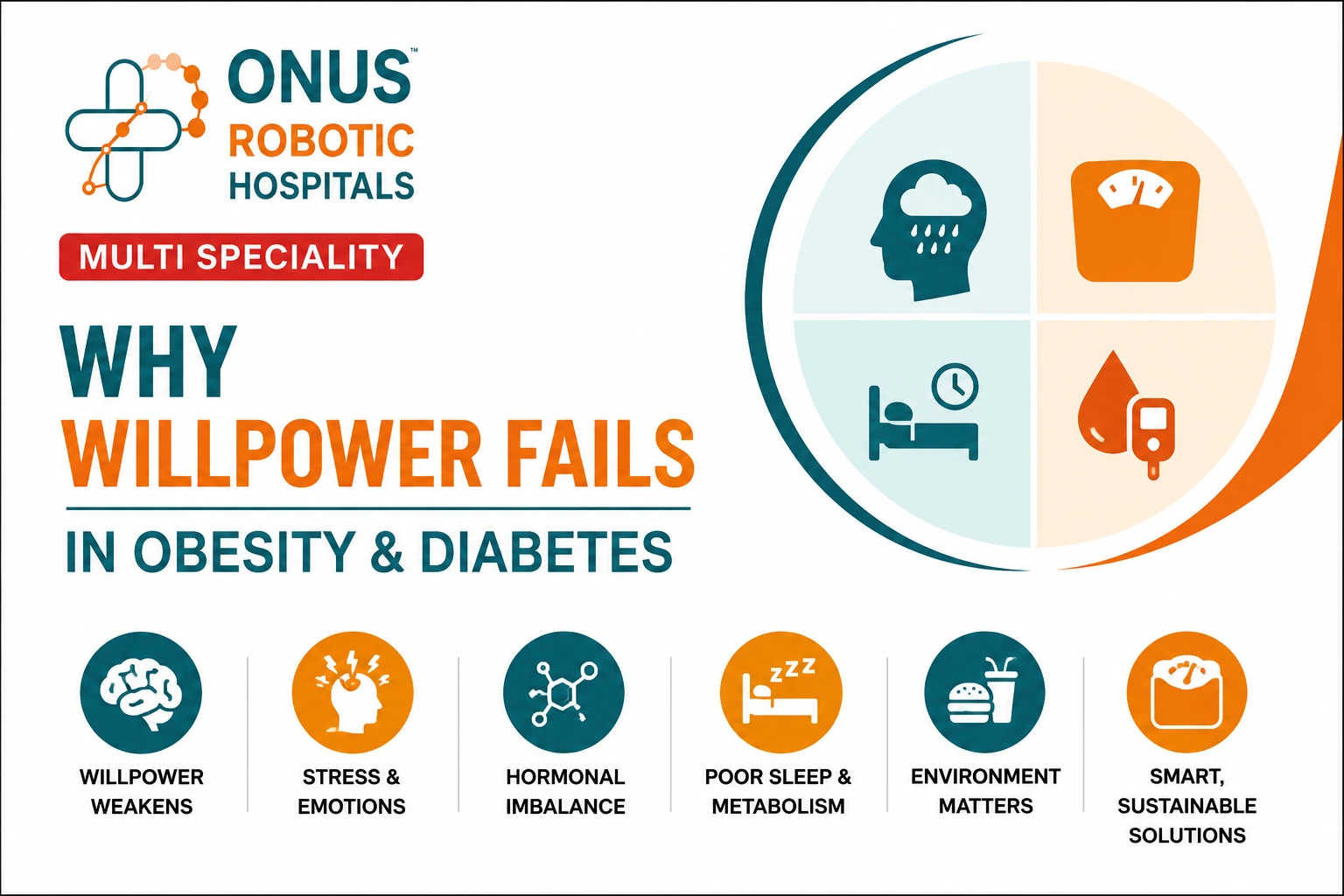
Willpower is often viewed as the primary factor determining success or failure in weight management. However, willpower is not an unlimited resource.
Research suggests that mental energy fluctuates throughout the day. Factors such as stress, fatigue, sleep deprivation, emotional challenges, and environmental triggers can weaken decision-making abilities and increase cravings.
This means that even highly motivated individuals may struggle to maintain healthy eating habits when multiple biological and psychological factors are working against them.
Why Willpower Weakens During the Day
Many people notice that they make healthier choices in the morning but struggle later in the evening.
This happens because:
- Mental fatigue accumulates throughout the day
- Stress hormones rise
- Hunger signals become stronger
- Decision-making capacity decreases
- Emotional triggers become more influential
After a long day of work, family responsibilities, and daily stress, resisting unhealthy food choices becomes significantly more difficult.
This is not a character flaw—it is a normal biological response.
How Stress Affects Eating Behavior
Stress plays a major role in both obesity and diabetes.
When the body experiences stress, it releases hormones such as cortisol and adrenaline. While these hormones help us respond to challenges, chronic stress can negatively affect metabolism and eating patterns.
Effects of Chronic Stress
- Increased appetite
- Cravings for sugary and high-calorie foods
- Increased fat storage
- Elevated blood sugar levels
- Reduced motivation for exercise
Many individuals unknowingly use food as a coping mechanism during periods of stress, anxiety, or emotional discomfort.
Understanding Emotional Eating
Emotional eating occurs when food is used to manage feelings rather than satisfy physical hunger.
Common emotional triggers include:
- Stress
- Anxiety
- Loneliness
- Frustration
- Boredom
- Sadness
Foods rich in sugar and fat stimulate reward pathways in the brain, temporarily improving mood. However, this relief is often short-lived and may contribute to weight gain and poor blood sugar control over time.
Recognizing emotional eating patterns is an important step toward healthier habits.
The Role of Hormones in Obesity
Body weight is regulated by a complex network of hormones that influence hunger, fullness, metabolism, and fat storage.
Ghrelin – The Hunger Hormone
Ghrelin signals the brain when it is time to eat. Increased ghrelin levels can make individuals feel hungry even after consuming sufficient calories.
Leptin – The Satiety Hormone
Leptin helps signal fullness. In many people with obesity, the body develops leptin resistance, making it harder to recognize when enough food has been consumed.