Fatty Liver Can Turn Into Cancer — Here’s What You Must Know: Dr. Ravi Kiran | Diabetologist, Onus Robotic Hospital
The Silent Progression from Fatty Liver to Liver Cancer (Hepatocellular Carcinoma)
Many people believe fatty liver disease is harmless.
It is often dismissed as “just extra fat in the liver.”
However, medical evidence shows a very different reality.
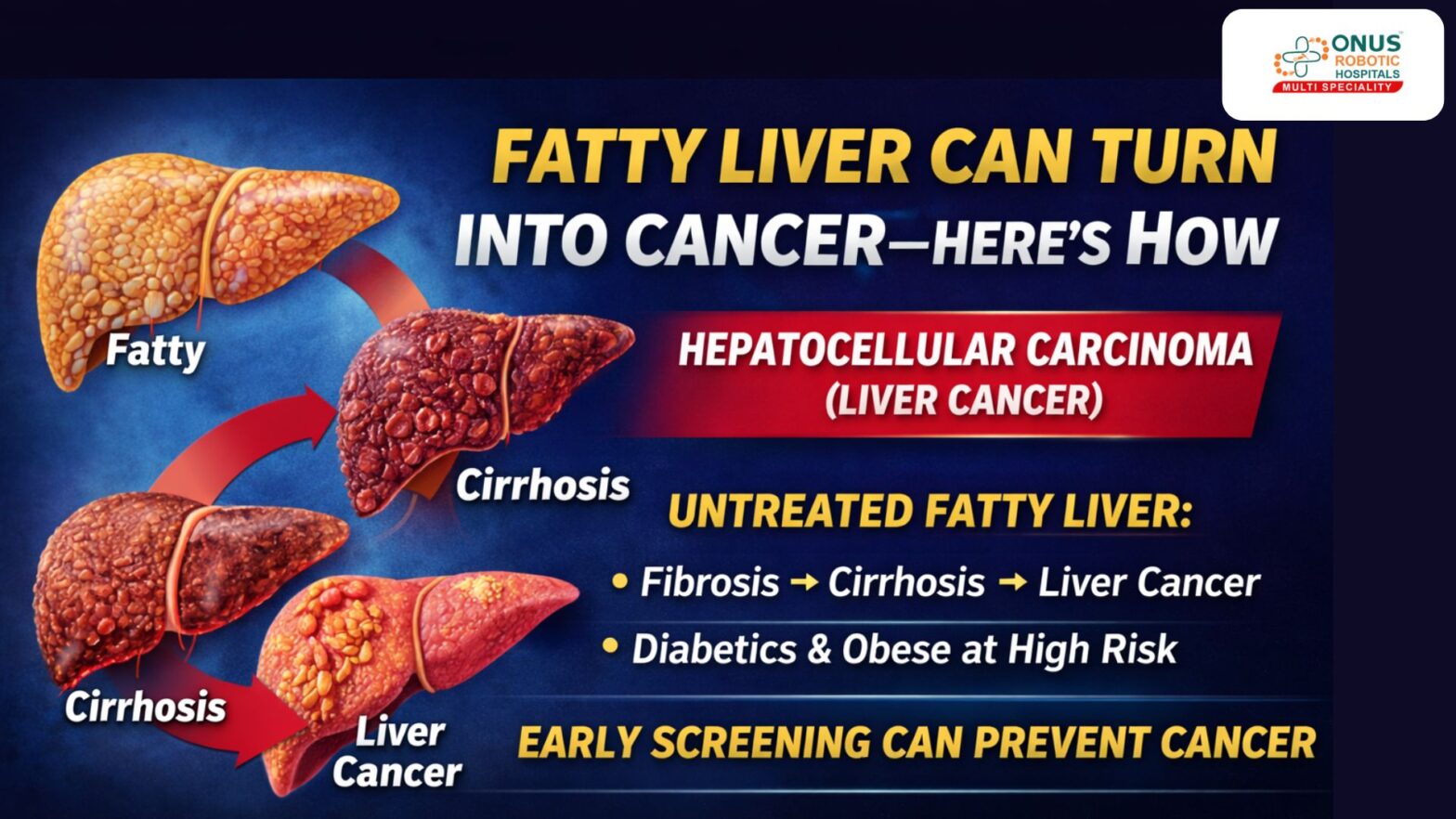
Untreated fatty liver can progress to:
-
Liver inflammation (NASH)
-
Liver fibrosis
-
Liver cirrhosis
-
Liver cancer (Hepatocellular Carcinoma – HCC)
With the rising prevalence of Non-Alcoholic Fatty Liver Disease (NAFLD) in India — especially among people with diabetes, obesity, and metabolic syndrome — this silent progression has become a major public health concern.
Early evaluation and structured lifestyle correction can prevent life-threatening complications.
Understanding Fatty Liver Disease
What Is Fatty Liver?
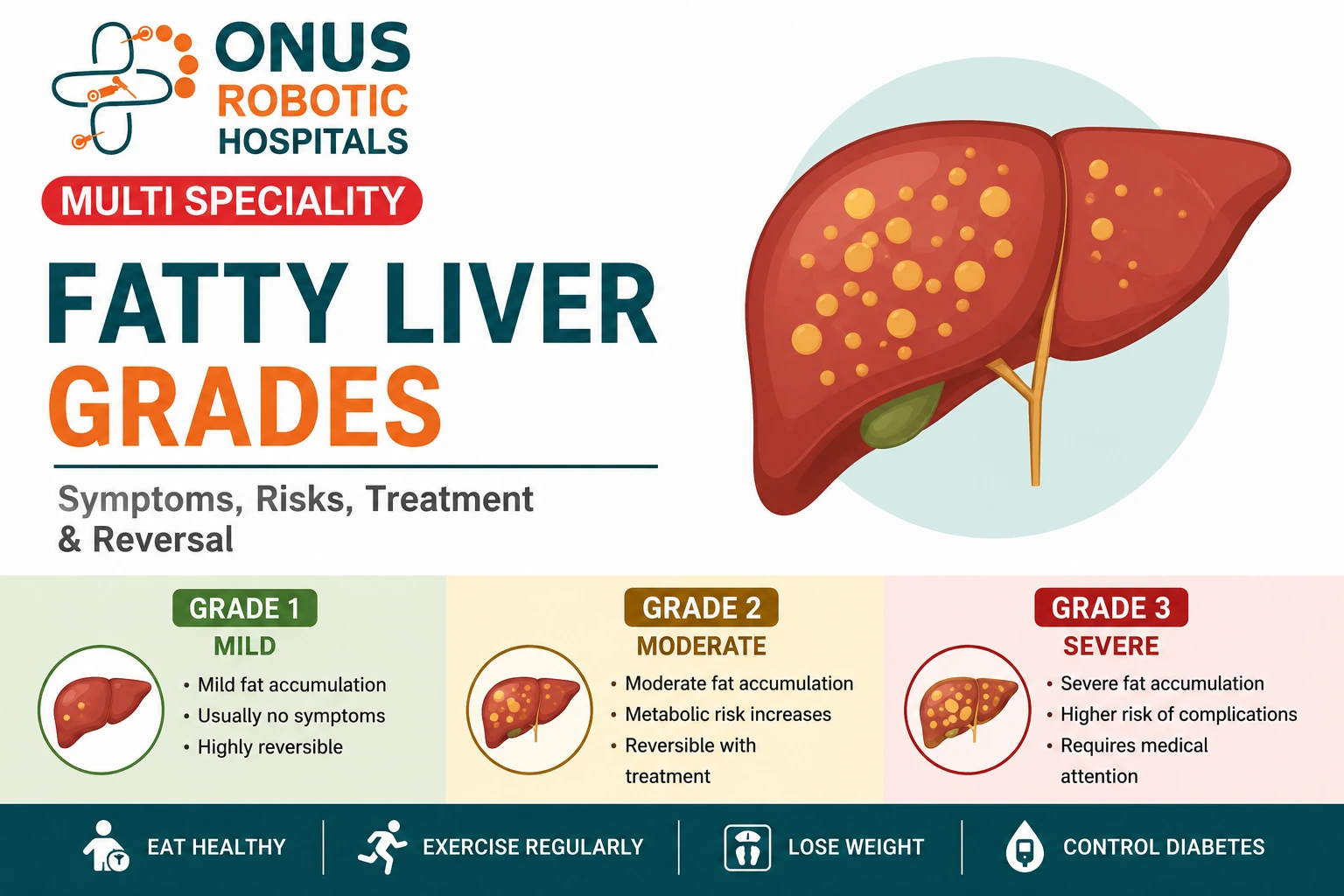
Fatty liver disease (hepatic steatosis) occurs when excess fat accumulates inside liver cells.
There are two major types:
1️⃣ Non-Alcoholic Fatty Liver Disease (NAFLD)
Associated with:
-
Obesity
-
Type 2 diabetes
-
Insulin resistance
-
High triglycerides
-
Metabolic syndrome
NAFLD is now more common in India than alcohol-related liver disease.
2️⃣ Alcoholic Fatty Liver Disease (AFLD)
Caused by long-term excessive alcohol consumption.
How Fatty Liver Progresses to Cancer
Fatty liver does not turn into cancer overnight.
It progresses gradually over years — often silently.
Stage 1: Simple Fatty Liver (Steatosis)
-
Fat accumulation in liver cells
-
No inflammation
-
Often no symptoms
-
Completely reversible
Stage 2: NASH (Non-Alcoholic Steatohepatitis)
-
Fat + inflammation
-
Liver cell injury begins
-
Increased risk of fibrosis
Stage 3: Liver Fibrosis
-
Scar tissue forms
-
Liver structure changes
-
Function begins to decline
Stage 4: Liver Cirrhosis
-
Extensive scarring
-
Irreversible damage
-
High risk of complications
Stage 5: Liver Cancer (Hepatocellular Carcinoma – HCC)
-
Malignant tumor develops
-
Life-threatening condition
This progression may take 8–20 years, often without noticeable symptoms.
Why Does Fatty Liver Increase Cancer Risk?
1️⃣ Chronic Inflammation
Persistent inflammation leads to:
-
Oxidative stress
-
DNA damage
-
Abnormal liver cell regeneration
Over time, damaged cells may become cancerous.
2️⃣ Insulin Resistance
High insulin and IGF levels:
-
Promote abnormal cell growth
-
Suppress normal cell death
-
Increase tumor risk
Patients with diabetes and obesity are at particularly high risk.
3️⃣ Fibrosis and Cirrhosis
Cirrhosis creates:
-
Chronic regenerative nodules
-
Genetic instability
-
High risk of malignant transformation
Importantly, NAFLD-related liver cancer can sometimes occur even without cirrhosis, especially in diabetics.
Who Is at Highest Risk?
You are at increased risk if you have:
-
Type 2 diabetes
-
Central abdominal obesity
-
High triglycerides
-
Metabolic syndrome
-
Long-standing fatty liver
-
Liver fibrosis on FibroScan
-
Family history of liver cancer
-
Chronic hepatitis B or C
High-risk individuals require structured monitoring.
Warning Signs of Liver Cancer
Early liver cancer often shows no symptoms.
Advanced symptoms may include:
-
Unexplained weight loss
-
Persistent fatigue
-
Loss of appetite
-
Right upper abdominal pain
-
Abdominal swelling (ascites)
-
Jaundice
-
Vomiting blood (advanced cirrhosis)
Do not wait for symptoms before screening.
How to Detect Progression Early
Recommended tests include:
-
Ultrasound abdomen
-
FibroScan (liver stiffness measurement)
-
MRI or CT scan (if indicated)
-
Alpha-fetoprotein (AFP tumor marker)
-
Liver function tests (LFT)
-
HbA1c
-
Lipid profile
Regular screening prevents late detection.
Can Fatty Liver-Related Cancer Be Prevented?
In most cases — yes.
Prevention Strategies
✔ 7–10% weight loss
✔ Strict diabetes control
✔ Reduce sugar and fructose intake
✔ Control cholesterol and triglycerides
✔ 150–300 minutes of exercise per week
✔ Avoid alcohol
✔ Regular liver monitoring
Early-stage fatty liver is reversible with structured metabolic correction.
Why NAFLD Is Rising Rapidly in India
Urban lifestyle changes have led to:
-
High sugar consumption
-
Fast food culture
-
Sedentary work patterns
-
Rising childhood obesity
-
Early onset type 2 diabetes
This metabolic shift is driving NAFLD-related cirrhosis and cancer cases.
Frequently Asked Questions
Is fatty liver always dangerous?
Early fatty liver is reversible. Advanced stages can be life-threatening.
How long does progression take?
Usually 10–20 years, depending on metabolic control.
Can Grade 1 fatty liver cause cancer?
Rarely directly — but long-term uncontrolled disease increases risk.
Is liver cancer curable?
If detected early, it may be treated with surgery, ablation, or transplant.
Final Takeaway
Fatty liver is not a minor issue.
It is:
-
A metabolic disease
-
A precursor to fibrosis
-
A risk factor for cirrhosis
-
A potential pathway to liver cancer
Early diagnosis and aggressive lifestyle correction can prevent progression.
Protect your liver before irreversible damage occurs.
Consultation
📍 Dr. Ravi Kiran
Diabetologist & Preventive Medicine Specialist
Onus Robotic Hospital, Hyderabad