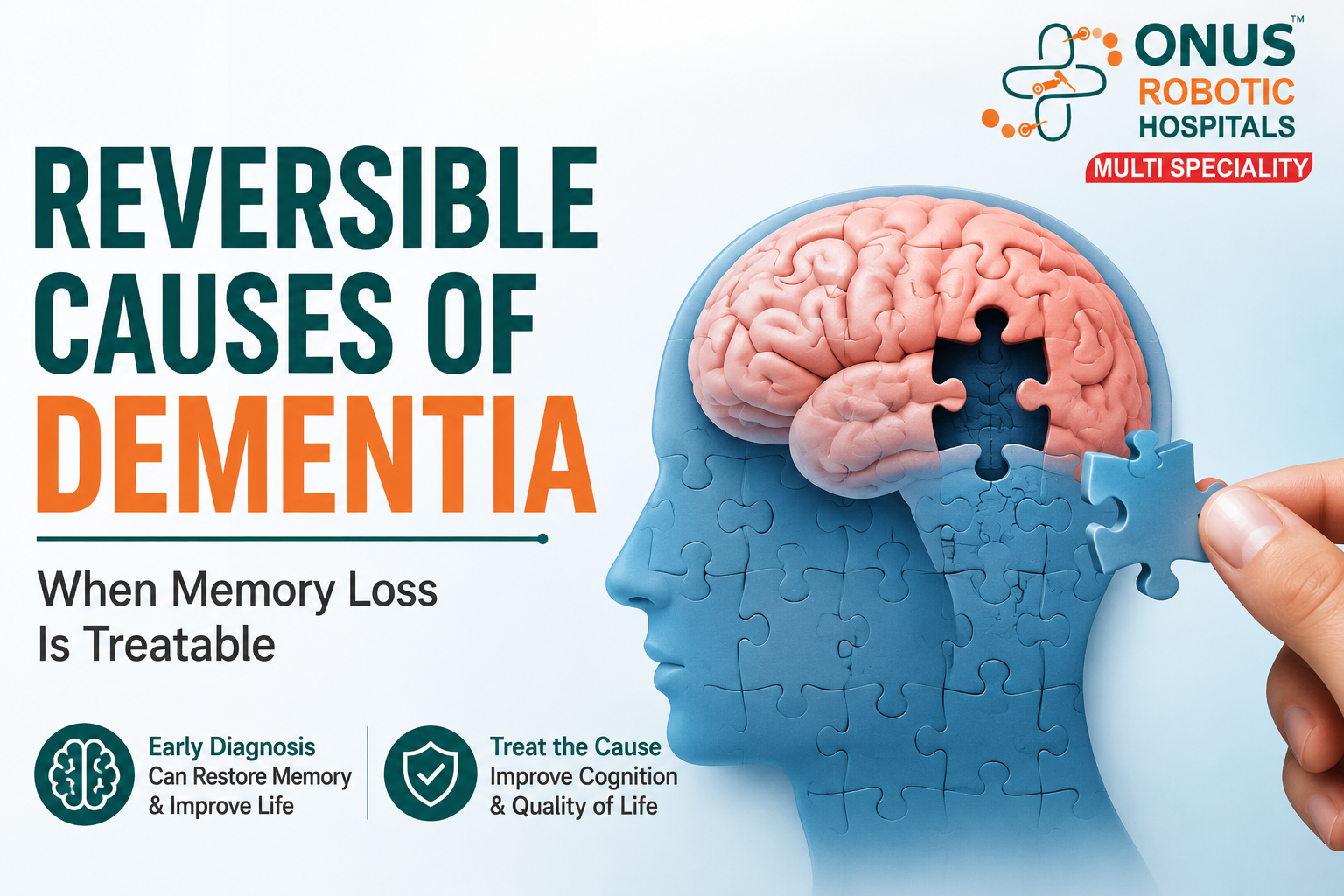
Reversible Causes of Dementia: When Memory Loss May Be Treatable – By Dr.Krishna Chaithanya Reddy, Neurologist, ONUS Robotic Hospitals
Memory loss and cognitive decline are often feared as signs of irreversible dementia or Alzheimer’s disease. However, not every patient with memory problems has permanent brain degeneration. In many cases, cognitive impairment may actually be caused by treatable medical conditions.
This concept is known as “reversible dementia” — situations where memory loss and confusion improve partially or even completely after identifying and treating the underlying cause.
Recognizing these conditions early is extremely important because proper treatment can significantly improve memory, independence, daily functioning, and quality of life.
The original clinical overview emphasizes the importance of searching for reversible causes before labeling someone with permanent dementia.
What Is Reversible Dementia?
Reversible dementia refers to cognitive impairment that mimics dementia but is caused by an underlying medical, psychiatric, metabolic, or neurological condition that can be treated.
Patients may present with symptoms such as:
- Memory loss
- Poor concentration
- Slowed thinking
- Confusion
- Personality changes
- Behavioral problems
- Difficulty performing daily tasks
- Executive dysfunction
At first glance, these symptoms may resemble Alzheimer’s disease or other neurodegenerative disorders. However, the key difference is that the underlying condition may still be treatable.
Why Identifying Reversible Causes Matters
True neurodegenerative dementias generally progress over time despite treatment. In contrast, reversible causes may improve dramatically with proper diagnosis and management.
Early identification is important because:
- Cognitive function may improve significantly
- Independence can be restored
- Families receive clarity and hope
- Unnecessary dementia medications may be avoided
- Some conditions are medical emergencies
- Permanent brain damage may be prevented
A patient believed to have dementia may actually have depression, vitamin deficiency, medication side effects, thyroid disease, or even a surgically treatable condition.
Common Reversible Causes of Dementia
1. Depression (Pseudodementia)
Depression is one of the most common reversible causes of cognitive impairment in older adults.
This condition is sometimes called pseudodementia because depression can closely mimic dementia symptoms.
Common Symptoms
- Forgetfulness
- Poor concentration
- Reduced motivation
- Slowed responses
- Social withdrawal
- Lack of interest
- “I don’t know” answers
Clues Suggesting Depression Rather Than Dementia
- Relatively sudden onset
- Patient is worried about memory loss
- Prominent sadness or apathy
- Variable performance on memory testing
- Cognitive complaints greater than objective deficits
Treatment
- Antidepressant medications
- Counseling and psychotherapy
- Sleep correction
- Social engagement
Many patients improve significantly after proper treatment.
2. Vitamin B12 Deficiency
Vitamin B12 deficiency is a classic and highly treatable cause of cognitive decline.
Symptoms
- Memory problems
- Mental slowing
- Depression
- Irritability
- Tingling or numbness
- Difficulty walking
- Peripheral neuropathy
High-Risk Groups
- Elderly patients
- Vegetarians
- Long-term metformin users
- Patients with stomach or intestinal disorders
Clinical Clues
- Anemia
- Balance problems
- Reduced vibration sensation
- Glossitis
Timely vitamin B12 replacement can improve cognition, especially if diagnosed early.
3. Hypothyroidism
Low thyroid hormone levels can slow down brain function significantly.
Common Symptoms
- Forgetfulness
- Fatigue
- Depression
- Weight gain
- Constipation
- Cold intolerance
- Slowed thinking
Hypothyroidism can closely resemble dementia, particularly in elderly individuals.
A simple thyroid function test helps diagnose the condition, and treatment with thyroid hormone replacement often improves cognitive symptoms.
4. Normal Pressure Hydrocephalus (NPH)
Normal Pressure Hydrocephalus is one of the most important reversible causes of dementia because it is frequently overlooked.
Classic Triad of Symptoms
- Walking difficulty
- Cognitive decline
- Urinary incontinence
This is often remembered as:
“Wet, Wobbly, and Wacky.”
Common Features
- Slow shuffling gait
- Difficulty initiating walking
- Executive dysfunction
- Enlarged brain ventricles on imaging
Treatment
Some patients improve significantly after:
- Cerebrospinal fluid drainage
- Ventriculoperitoneal shunt surgery
NPH is one of the few structural brain disorders causing dementia-like symptoms that can be effectively treated.
5. Chronic Subdural Hematoma
Older adults may develop bleeding around the brain even after minor head injury.
Symptoms may appear weeks later and are often mistaken for dementia.
Symptoms
- Progressive confusion
- Personality changes
- Headache
- Gait imbalance
- Weakness
- Cognitive decline
Diagnosis
A simple CT scan or MRI can identify the condition.
Treatment
Neurosurgical drainage may result in dramatic improvement.
6. Medication-Induced Cognitive Impairment
Medications are one of the most underrecognized causes of reversible cognitive decline.
Common Problem Medications
- Benzodiazepines
- Anticholinergic drugs
- Sedatives
- Opioids
- Antihistamines
- Certain seizure medications
Symptoms
- Confusion
- Drowsiness
- Poor attention
- Daytime sleepiness
- Memory impairment
Sometimes simply adjusting medications can improve cognition significantly.
7. Sleep Disorders
Poor sleep severely affects memory and brain function.
Common Causes
- Obstructive sleep apnea
- Chronic insomnia
- Fragmented sleep
- REM sleep disorders
Symptoms
- Poor concentration
- Fatigue
- Memory complaints
- Slowed thinking
- Irritability
Treatment
Improving sleep quality often improves cognition.
8. Delirium Mistaken for Dementia
Delirium is an acute medical condition that may resemble dementia.
Unlike dementia, delirium usually develops suddenly and fluctuates.
Common Causes
- Infection
- Dehydration
- Electrolyte imbalance
- Medication toxicity
- Urinary retention
- Constipation
Clues Suggesting Delirium
- Acute onset
- Fluctuating symptoms
- Altered consciousness
- Inattention
Delirium is a medical emergency and should always be ruled out first.
9. CNS Infections
Certain infections affecting the brain can cause memory loss and confusion.
Examples
- Neurosyphilis
- HIV-associated cognitive disorder
- Tuberculosis
- Fungal brain infections
These are especially important in immunocompromised patients.
Many are treatable if diagnosed early.
10. Metabolic and Systemic Illness
Systemic diseases commonly affect brain function.
Important Causes
- Low sodium (hyponatremia)
- High calcium
- Liver failure
- Kidney failure
- Low blood sugar
- Organ dysfunction
These conditions can present as confusion or dementia-like symptoms.
11. Autoimmune and Inflammatory Brain Disorders
Some inflammatory brain diseases mimic rapidly progressive dementia.
Examples
- Autoimmune encephalitis
- CNS vasculitis
- Paraneoplastic encephalitis
Symptoms
- Memory loss
- Behavioral change
- Psychiatric symptoms
- Seizures
These conditions may respond to immunotherapy if identified early.
Red Flags Suggesting a Reversible Cause
Doctors should look beyond degenerative dementia when patients have:
- Sudden onset symptoms
- Rapid progression
- Fluctuating cognition
- Altered consciousness
- Psychiatric symptoms
- Medication burden
- Younger age
- Gait problems
- Systemic illness
- Focal neurological deficits
These clues should trigger evaluation for treatable conditions.
How Doctors Evaluate Cognitive Decline
Step 1: Confirm It Is Truly Dementia
Doctors first rule out:
- Delirium
- Depression
- Functional memory complaints
Step 2: Review Medications
Medication lists are carefully examined for:
- Sedatives
- Anticholinergics
- Polypharmacy
Step 3: Blood Tests
Common tests include:
- CBC
- Electrolytes
- Liver and kidney function
- Thyroid profile
- Vitamin B12
- Blood sugar
Step 4: Brain Imaging
CT or MRI helps identify:
- Subdural hematoma
- Hydrocephalus
- Stroke
- Brain tumors
Step 5: Special Tests if Needed
Depending on the situation:
- Sleep study
- CSF analysis
- EEG
- Autoimmune testing
- HIV or syphilis testing
The Clinical Bottom Line
Not all memory loss is Alzheimer’s disease.
Not all dementia is irreversible.
Some patients improve dramatically once the real cause is found and treated.
That is why every patient with cognitive decline deserves a careful search for potentially reversible conditions before a diagnosis of permanent dementia is made.
The uploaded clinical material strongly reinforces this principle and highlights the importance of evaluating treatable causes before labeling a patient with irreversible dementia.
Final Takeaway
Before diagnosing irreversible dementia, one critical question must always be asked:
“Is this truly irreversible — or have we not yet identified a treatable cause?”
Early diagnosis can restore memory, improve independence, and significantly improve quality of life.
Expert Neurology Care at ONUS Robotic Hospitals
For evaluation of:
- Memory loss
- Confusion
- Cognitive decline
- Behavioral changes
- Dementia symptoms
For Appointments:
Dr. Krishna Chaithanya Reddy
Consultant – Interventional Neurologist
ONUS Robotic Hospitals – Hyderabad
👉 link: contact-us or book-appointment