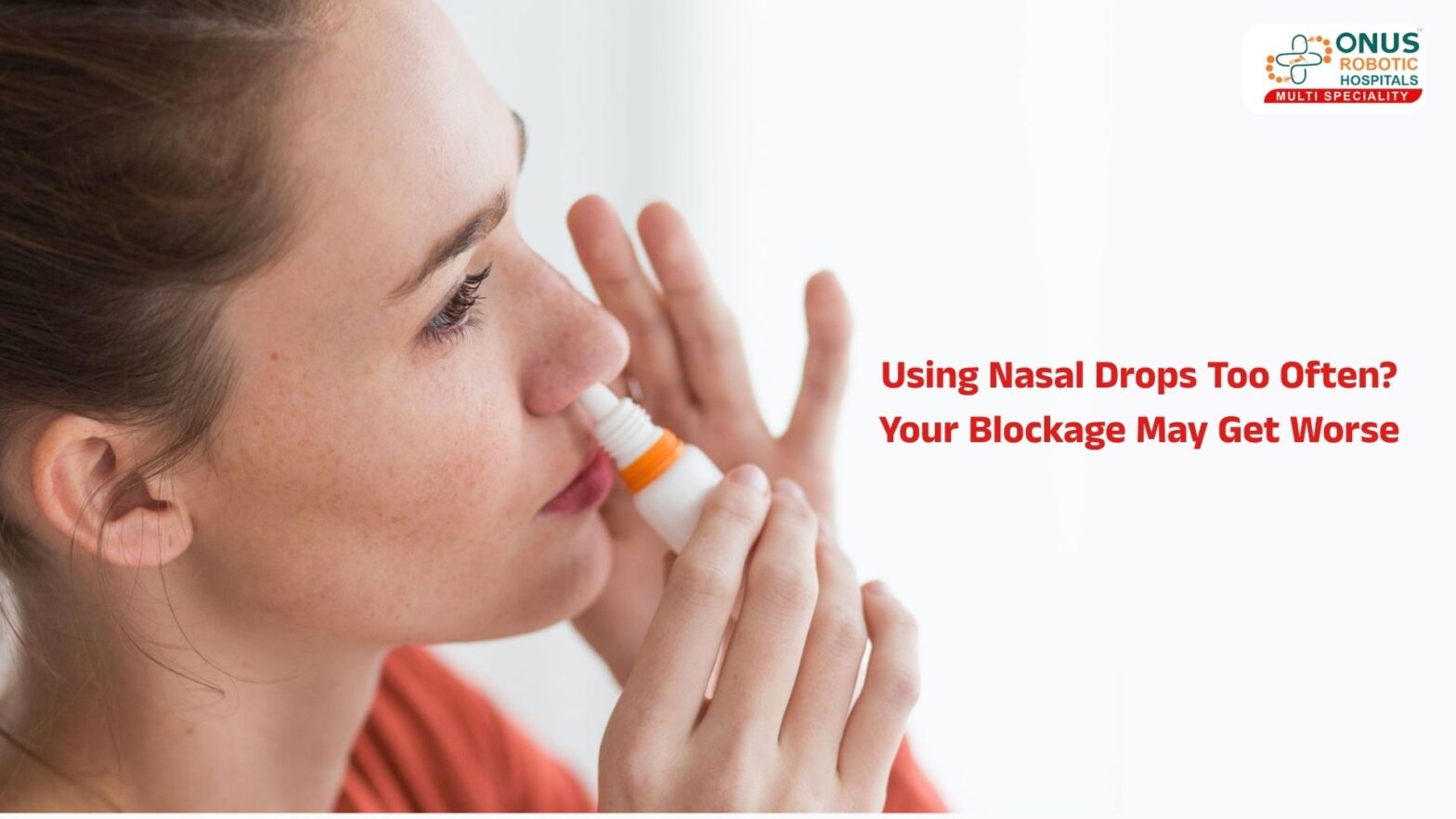
Rhinitis Medicamentosa: Causes, Symptoms & When to See an ENT Specialist – By Dr. Akshitha Reddy, ENT Specialist, ONUS Robotic Hospitals
Do you feel that your nasal blockage improves only after using nasal drops—but returns even worse later?
Many patients unknowingly fall into a cycle of repeated nasal spray use. What begins as temporary relief can eventually lead to persistent nasal congestion that becomes difficult to control.
This condition is called Rhinitis Medicamentosa, a common yet underdiagnosed problem caused by overuse of nasal decongestant drops.
Understanding this condition early can prevent long-term dependency and restore normal nasal breathing.
What is Rhinitis Medicamentosa?
Rhinitis Medicamentosa is a condition in which prolonged use of nasal decongestant sprays or drops leads to rebound nasal congestion.
Initially, these drops provide quick relief by shrinking swollen blood vessels inside the nose. However, repeated use causes the nasal lining to become dependent on the medication.
Over time:
- The nose becomes reliant on nasal drops
- Blockage returns more severely
- Frequent use becomes necessary
This creates a cycle of dependency that worsens symptoms.
How Does Rhinitis Medicamentosa Develop?
Nasal decongestant drops work by constricting blood vessels in the nasal lining.
But when used for more than 3 to 5 days, the following changes occur:
- Blood vessels lose their normal function
- Nasal tissues swell again after the medication wears off
- The blockage becomes persistent
This phenomenon is known as rebound congestion.
Common Causes of Rhinitis Medicamentosa
This condition is most often linked to improper use of over-the-counter nasal sprays.
Typical causes include:
- Overuse of nasal decongestant sprays
- Self-medication without medical advice
- Using nasal drops for prolonged periods
- Treating cold or allergy symptoms repeatedly with OTC medication
- Lack of awareness about safe usage duration
Many patients assume nasal sprays are harmless—but prolonged use can lead to chronic problems.
Symptoms to Watch For
Patients often do not realize that the medication itself is causing the problem.
Common symptoms include:
- Persistent nasal blockage
- Temporary relief only after using drops
- Increasing frequency of drop usage
- Dryness or irritation inside the nose
- Difficulty breathing without medication
A typical complaint heard in clinics is:
👉 “Without drops, I cannot breathe properly.”
Why You Should Not Ignore This Condition
Ignoring rhinitis medicamentosa can lead to:
- Chronic nasal congestion
- Dependency on nasal sprays
- Sleep disturbance
- Mouth breathing
- Reduced quality of life
The longer the duration of use, the harder it becomes to stop the medication.
Early diagnosis allows easier treatment and faster recovery.
How is Rhinitis Medicamentosa Diagnosed?
Diagnosis is usually straightforward and based on clinical evaluation.
Doctors typically assess:
Medical History
- Duration of nasal spray use
- Frequency of usage
- Type of medication
Clinical Examination
- Nasal blockage pattern
- Nasal lining condition
Nasal Endoscopy (If Required)
This helps evaluate:
- Nasal swelling
- Inflammation
- Structural abnormalities
Treatment for Rhinitis Medicamentosa
Treatment focuses on breaking the cycle of dependency and restoring normal nasal function.
Gradual Withdrawal of Nasal Drops
Stopping the spray is the most important step.
Medical Therapy
Doctors may prescribe:
- Nasal steroid sprays
- Antihistamines
- Saline nasal irrigation
These treatments help reduce inflammation and improve breathing.
Supportive Measures
- Steam inhalation
- Adequate hydration
- Allergen avoidance
Most patients recover within a few weeks once the medication is discontinued.
How to Prevent Rhinitis Medicamentosa
Simple precautions can prevent this condition.
Safe Use Guidelines
- Use nasal decongestant sprays for no more than 3–5 days
- Avoid self-medication
- Follow medical advice carefully
- Use saline sprays for long-term relief
Education is the most effective prevention strategy.
When Should You See an ENT Specialist?
Consult an ENT specialist if:
- You have been using nasal drops for more than 5 days
- You feel dependent on nasal sprays
- Nasal blockage keeps returning
- Breathing difficulty affects sleep
- Symptoms persist despite treatment
Early intervention makes treatment easier and prevents chronic problems.
Final Takeaway
Rhinitis Medicamentosa is:
✔ Common
✔ Preventable
✔ Treatable
But it often goes unrecognized.
If your nasal blockage improves only after using drops, the medication itself may be the cause.
Stopping early and seeking proper treatment restores normal breathing and improves quality of life.
About the Doctor
Dr. Akshitha Reddy
ENT Specialist
Focused on accurate diagnosis and ethical treatment, with special interest in managing nasal conditions, allergies, and preventing unnecessary procedures.
About the Hospital
ONUS Robotic Hospitals
Providing advanced ENT care with modern diagnostic facilities and patient-centered treatment.
For Appointments:
👩⚕️ Dr. Akshitha Reddy
ENT Specialist
Providing ethical, evidence-based care for ear, nose, throat, sinus, and airway conditions.
ONUS Robotic Hospitals – Hyderabad
👉 link: contact-us or book-appointment