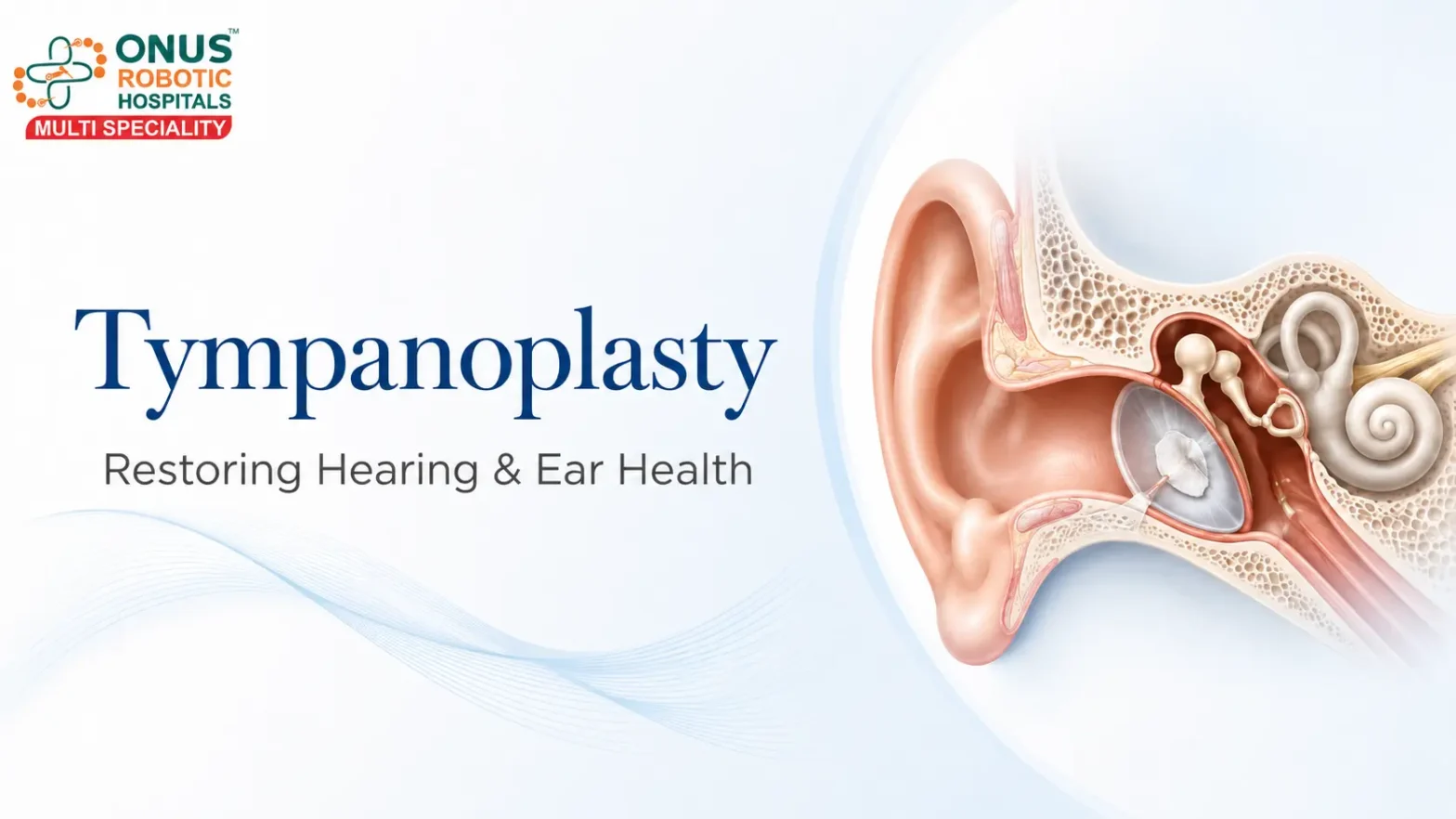
Tympanoplasty: Restoring Hearing & Ear Health- By Dr. Akshitha Reddy, ENT Specialist, ONUS Robotic Hospitals
Repeated ear discharge, hearing loss, blocked ear sensation, ear infections, ear pain, or a hole in the eardrum should not be ignored. These symptoms may be related to eardrum perforation, chronic ear infection, or middle ear disease.
Tympanoplasty is an advanced ear surgery performed to repair a damaged or perforated eardrum. The goal of the surgery is to close the hole in the eardrum, reduce repeated infections, protect the middle ear, and improve hearing in suitable patients. Tympanoplasty is commonly recommended when a ruptured eardrum does not heal on its own or when it causes hearing problems or repeated infections.
In this informative webinar, Dr. Akshitha Reddy, Consultant ENT Head & Neck Surgeon at ONUS Robotic Hospitals, explains “Tympanoplasty: Restoring Hearing & Ear Health” in a simple and patient-friendly way.
What Is Tympanoplasty?
Tympanoplasty is a surgical procedure used to repair a perforated tympanic membrane, commonly known as the eardrum. In some patients, the surgery may also involve evaluation or repair of middle ear structures if they are affected. Johns Hopkins Medicine describes tympanoplasty as a procedure to repair a perforated eardrum, remove middle ear disease when present, and improve hearing.
The eardrum is a thin membrane that separates the ear canal from the middle ear. It plays an important role in hearing and also protects the middle ear from infection. When there is a hole in the eardrum, water, germs, and repeated infections can affect ear health.
Why Does Eardrum Perforation Happen?
An eardrum perforation may occur due to several reasons, including:
Repeated ear infections
Chronic middle ear infection
Trauma or injury to the ear
Cotton bud or sharp object injury
Sudden pressure changes
Loud blast or sound injury
Untreated ear discharge
Previous ear surgery
Foreign body injury
Some small eardrum perforations may heal naturally, but persistent perforations with discharge, hearing loss, or repeated infections need ENT evaluation.
Common Symptoms of Eardrum Damage
Patients with a perforated eardrum or chronic ear infection may experience:
Repeated ear discharge
Hearing loss
Blocked ear sensation
Ear pain
Ringing sound in the ear
Recurrent ear infections
Bad smell from ear discharge
Itching or irritation
Dizziness in some cases
Water sensitivity in the ear
Mayo Clinic lists mucus-like, pus-filled, or bloody ear discharge, hearing loss, ringing in the ear, and vertigo as possible symptoms of a ruptured eardrum.
When Is Tympanoplasty Needed?
Tympanoplasty may be advised when:
The eardrum hole does not heal naturally
Ear discharge keeps coming again and again
Hearing loss affects daily life
The patient gets repeated ear infections
Water entering the ear causes discharge
There is chronic middle ear disease
Medical treatment alone is not enough
The ENT specialist finds a persistent perforation
The decision for surgery depends on the size and location of the perforation, infection status, hearing test results, middle ear condition, and the patient’s overall health.
How Tympanoplasty Helps
Tympanoplasty can help by:
Repairing the eardrum hole
Reducing repeated ear infections
Protecting the middle ear from germs and water
Improving hearing in suitable cases
Reducing ear discharge
Supporting long-term ear health
Improving quality of life
A ruptured eardrum can affect hearing and may increase exposure to germs that cause ear infections; if medicines do not help healing, tympanoplasty may be recommended.
Diagnosis Before Tympanoplasty
Before surgery, the ENT specialist may recommend:
ENT examination
Ear microscopy or endoscopic ear examination
Hearing test or audiometry
Tympanometry in selected cases
Evaluation of ear discharge or infection
CT scan if middle ear disease is suspected
Mayo Clinic notes that diagnosis of a perforated eardrum may include lab tests for ear fluid, tuning fork tests, tympanometry, and audiology examination depending on the case.
Recovery After Tympanoplasty
Recovery after tympanoplasty depends on the patient’s condition, type of surgery, infection status, and healing response. Patients are usually advised to follow strict ear precautions after surgery.
Common recovery precautions include:
Keep the ear dry
Avoid water entry into the ear
Avoid nose blowing
Avoid heavy lifting or straining
Avoid inserting cotton buds or objects into the ear
Use medicines only as prescribed
Attend follow-up visits
Report severe pain, fever, dizziness, or heavy discharge
Keeping the ear dry and avoiding ear cleaning are important self-care steps while a ruptured eardrum heals. Mayo Clinic also advises avoiding nose blowing because pressure can affect the healing eardrum.
Why You Should Not Ignore Ear Discharge or Hearing Loss
Repeated ear discharge and hearing loss may indicate chronic ear disease. Delaying treatment can increase the risk of repeated infections, worsening hearing, middle ear complications, and long-term ear damage.
Consult an ENT specialist if you have:
Ear discharge lasting more than a few days
Repeated ear infections
Hearing loss
Blocked ear sensation
Ear pain with discharge
Known eardrum perforation
Discharge after water entry
Bad-smelling ear discharge
Ringing sound or dizziness
For Appointments:
👩⚕️ Dr. Akshitha Reddy
ENT Specialist
Providing ethical, evidence-based care for ear, nose, throat, sinus, and airway conditions.
ONUS Robotic Hospitals – Hyderabad
👉 link: contact-us or book-appointment