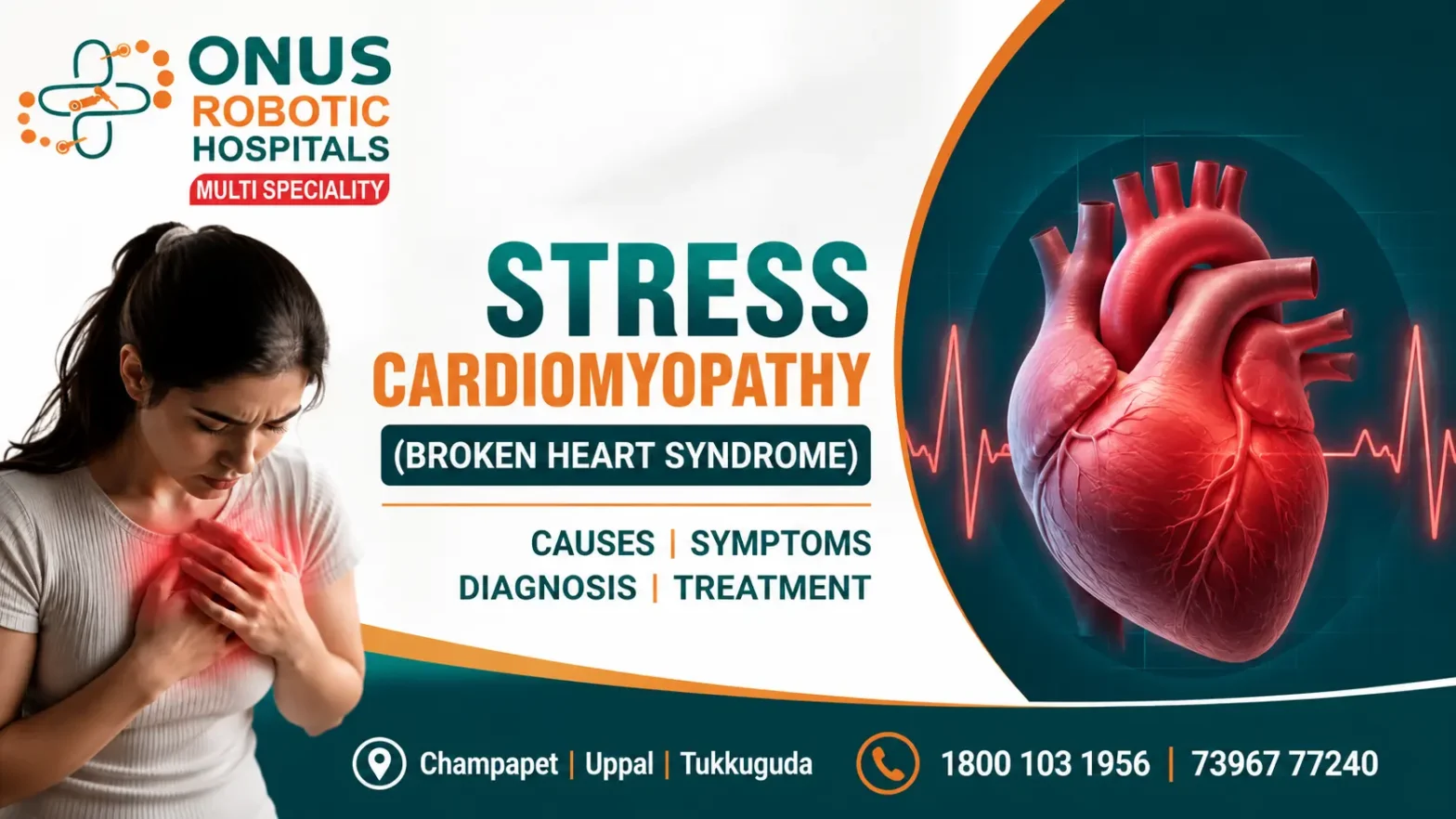
Common Symptoms
Symptoms may appear suddenly and can be frightening.
Common symptoms include:
- Chest pain
- Chest heaviness
- Breathlessness
- Sweating
- Dizziness
- Palpitations
- Weakness
- Fainting
- Nausea
- Pain spreading to arm, neck, jaw, or back
- Anxiety-like feeling with chest discomfort
Mayo Clinic lists chest pain, shortness of breath, and fainting as possible symptoms of broken heart syndrome. It also notes that possible complications can include pulmonary edema, low blood pressure, irregular heartbeats, heart failure, and blood clots in the heart.
When Chest Pain Becomes an Emergency
Chest pain should be treated as an emergency when it is sudden, severe, or associated with warning signs.
Seek emergency medical care immediately if you have:
- Sudden chest pain
- Breathlessness
- Sweating
- Dizziness
- Fainting
- Palpitations
- Severe weakness
- Pain spreading to left arm
- Pain spreading to jaw, neck, shoulder, or back
- Chest heaviness lasting more than a few minutes
- Symptoms after severe stress or shock
- Known diabetes, BP, cholesterol, smoking, or heart disease
Do not wait to “see if it goes away.” Heart attack and Stress Cardiomyopathy can look similar in the beginning.
Diagnosis: ECG, 2D Echo, Blood Tests, CT and Angiogram
Stress Cardiomyopathy is often diagnosed in an emergency or hospital setting because the symptoms can closely resemble a heart attack. Mayo Clinic states that broken heart syndrome is often diagnosed in the emergency room or hospital because symptoms can look a lot like a heart attack.
Diagnosis may include:
ECG
ECG helps detect electrical changes in the heart. It is one of the first tests done in chest pain evaluation.
Blood Tests
Blood tests such as troponin may be done to check for heart muscle injury. In Stress Cardiomyopathy, markers may be mildly or moderately elevated.
2D Echo
2D Echo helps assess heart pumping function, heart muscle movement, valve function, and complications. It may show typical temporary weakness patterns.
Cardiac CT or Angiogram
CT coronary angiography or traditional coronary angiography may be required to check whether there is a coronary artery blockage. This is important because symptoms may mimic a heart attack.
Cath Lab Evaluation
If doctors suspect heart attack or significant blockage, cath lab evaluation may be needed urgently.
Treatment and Recovery
Treatment depends on the patient’s condition, blood pressure, heart function, symptoms, and complications. There is no single treatment for every case.
Treatment may include:
- Hospital monitoring
- Medicines to support heart function
- Blood pressure control
- Medicines for heart failure symptoms if needed
- Treatment for rhythm problems
- Management of fluid in lungs if present
- Follow-up 2D Echo
- Stress control and lifestyle guidance
- Cardiac rehabilitation in selected patients
Most patients improve, but follow-up is important because complications and recurrence can occur. Cleveland Clinic notes that with medicine, most people recover completely, but some may develop serious complications.
Can Broken Heart Syndrome Come Back?
Yes, recurrence can happen in some patients. People who have had Stress Cardiomyopathy should follow up with a cardiologist, take medicines as advised, manage risk factors, and address stress, anxiety, sleep issues, and emotional health.
Prevention and Stress Management Tips
Stress management cannot prevent every case, but it supports overall heart health.
Helpful steps include:
- Regular health checkups
- Control BP, diabetes, and cholesterol
- Avoid smoking
- Limit alcohol
- Regular walking or safe exercise
- Adequate sleep
- Breathing exercises
- Meditation or relaxation practices
- Counselling when grief or anxiety is severe
- Avoid self-medication
- Follow cardiology advice after any chest pain episode
Stress Cardiomyopathy is a heart condition, not just an emotional reaction. It needs medical evaluation and proper follow-up.
Expert Cardiac Care at ONUS Robotic Hospitals
At ONUS Robotic Hospitals, patients with chest pain, breathlessness, palpitations, suspected heart attack, stress-related cardiac symptoms, BP, diabetes-related heart risk, and emergency cardiac symptoms receive timely evaluation and personalized care.
For Appointments:
Senior Clinical Cardiologist
ONUS Robotic Hospitals – Hyderabad
👉 link: contact-us or book-appointment