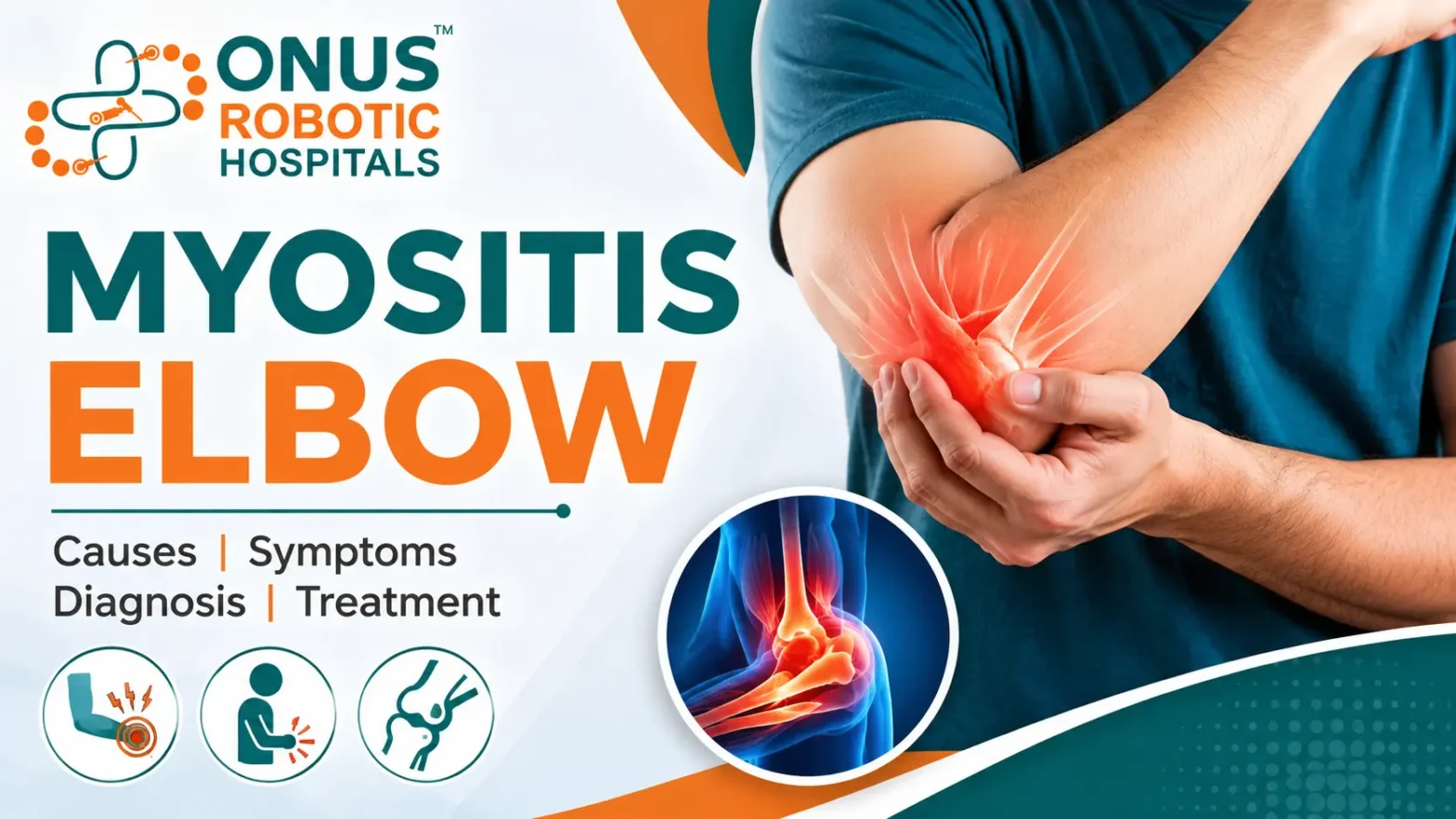
Elbow pain, swelling, stiffness, or difficulty moving the hand should not be ignored. Many people assume elbow pain is only a simple strain, but in some cases, it may be due to Myositis Elbow, a condition where the muscles around the elbow become inflamed.
Myositis around the elbow can affect daily activities such as bending the hand, lifting objects, writing, working, exercising, or playing sports. Early diagnosis and proper treatment can help reduce pain, improve movement, and prevent long-term stiffness.
What Is Myositis Elbow?
Myositis means inflammation of the muscles. When this inflammation occurs around the elbow joint, it may cause pain, swelling, tenderness, and restricted movement.
The elbow joint is surrounded by muscles, tendons, ligaments, nerves, and soft tissues. Any injury, repeated stress, trauma, or inflammation in these tissues can lead to pain and stiffness around the elbow.
In some cases, especially after injury or trauma, calcium or bone-like tissue can develop inside the muscle. This condition is called Myositis Ossificans. It can make elbow movement more restricted if not evaluated properly.
Common Causes of Myositis Around the Elbow
Myositis Elbow may develop due to different reasons, including:
- Direct injury to the elbow
- Sports injury
- Repeated stress or overuse
- Accident or fall
- Muscle strain around the elbow
- Trauma to the arm
- Injection-related irritation in rare cases
- Post-injury inflammation
- Repeated lifting or forceful elbow movements
Athletes, gym users, manual workers, and people who use their hands repeatedly for work may be at higher risk of elbow muscle inflammation or soft tissue injury.
Symptoms of Myositis Elbow
The symptoms may start mildly and increase gradually, especially after injury or repeated stress.
Common symptoms include:
- Elbow pain
- Swelling around the elbow
- Stiffness
- Difficulty bending the hand
- Difficulty straightening the hand
- Pain while touching the elbow
- Reduced elbow movement
- Pain after sports activity
- Pain after injury or fall
- Tightness around the elbow
- Weakness while lifting objects
If pain continues for more than 1–2 weeks, or if swelling and movement restriction increase, proper orthopedic evaluation is important.
What Is Myositis Ossificans?
Myositis Ossificans is a condition where bone-like tissue forms inside the muscle or soft tissue after injury. This may happen after a direct blow, muscle bruise, fracture, sports trauma, or repeated injury.
In the early stage, it may feel like a normal muscle injury. Later, the patient may notice:
- Persistent pain
- Hard swelling or lump
- Reduced elbow movement
- Increasing stiffness
- Pain during activity
- Difficulty returning to sports or work
Not every elbow injury becomes Myositis Ossificans, but persistent symptoms after trauma should not be ignored.
When Should You See an Orthopedic Doctor?
You should consult an orthopedic specialist if you have:
- Elbow pain lasting more than 1–2 weeks
- Swelling that is increasing
- Difficulty bending or straightening the elbow
- Pain after sports injury
- Pain after accident or fall
- Stiffness after injury
- A hard lump around the elbow
- Severe pain while touching the elbow
- Reduced hand or elbow function
- Recurrent elbow pain
Early consultation helps identify whether the pain is due to muscle inflammation, ligament injury, fracture, tendon injury, nerve-related pain, or Myositis Ossificans.
Diagnosis of Myositis Elbow
Diagnosis starts with a detailed clinical examination by an orthopedic doctor. The doctor may check pain location, swelling, tenderness, range of movement, strength, and history of injury.
Depending on the symptoms, the following investigations may be advised:
X-ray
An X-ray may help identify fracture, bony injury, calcification, or bone-like formation in soft tissues.
Ultrasound
Ultrasound may help assess soft tissue swelling, muscle injury, fluid collection, and inflammation.
MRI
MRI may be useful when detailed evaluation of muscles, tendons, ligaments, and soft tissues is required.
CT Scan
In selected cases, CT scan may help assess calcification or bone formation more clearly.
The required test depends on the patient’s symptoms, injury history, and clinical examination.
Treatment Options for Myositis Elbow
Treatment depends on the cause, severity, duration of symptoms, and whether there is any calcification or bone-like formation.
Common treatment options may include:
Rest and Activity Modification
Avoiding painful movements, repeated strain, heavy lifting, or sports activity may help reduce inflammation in the early stage.
Medicines
Pain-relief medicines or anti-inflammatory medicines may be prescribed by the doctor depending on the patient’s condition.
Ice or Heat Therapy
In early injury, ice may help reduce swelling. In later stages, heat therapy may be advised in some cases to reduce stiffness.
Physiotherapy
Physiotherapy plays an important role in improving elbow movement, reducing stiffness, strengthening muscles, and restoring function.
Range-of-Motion Exercises
Gentle stretching and supervised exercises may help prevent long-term elbow stiffness.
Advanced Evaluation
If pain persists, swelling increases, or movement becomes restricted, further imaging may be required to rule out Myositis Ossificans or other elbow conditions.
Surgery
Surgery is rarely needed. It may be considered only in selected cases where severe stiffness, persistent pain, or mature bone-like formation affects movement and does not improve with conservative treatment.
Can Myositis Elbow Be Prevented?
Not all cases can be prevented, but risk can be reduced by:
- Avoiding repeated elbow strain
- Using proper sports technique
- Treating elbow injuries early
- Taking rest after trauma
- Avoiding aggressive massage after injury
- Following proper physiotherapy guidance
- Consulting a doctor if swelling or stiffness persists
Ignoring elbow pain after injury can delay recovery and may increase stiffness.
Why Choose ONUS Robotic Hospitals?
At ONUS Robotic Hospitals, patients receive advanced orthopedic evaluation and treatment for elbow pain, sports injuries, trauma, fractures, muscle inflammation, and joint-related problems.
Under the guidance of Dr. Balaraju Naidu, Consultant Robotic Orthopedic Surgeon, patients receive personalized care based on accurate diagnosis, advanced imaging, physiotherapy, and modern orthopedic treatment protocols.
For Appointments:
Dr. Balaraju Naidu, Robotic Orthopedic Surgeon
ONUS Robotic Hospitals – Hyderabad
👉 link: contact-us or book-appointment